 Image 1 of 2
 Image 2 of 2
•Detailed lesson with lots of scaffolding based on adaptive teaching that helps students identify the different types of interviews and their features, explain their practical, ethical and theoretical strengths and weaknesses and apply this knowledge to 4-mark exam questions.
•Covers the following key terms: Interview, Structured interview, Unstructured interview, Semi-structured interview, Group interviews, Focus groups, Interviewer bias/effect, Interview schedule, Interviewer, Interviewee, Telephone interviews, Response rate
•Makes reference to the following key terms students might know to promote a spiral curriculum: Questionnaires – Primary methods – Quantitative vs Qualitative data – Open vs Closed questions – Practical, Ethical and Theoretical (PET) issues – Validity – Reliability – Representativeness – Generalisability – Standardisation – Feminism
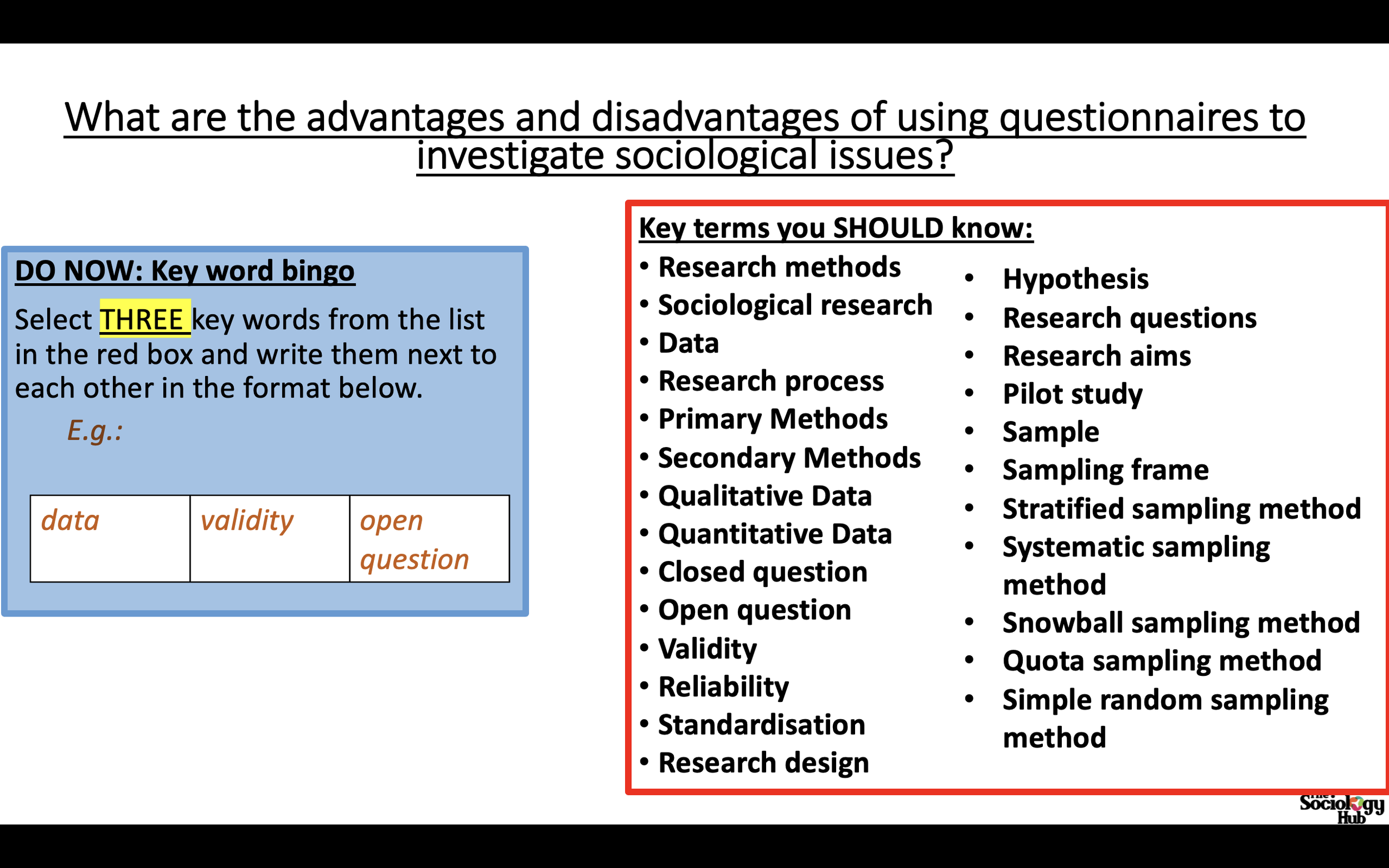
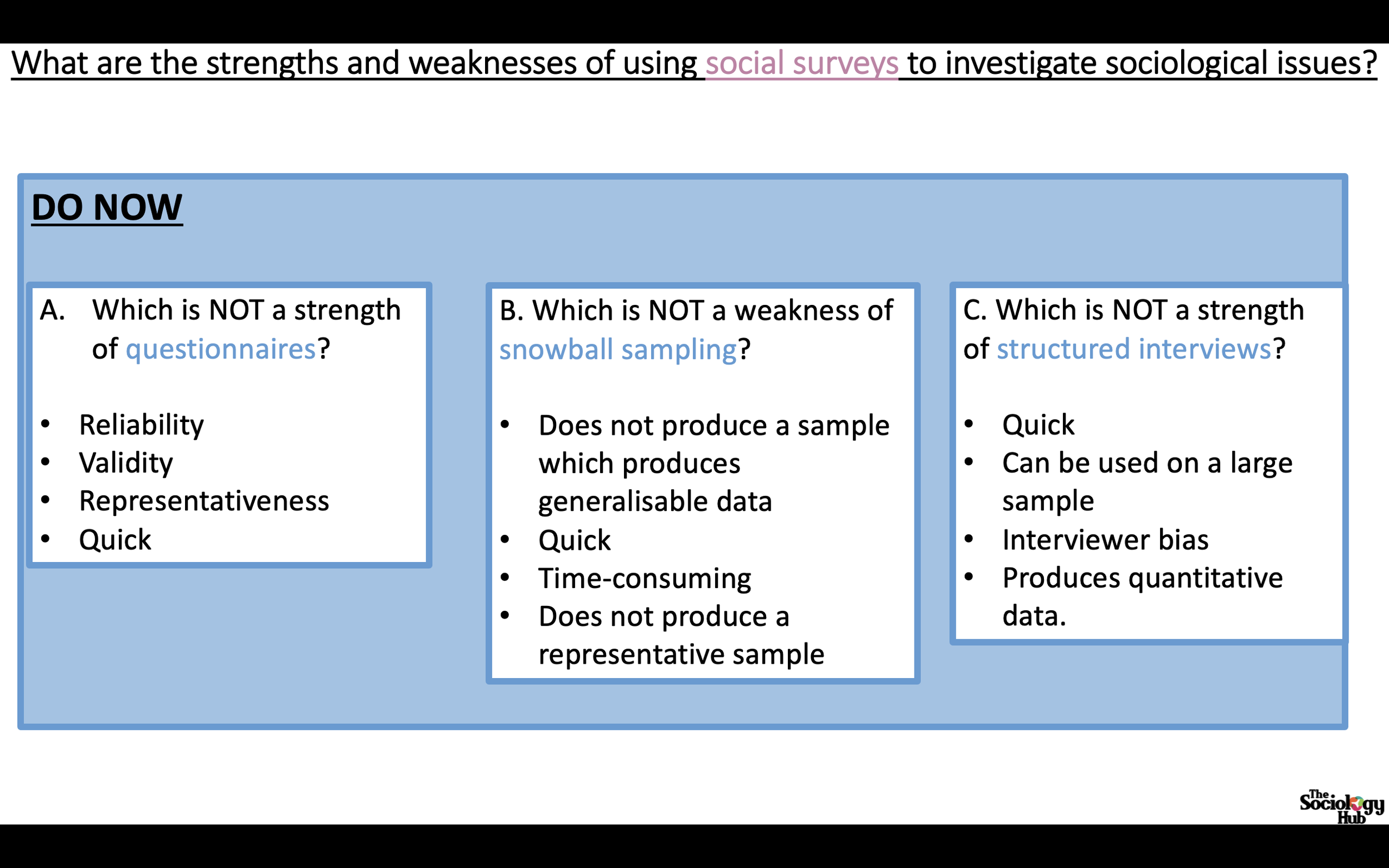
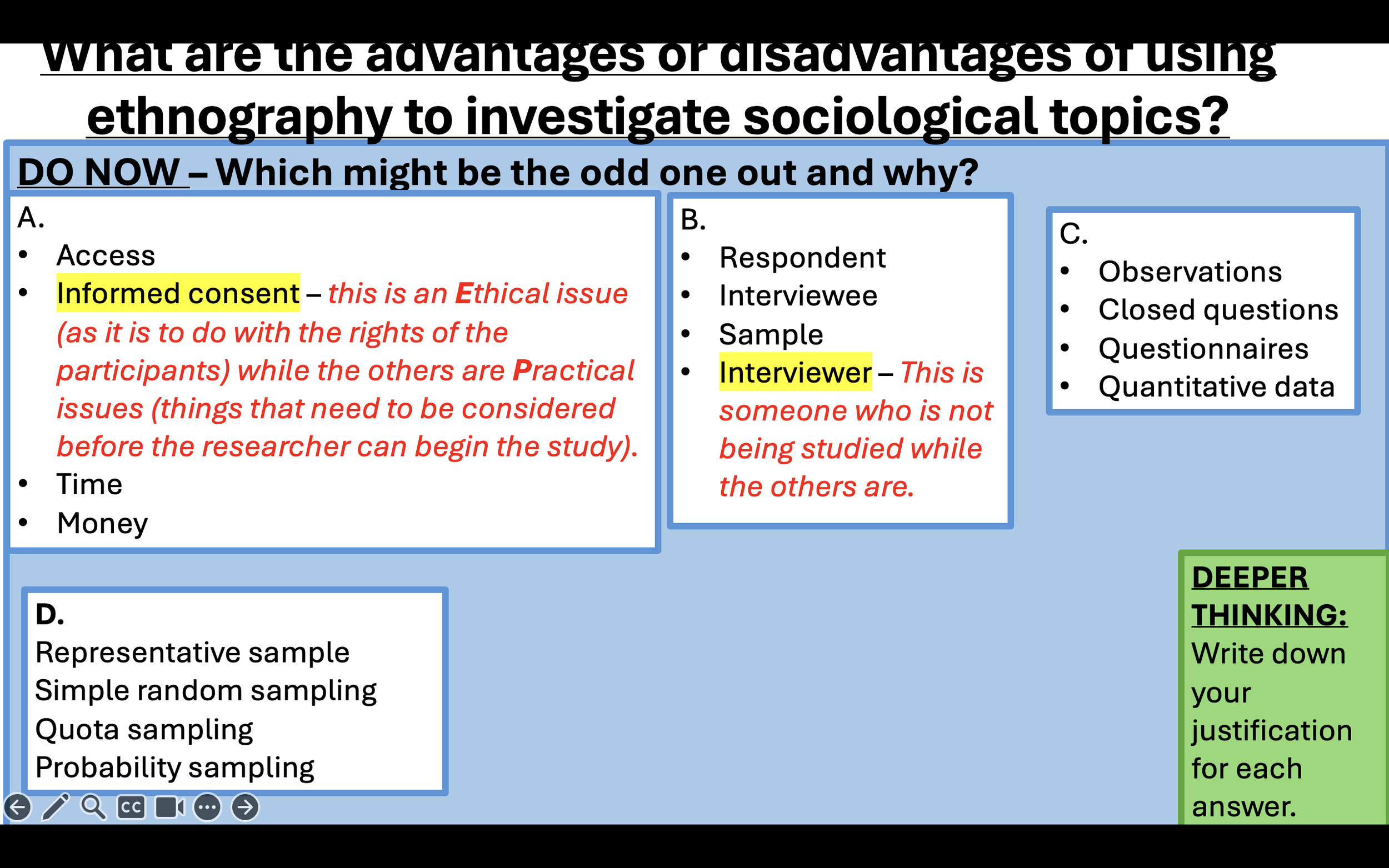
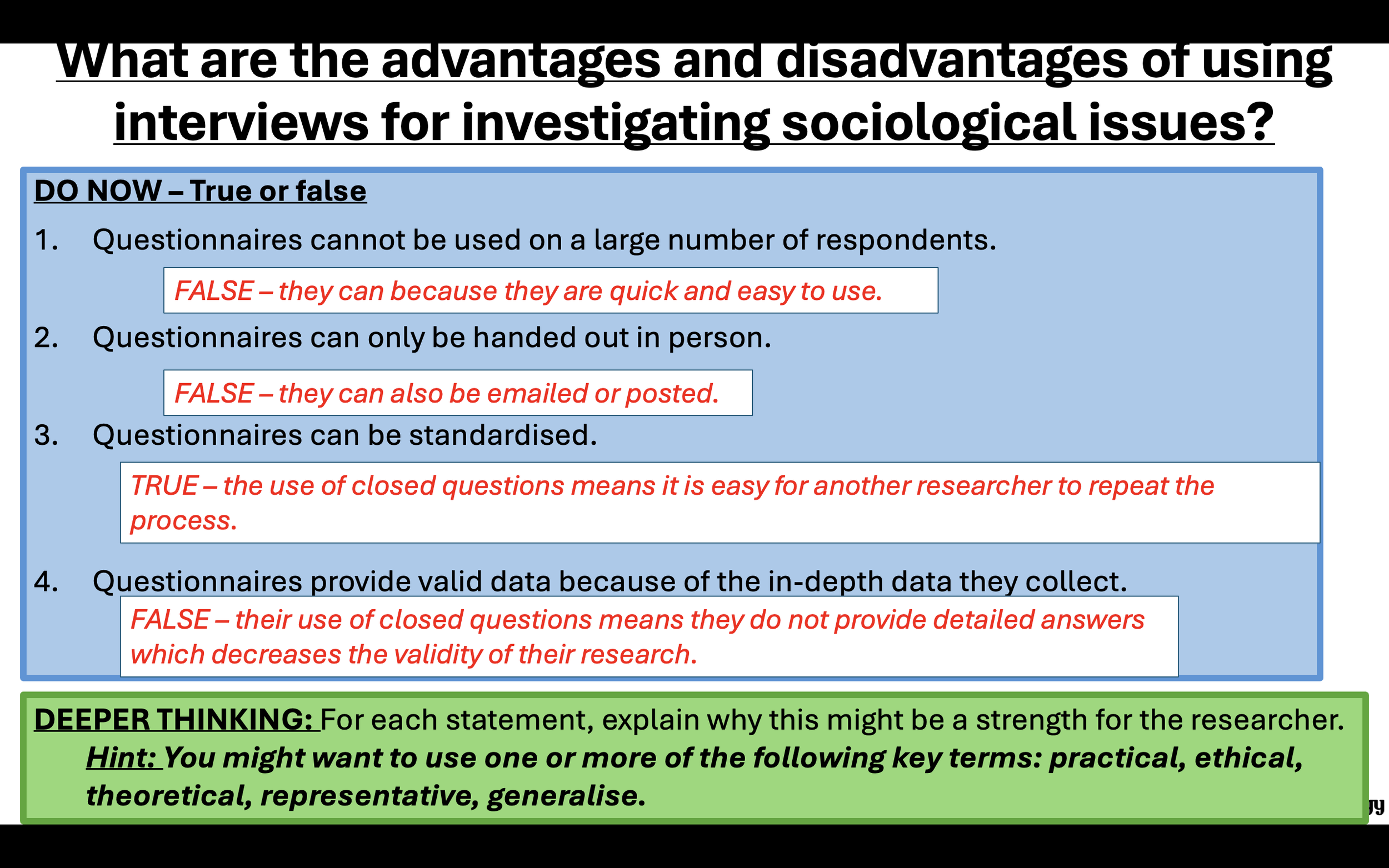
•Do Now retrieval starter recaps questionnaires
•Includes a Think–Pair–Share key term activity with a key term sheet and tips for memorising definitions
•Includes three short videos (semi-structured interviews, unstructured interviews and focus groups)
•Includes interview schedule progress checks and a stand-up/sit-down true or false check
•Includes a source-based task on interviewer bias
•INCLUDES A 4-MARKER WITH SUCCESS CRITERIA AND A FULL MARK SCHEME
•ANSWERS TO MOST ACTIVITIES INCLUDED
•INCLUDES KEY TERM SHEET WITH DEFINITIONS FOR THE LESSON
•Resources can be found at the end of the PPT