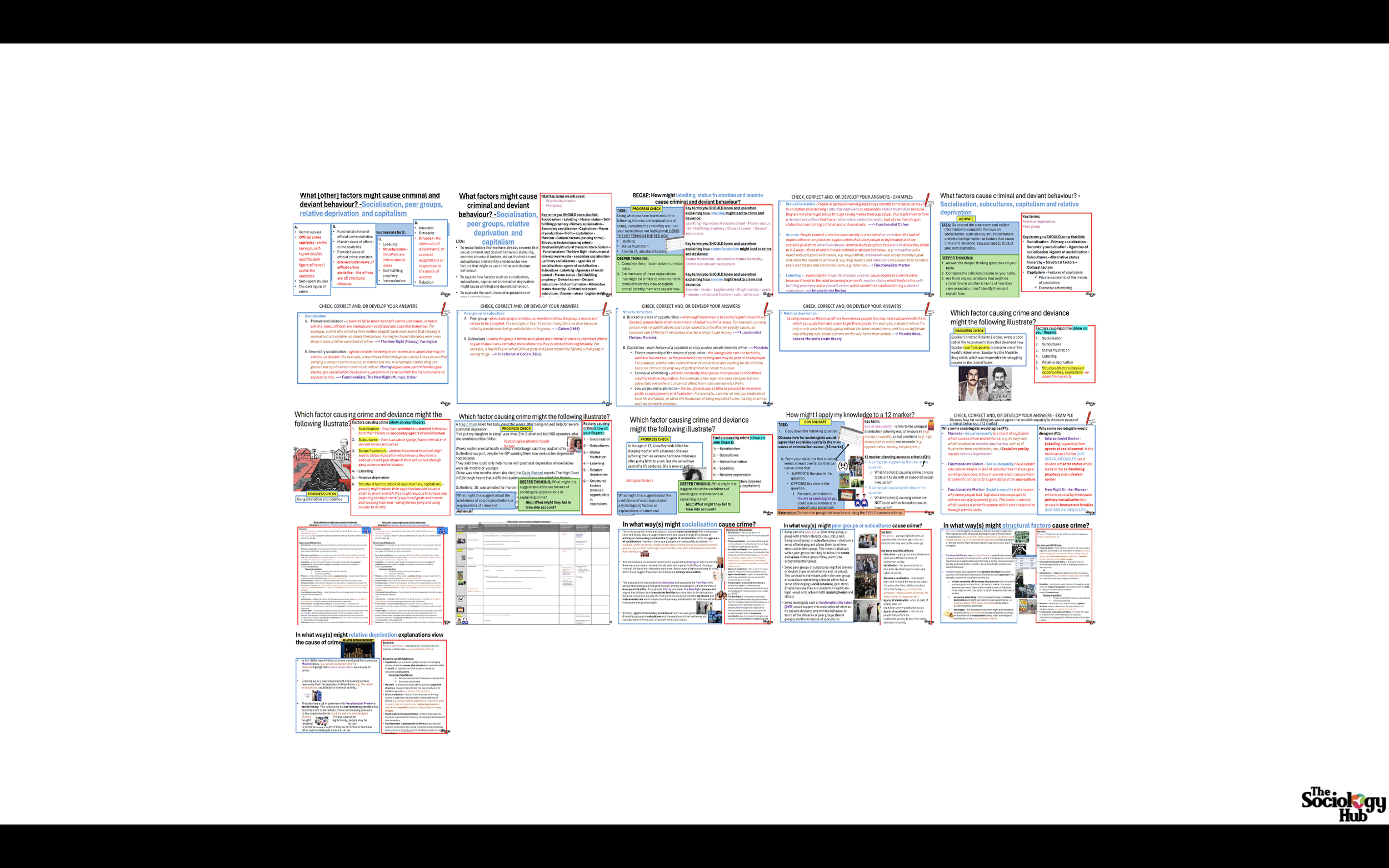
 Image 1 of 2
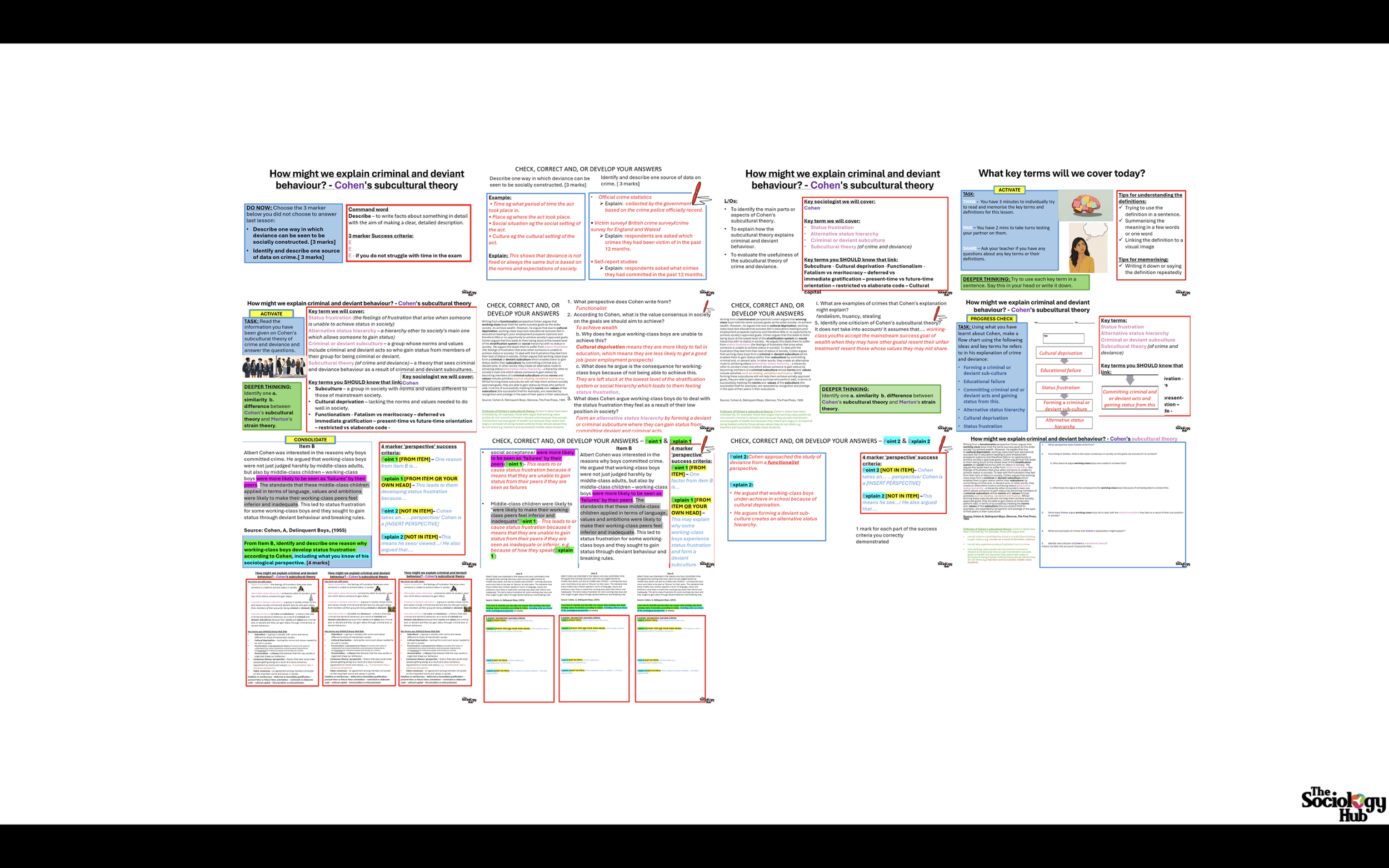
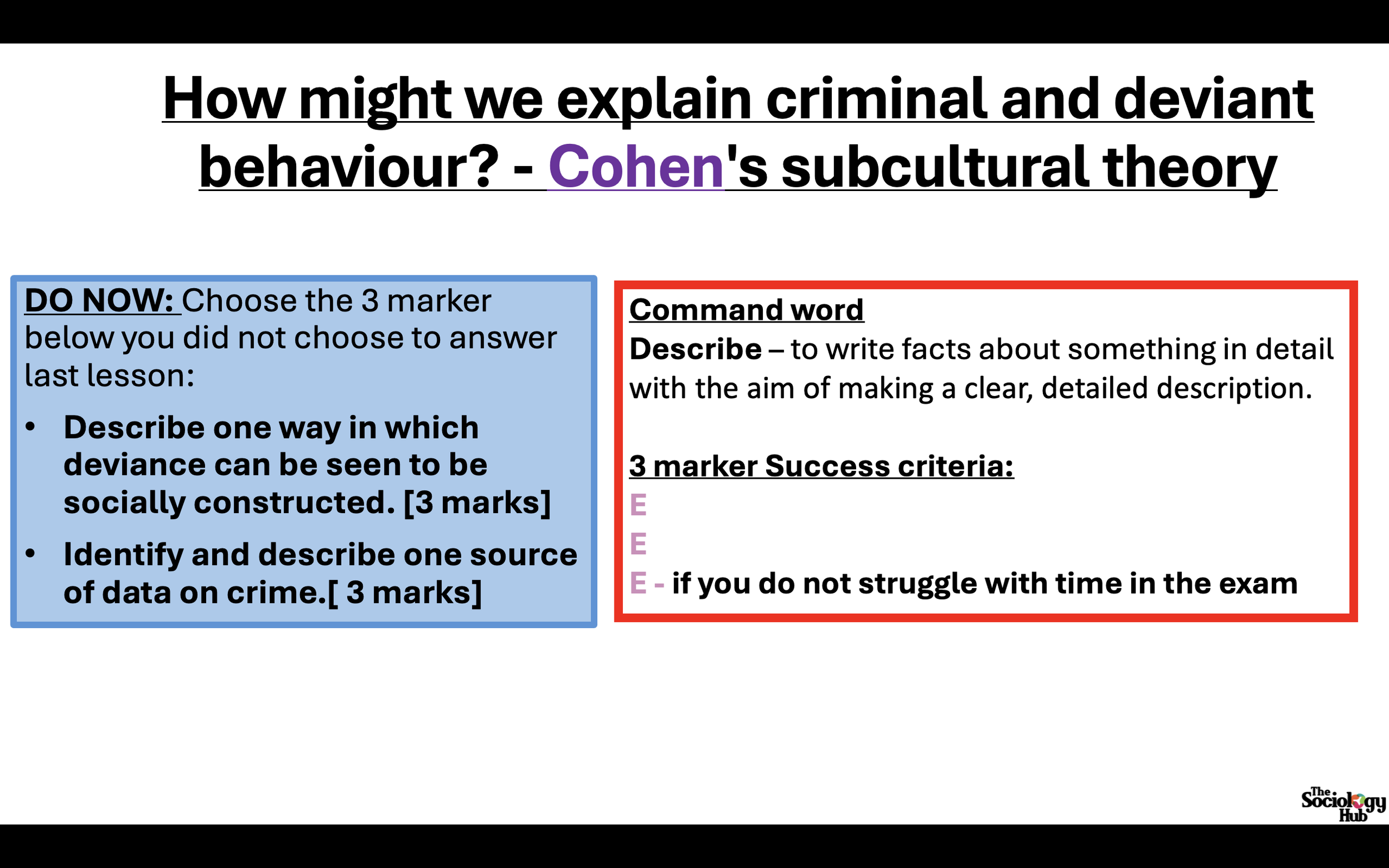 Image 2 of 2
•Detailed lesson with lots of scaffolding based on adaptive teaching that helps students identify the main aspects of Cohen's subcultural theory, explain how it accounts for criminal and deviant behaviour, and evaluate its usefulness.
•Covers the following key terms: status frustration, alternative status hierarchy, criminal or deviant subculture, subcultural theory (of crime and deviance).
•Covers the following sociologist: Cohen (with comparison to Merton as stretch and challenge).
•Makes reference to the following key terms students might know to promote a spiral curriculum: subculture - cultural deprivation - functionalism - structuralism - consensus theory/perspective - value consensus - fatalism vs meritocracy - deferred vs immediate gratification - present-time vs future-time orientation - restricted vs elaborate code - cultural capital - structuralism vs interactionism.
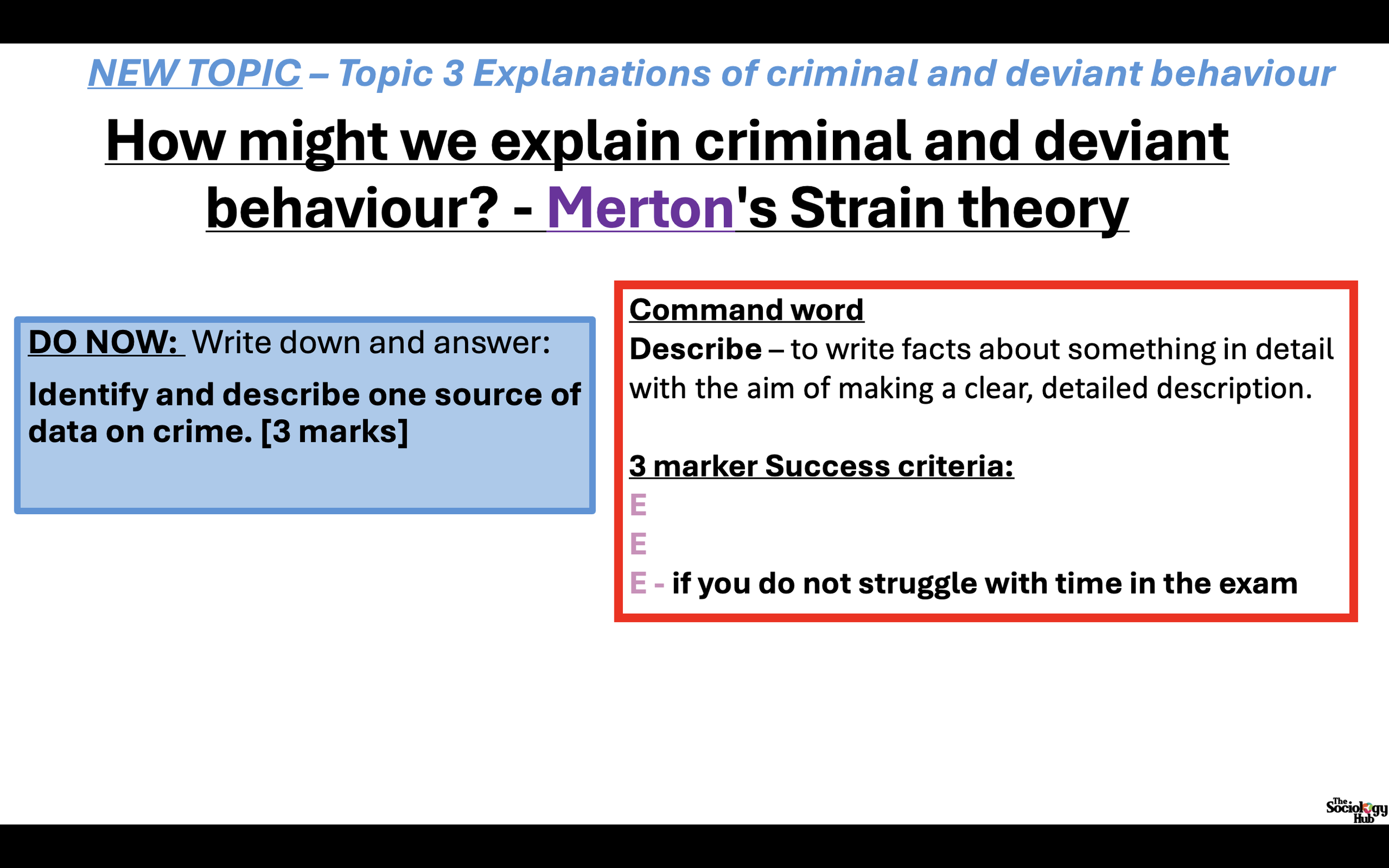
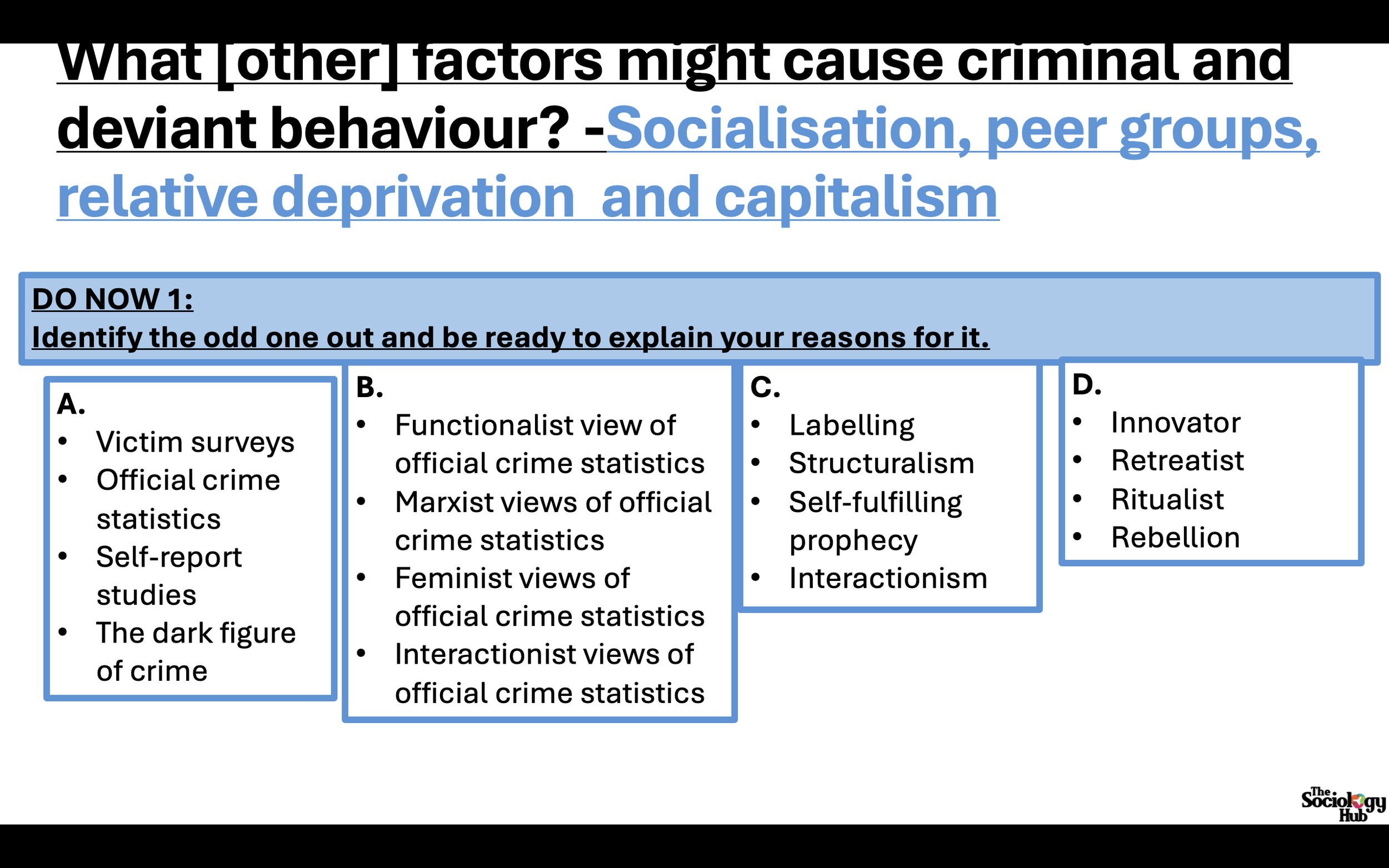
•Additional lesson features: retrieval-practice DO NOW recapping 3-mark exam practice on the social construction of deviance and sources of crime data; explicit vocabulary instruction with a THINK-PAIR-SHARE key terms activity; a source-based reading and questioning task on Cohen; a flow chart progress check on Cohen’s subcultural theory; success criteria for the 4-mark 'perspective' item question with answers
•ANSWERS TO THE MAIN ACTIVITIES INCLUDED
•Includes a key terms sheet with definitions for the lesson.
•Resources can be found at the end of the PPT.
•Detailed lesson with lots of scaffolding based on adaptive teaching that helps students identify the main aspects of Cohen's subcultural theory, explain how it accounts for criminal and deviant behaviour, and evaluate its usefulness.
•Covers the following key terms: status frustration, alternative status hierarchy, criminal or deviant subculture, subcultural theory (of crime and deviance).
•Covers the following sociologist: Cohen (with comparison to Merton as stretch and challenge).
•Makes reference to the following key terms students might know to promote a spiral curriculum: subculture - cultural deprivation - functionalism - structuralism - consensus theory/perspective - value consensus - fatalism vs meritocracy - deferred vs immediate gratification - present-time vs future-time orientation - restricted vs elaborate code - cultural capital - structuralism vs interactionism.
•Additional lesson features: retrieval-practice DO NOW recapping 3-mark exam practice on the social construction of deviance and sources of crime data; explicit vocabulary instruction with a THINK-PAIR-SHARE key terms activity; a source-based reading and questioning task on Cohen; a flow chart progress check on Cohen’s subcultural theory; success criteria for the 4-mark 'perspective' item question with answers
•ANSWERS TO THE MAIN ACTIVITIES INCLUDED
•Includes a key terms sheet with definitions for the lesson.
•Resources can be found at the end of the PPT.