 Image 1 of 2
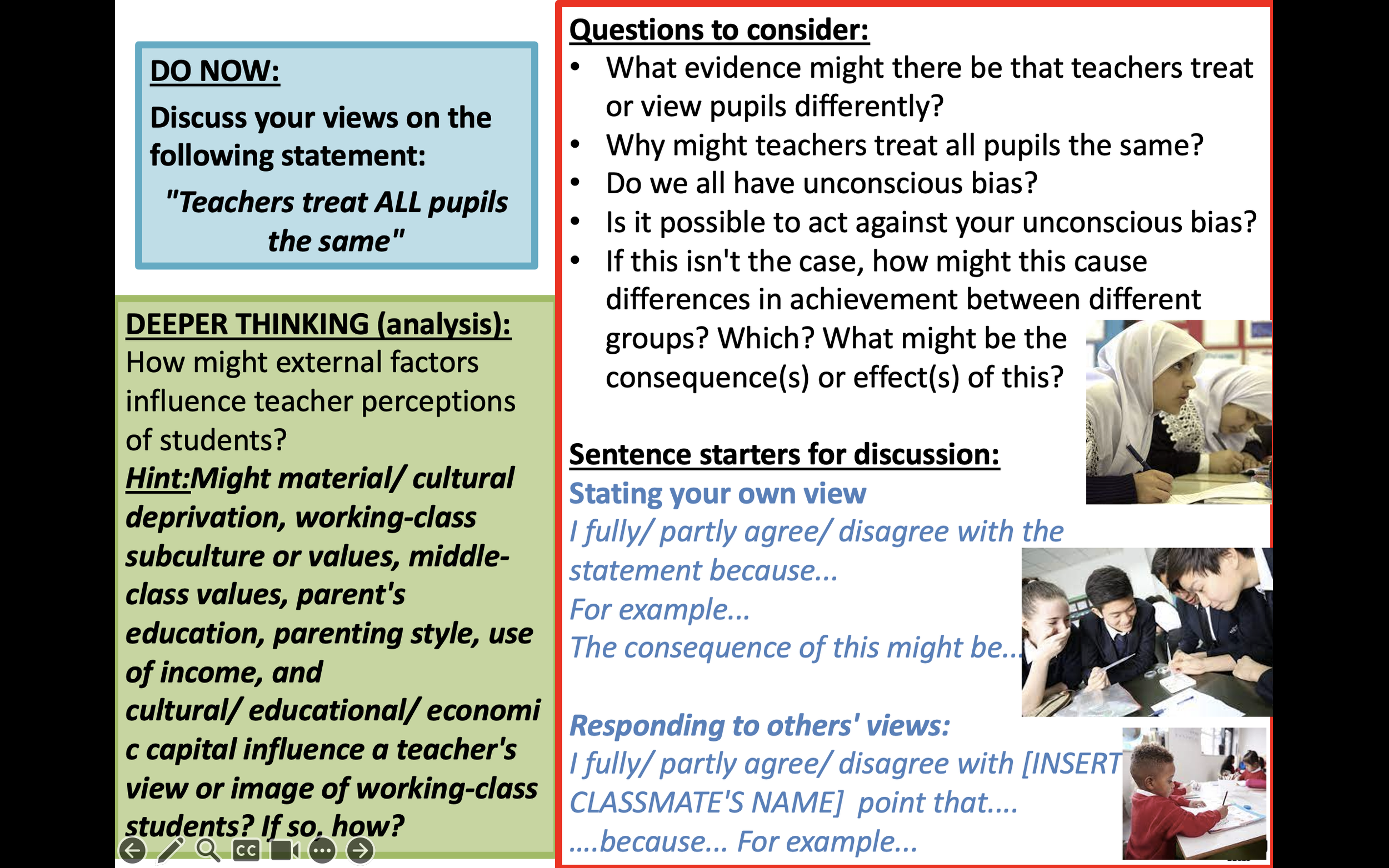 Image 2 of 2
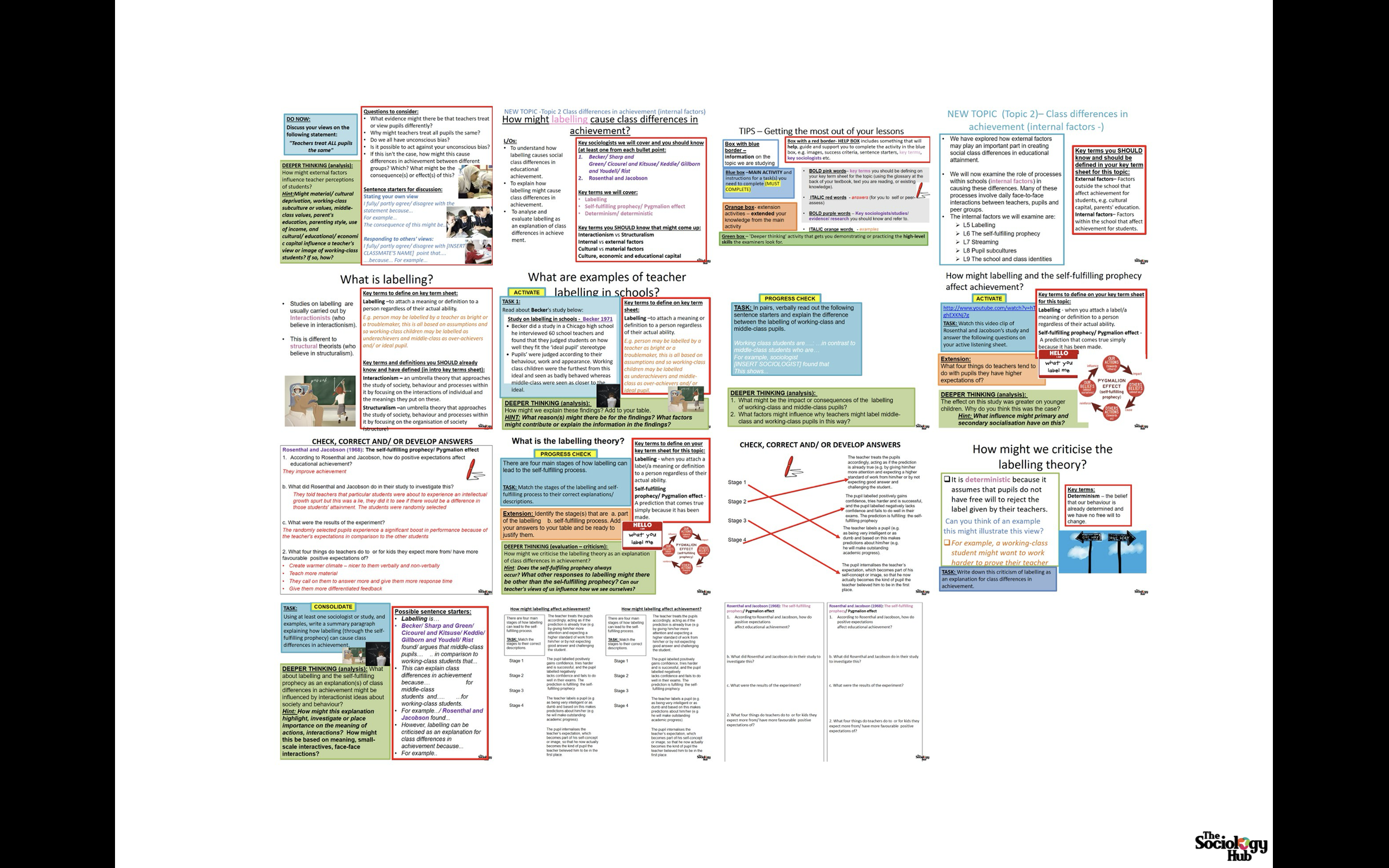
•Detailed lesson with lots of scaffolding based on adaptive teaching that helps students understand how labelling causes social class differences in educational achievement, and explain, analyse and evaluate labelling as an explanation of class differences in achievement.
•Covers the following key terms: Labelling, Self-fulfilling prophecy/ Pygmalion effect, Determinism/ deterministic.
•Covers the following sociologists: Becker, Sharp and Green, Cicourel and Kitsuse, Keddie, Gillborn and Youdell, Rist, Rosenthal and Jacobson.
•Makes reference to the following key terms students should already know, to promote a spiral curriculum: Interactionism vs Structuralism – Internal vs external factors – Cultural vs material factors – Cultural, economic and educational capital – Educational achievement – Social class – Ideal pupil.
•Includes a video activity on Rosenthal and Jacobson’s study with an active listening task.
•ANSWERS TO MAIN ACTIVITIES INCLUDED for self- and peer-assessment.
•RESOURCES CAN BE FOUND AT THE END OF THE PPT..