 Image 1 of 2
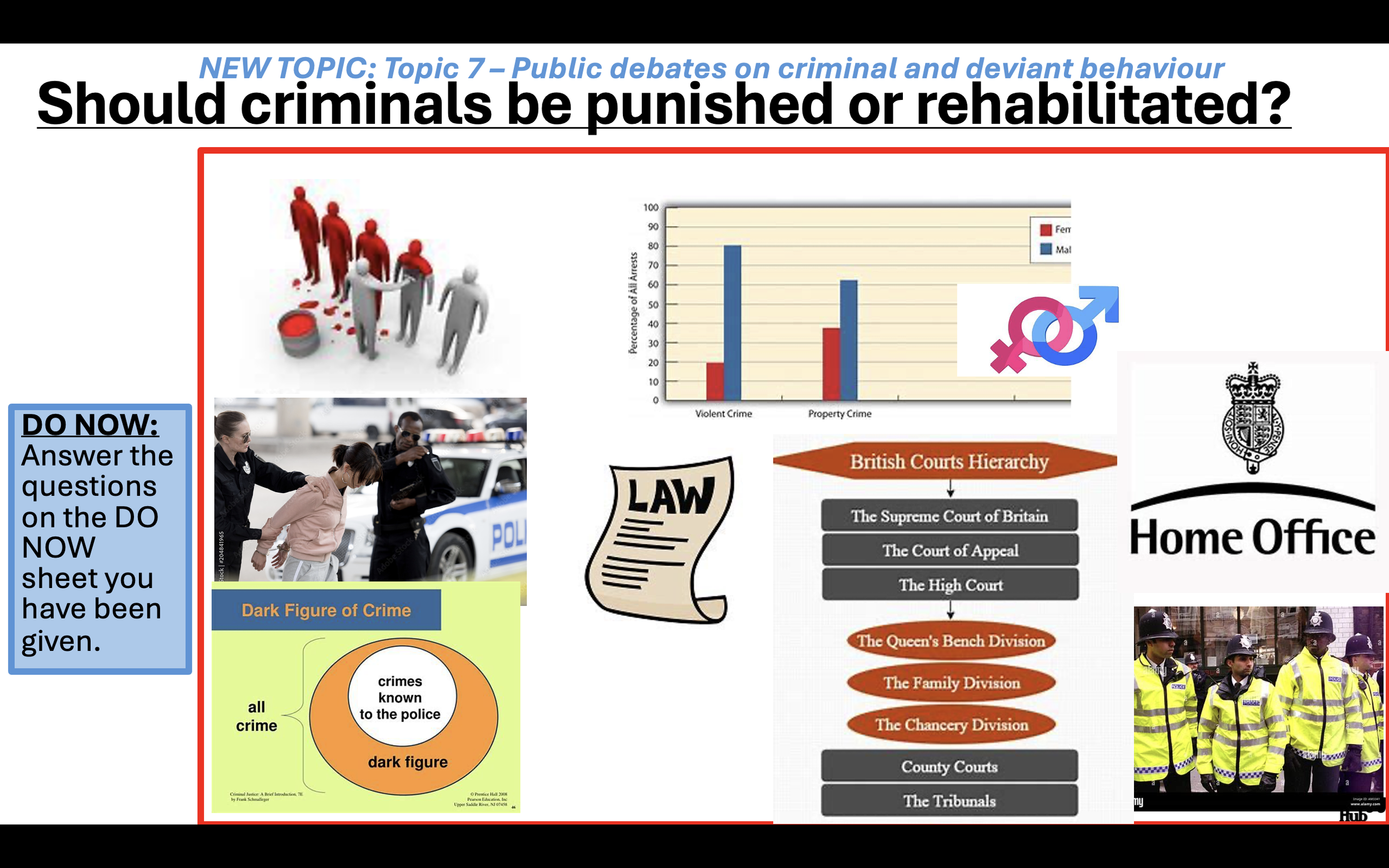 Image 2 of 2
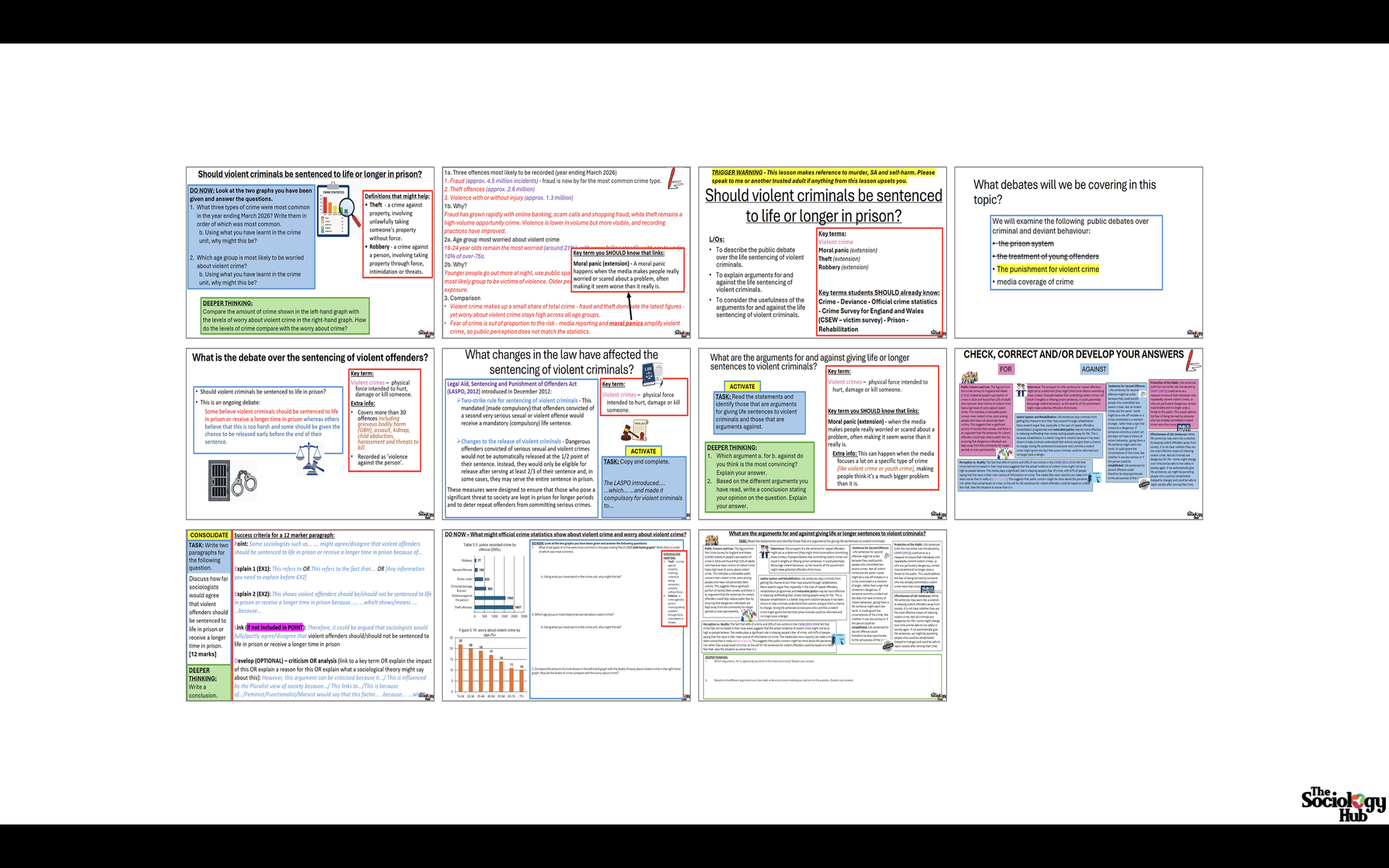
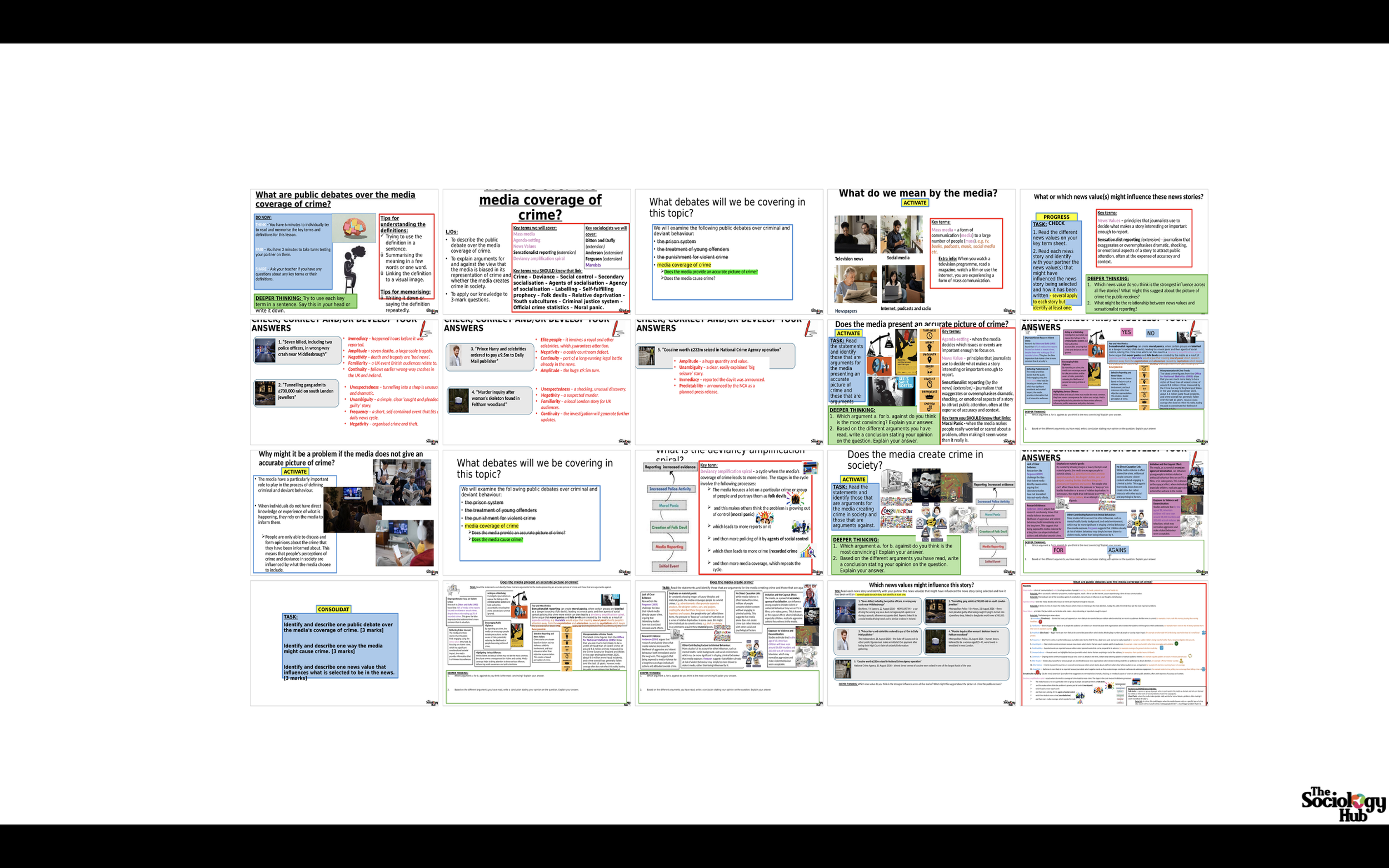
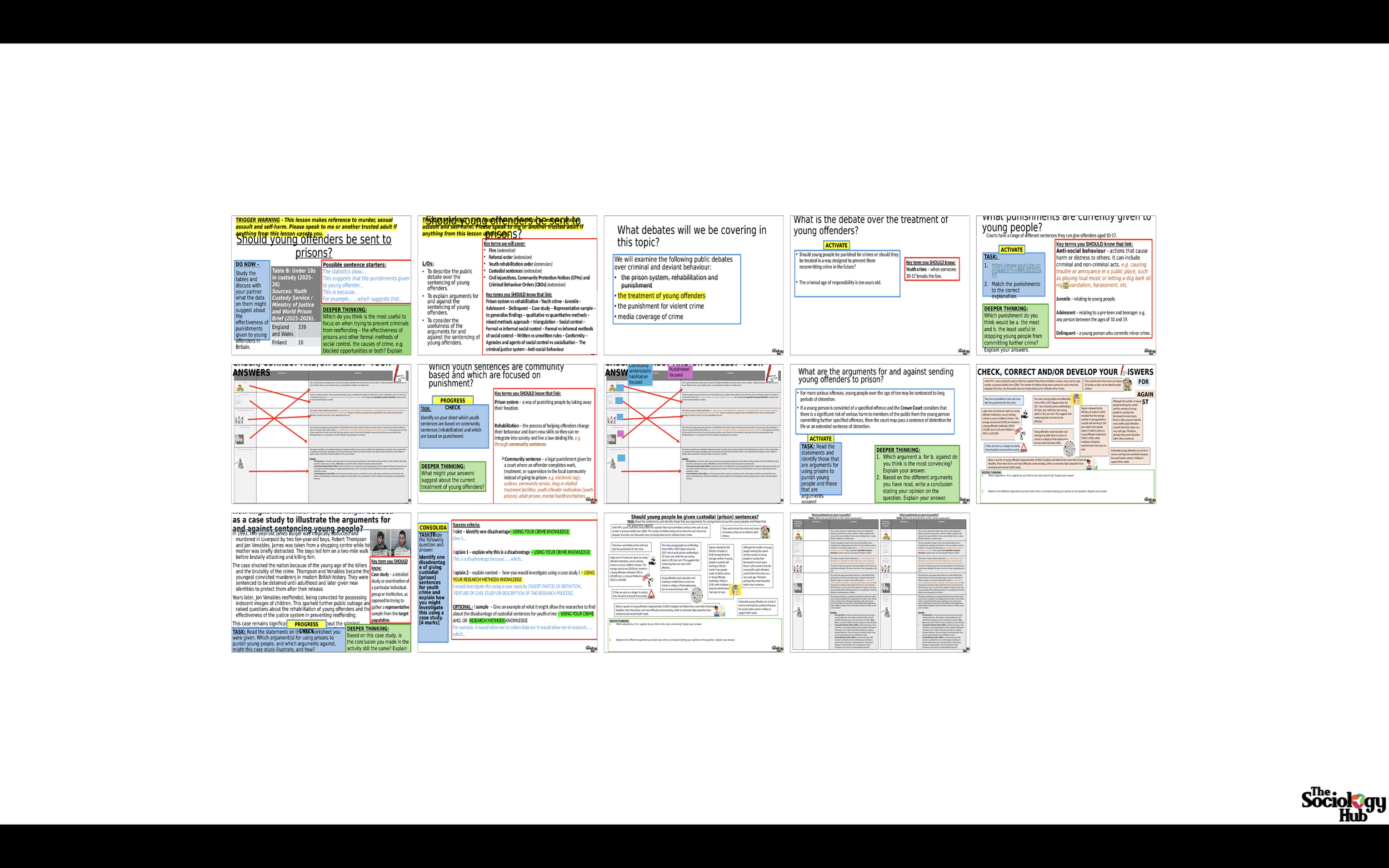
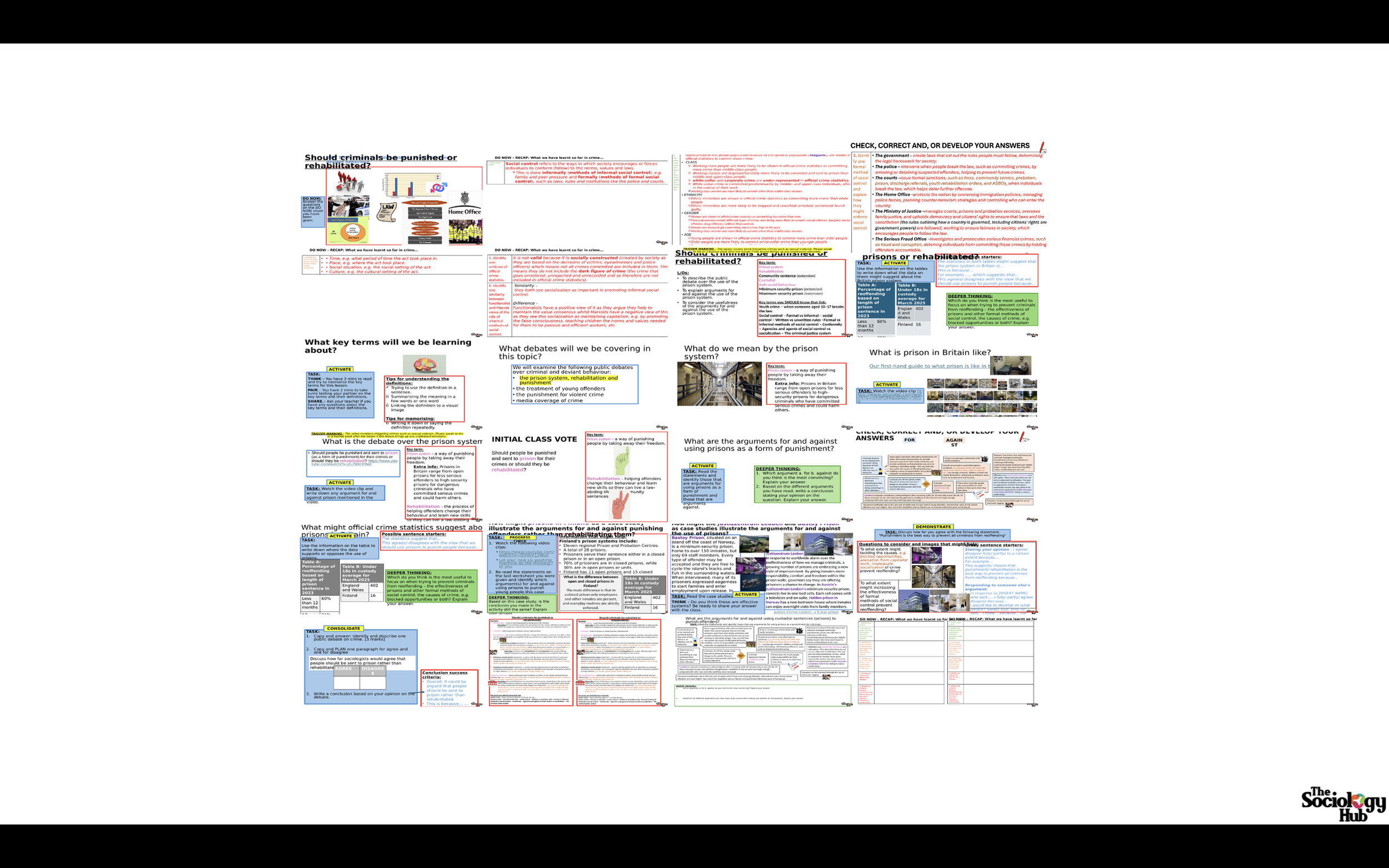
•Detailed lesson with lots of scaffolding based on adaptive teaching that helps students describe the public debate over the use of the prison system vs community sentences (rehabilitation), explain the arguments for and against its use, and consider how useful those arguments are.
•Covers the following key terms: Prison system, Rehabilitation, Community service, Anti-social behaviourMinimum security prison (extension), Maximum security prison (extension).
•Makes reference to the following key terms students should already know, to promote a spiral curriculum: Youth crime – Social control – Formal vs informal social control – Written vs unwritten rules – Formal vs informal methods of social control – Conformity – Agencies and agents of social control vs socialisation – The criminal justice system – Official crime statistics – Socially constructed – Deterrent.
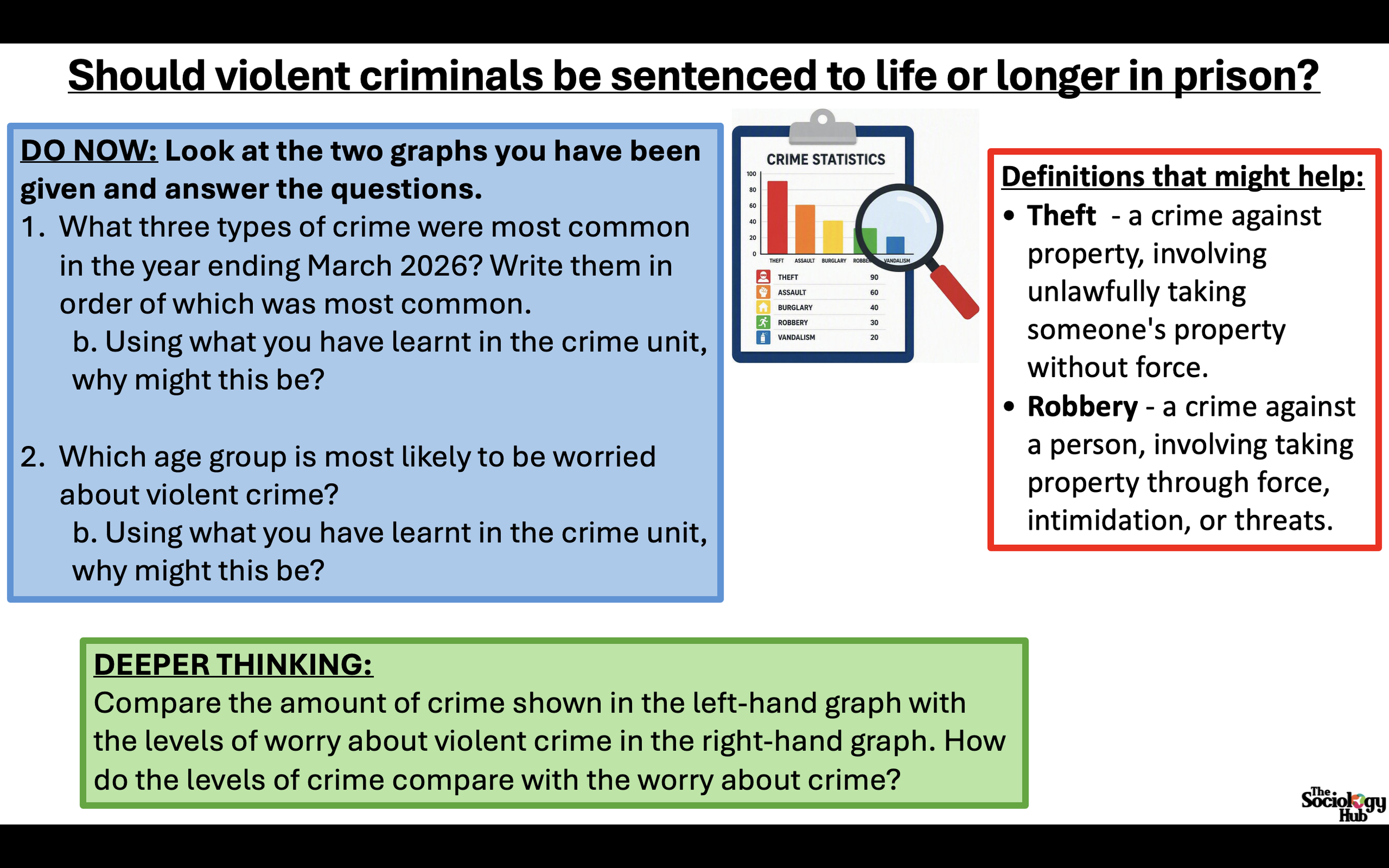
•DO NOW retrieval practice recapping social control, patterns of crime, formal methods of social control, the social construction of crime and criticisms of official crime statistics – with answers.
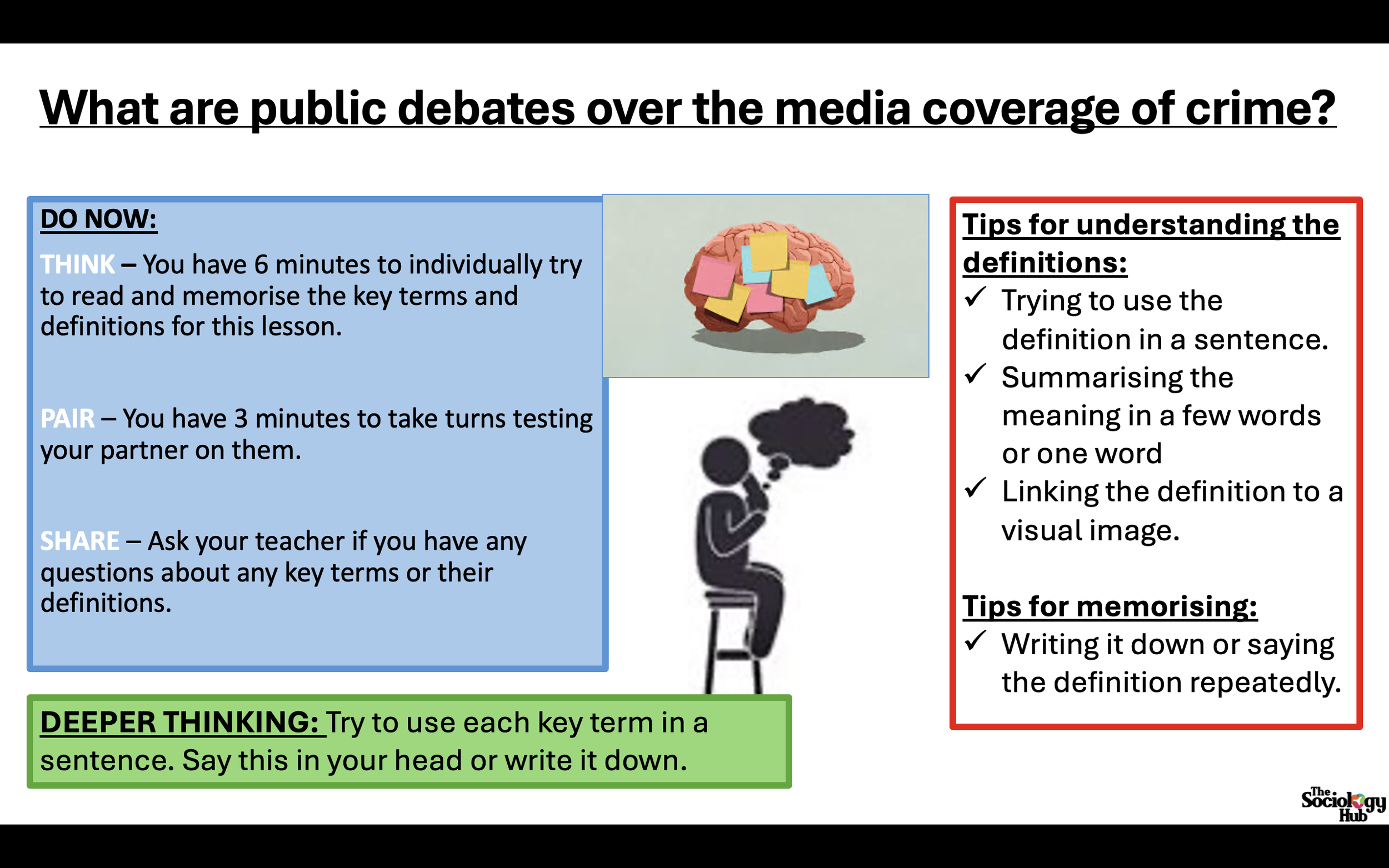
• Think–Pair–Share key term activity with tips for understanding and memorising definitions.
• Includes three video clips as activities on prisons.
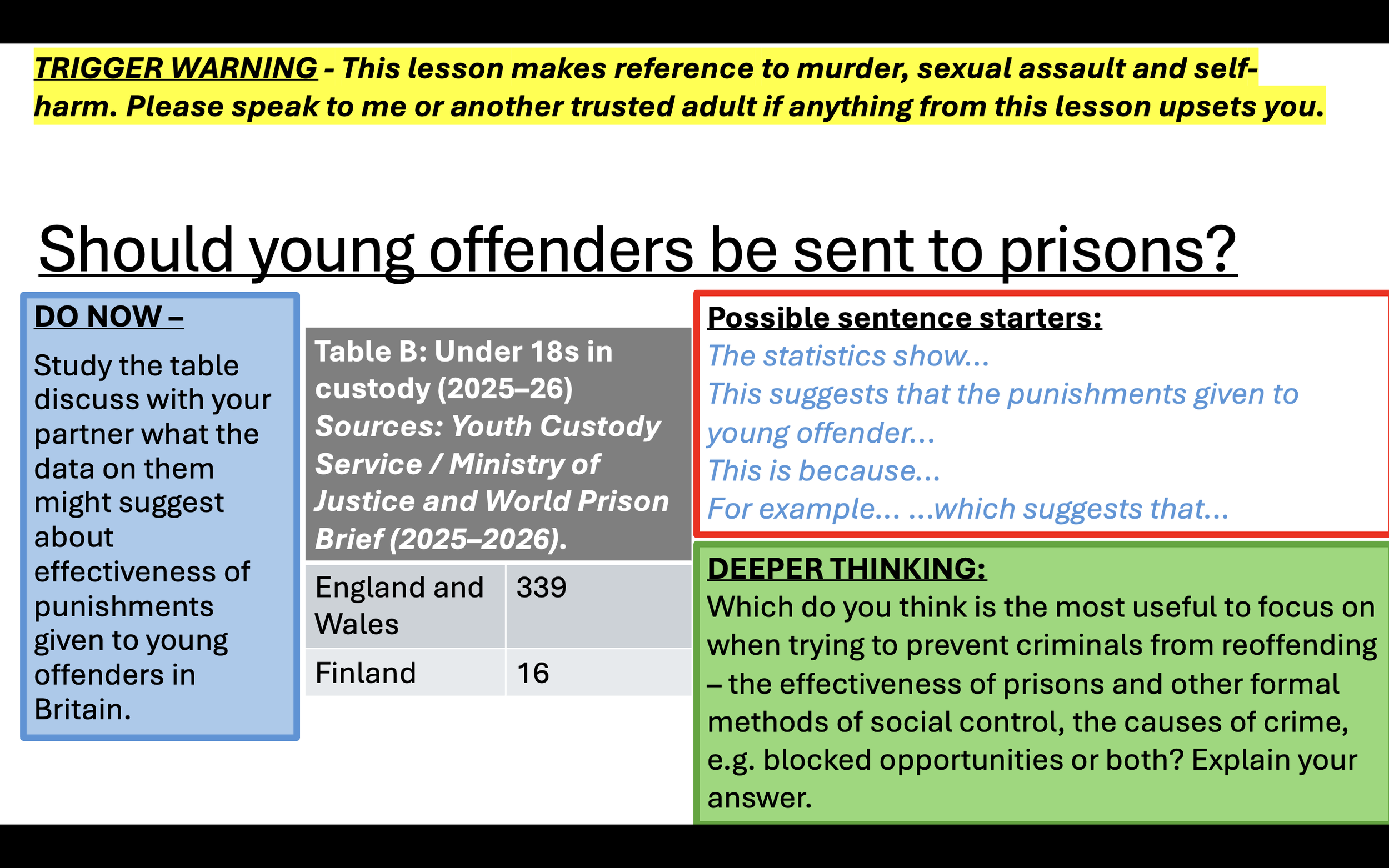
• Statistics activity more using up-to-date official data on reoffending by sentence length and under-18s in custody in England and Wales compared with Finland.
• Case studies of prisons in Finland, Bastoy Prison (Norway) and Justizzentrum Leoben (Austria).
• Initial class vote and oracy activity with sentence starters for discussion and debate.
• Exam practice: a 3-mark 'identify and describe' question and a 12-marker planning activity and a conclusion success criteria.
• Includes deeper thinking questions
• Includes a key term sheet with definitions for the lesson.
• Trigger warnings included where sensitive crimes are referenced.
•ANSWERS TO SOME ACTIVITIES INCLUDED.
•RESOURCES CAN BE FOUND AT THE END OF PPT.
•Detailed lesson with lots of scaffolding based on adaptive teaching that helps students describe the public debate over the use of the prison system vs community sentences (rehabilitation), explain the arguments for and against its use, and consider how useful those arguments are.
•Covers the following key terms: Prison system, Rehabilitation, Community service, Anti-social behaviourMinimum security prison (extension), Maximum security prison (extension).
•Makes reference to the following key terms students should already know, to promote a spiral curriculum: Youth crime – Social control – Formal vs informal social control – Written vs unwritten rules – Formal vs informal methods of social control – Conformity – Agencies and agents of social control vs socialisation – The criminal justice system – Official crime statistics – Socially constructed – Deterrent.
•DO NOW retrieval practice recapping social control, patterns of crime, formal methods of social control, the social construction of crime and criticisms of official crime statistics – with answers.
• Think–Pair–Share key term activity with tips for understanding and memorising definitions.
• Includes three video clips as activities on prisons.
• Statistics activity more using up-to-date official data on reoffending by sentence length and under-18s in custody in England and Wales compared with Finland.
• Case studies of prisons in Finland, Bastoy Prison (Norway) and Justizzentrum Leoben (Austria).
• Initial class vote and oracy activity with sentence starters for discussion and debate.
• Exam practice: a 3-mark 'identify and describe' question and a 12-marker planning activity and a conclusion success criteria.
• Includes deeper thinking questions
• Includes a key term sheet with definitions for the lesson.
• Trigger warnings included where sensitive crimes are referenced.
•ANSWERS TO SOME ACTIVITIES INCLUDED.
•RESOURCES CAN BE FOUND AT THE END OF PPT.