 Image 1 of 2
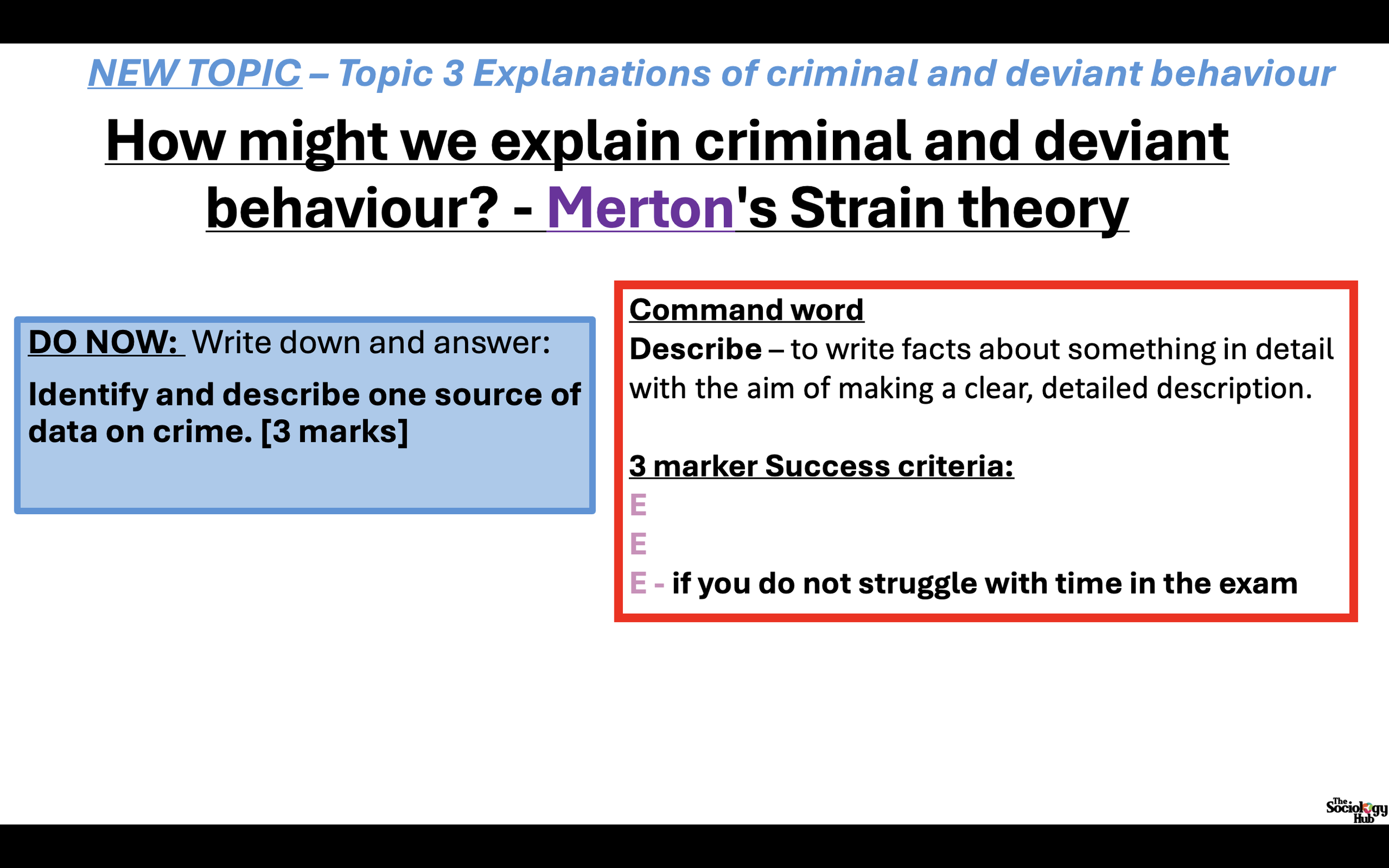 Image 2 of 2
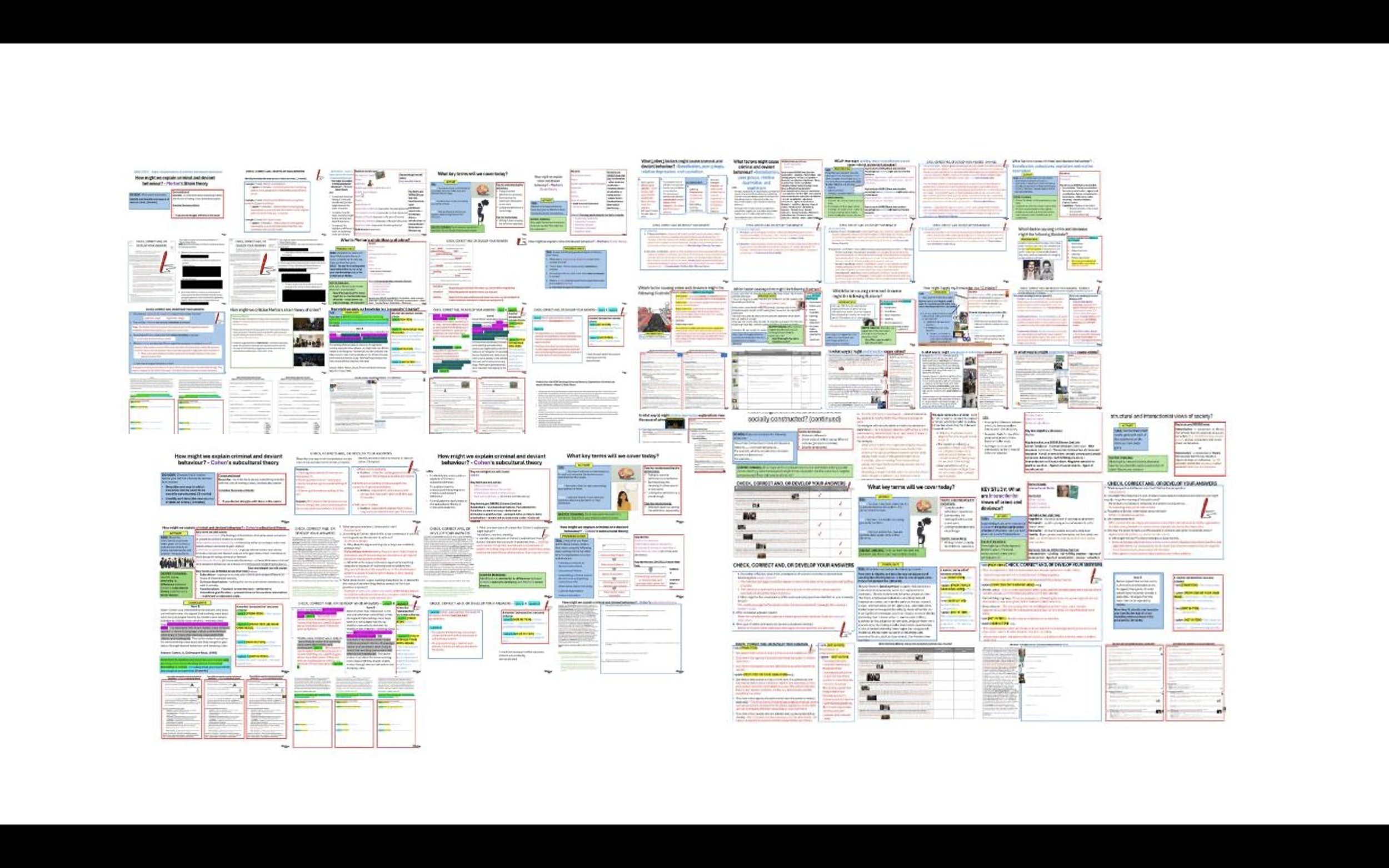
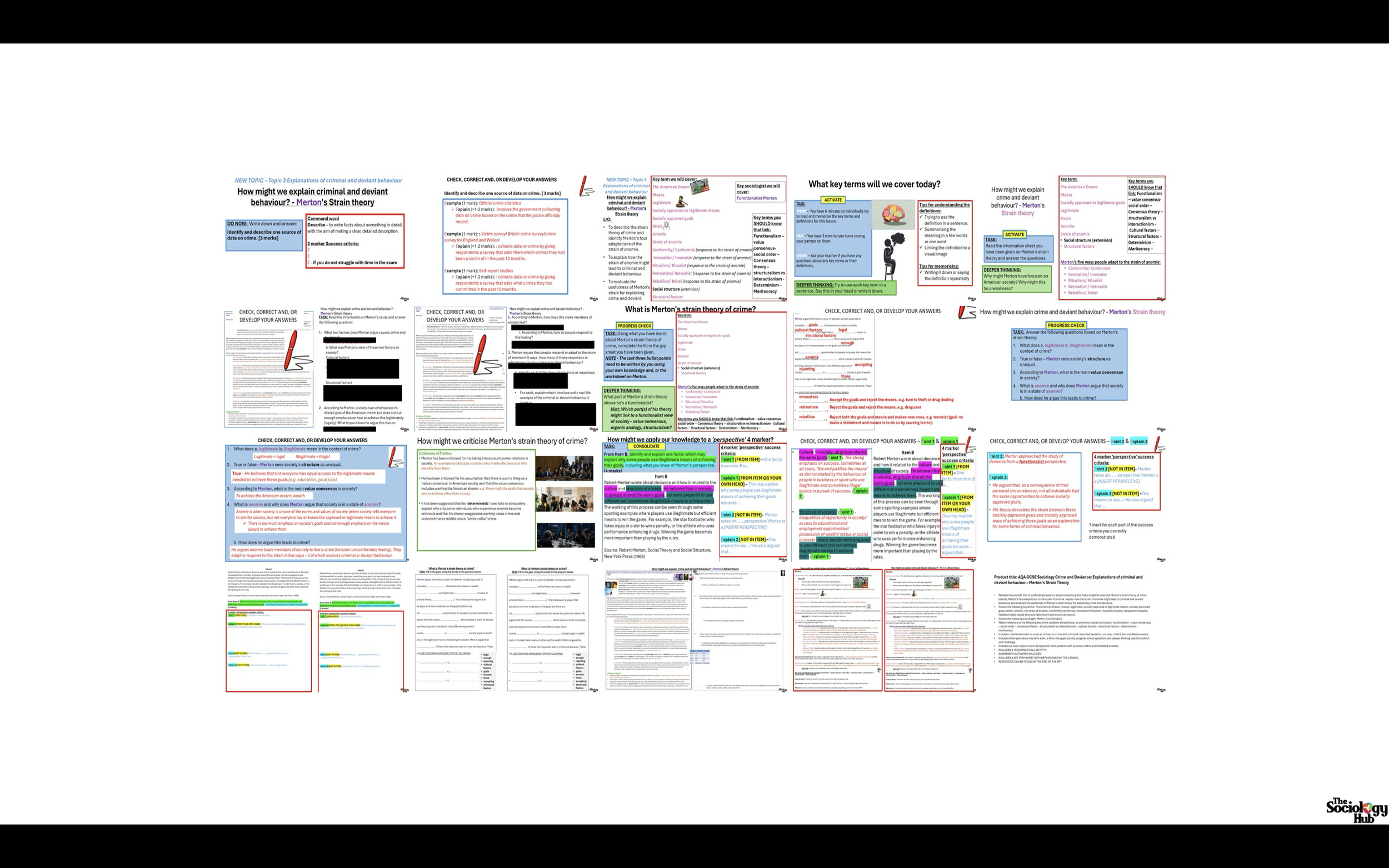
•Detailed lesson with lots of scaffolding based on adaptive teaching that helps students describe Merton’s strain theory of crime, identify Merton’s five adaptations to the strain of anomie, explain how the strain of anomie might lead to criminal and deviant behaviour and evaluate the usefulness of Merton’s strain theory for explaining crime and deviance.
•Covers the following key terms: The American Dream, means, legitimate, socially approved or legitimate means, socially approved goals, strain, anomie, the strain of anomie, conformity/conformist, innovation/innovator, ritualism/ritualist, retreatism/retreatist, rebellion/rebel, social structure (extension) and structural factors.
•Covers the following sociologist: Merton (functionalist).
•Makes reference to the following key terms students should know, to promote a spiral curriculum: functionalism – value consensus – social order – consensus theory – structuralism vs interactionism – cultural factors – structural factors – determinism – meritocracy.
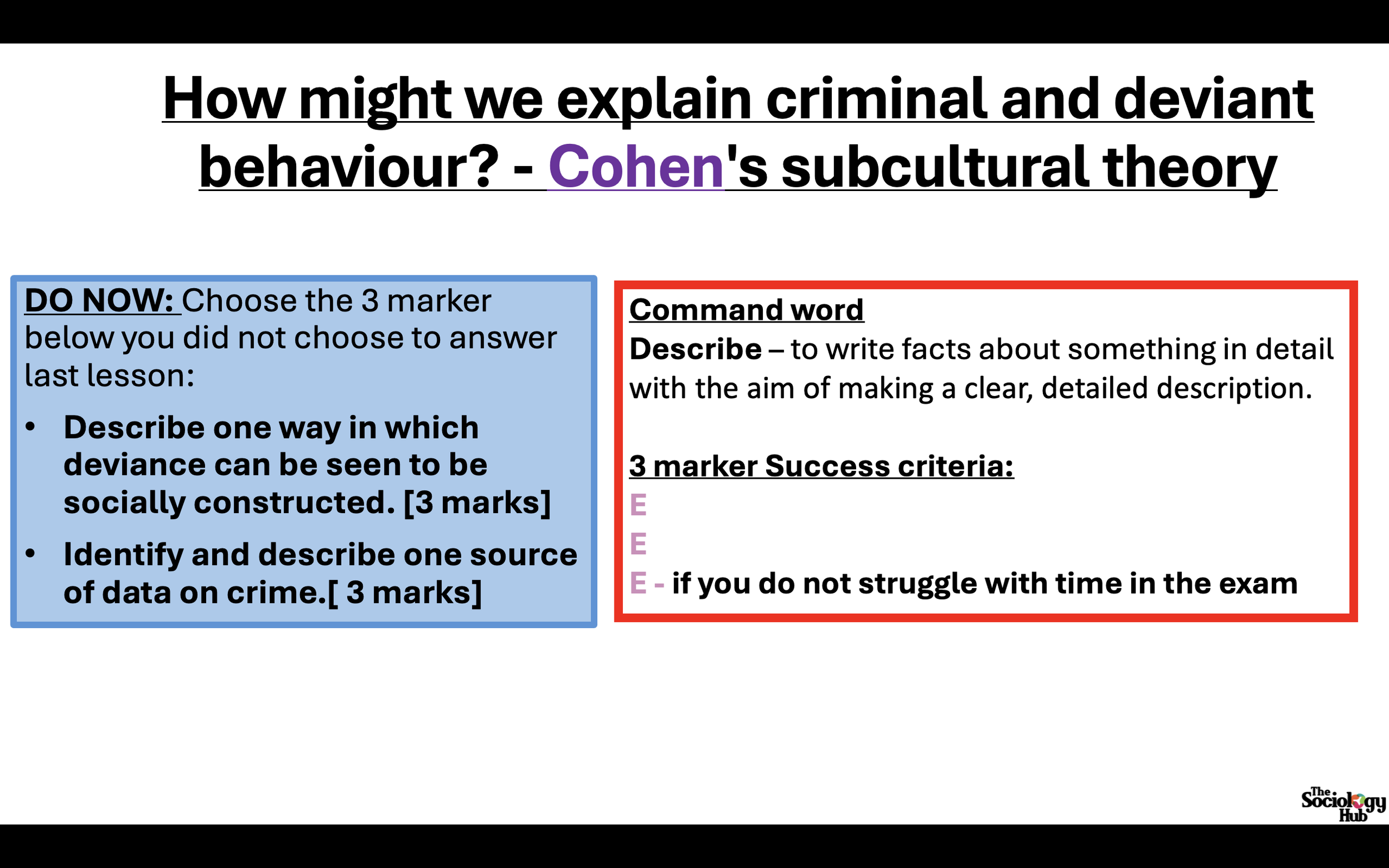
•Includes a retrieval starter on sources of data on crime with a 3-mark ‘identify and describe’ question, success criteria and modelled answers.
•Includes think–pair–share key term work, a fill-in-the-gaps activity, progress-check questions and deeper thinking tasks for stretch and challenge.
•Includes an exam-style 4-mark ‘perspective’ item question with success criteria and modelled answers.
•ANSWERS TO ALL ACTIVITIES INCLUDED.
•INCLUDES A KEY TERM SHEET WITH DEFINITIONS FOR THE LESSON.
•RESOURCES CAN BE FOUND AT THE END OF THE PPT.
•Detailed lesson with lots of scaffolding based on adaptive teaching that helps students describe Merton’s strain theory of crime, identify Merton’s five adaptations to the strain of anomie, explain how the strain of anomie might lead to criminal and deviant behaviour and evaluate the usefulness of Merton’s strain theory for explaining crime and deviance.
•Covers the following key terms: The American Dream, means, legitimate, socially approved or legitimate means, socially approved goals, strain, anomie, the strain of anomie, conformity/conformist, innovation/innovator, ritualism/ritualist, retreatism/retreatist, rebellion/rebel, social structure (extension) and structural factors.
•Covers the following sociologist: Merton (functionalist).
•Makes reference to the following key terms students should know, to promote a spiral curriculum: functionalism – value consensus – social order – consensus theory – structuralism vs interactionism – cultural factors – structural factors – determinism – meritocracy.
•Includes a retrieval starter on sources of data on crime with a 3-mark ‘identify and describe’ question, success criteria and modelled answers.
•Includes think–pair–share key term work, a fill-in-the-gaps activity, progress-check questions and deeper thinking tasks for stretch and challenge.
•Includes an exam-style 4-mark ‘perspective’ item question with success criteria and modelled answers.
•ANSWERS TO ALL ACTIVITIES INCLUDED.
•INCLUDES A KEY TERM SHEET WITH DEFINITIONS FOR THE LESSON.
•RESOURCES CAN BE FOUND AT THE END OF THE PPT.