 Image 1 of 2
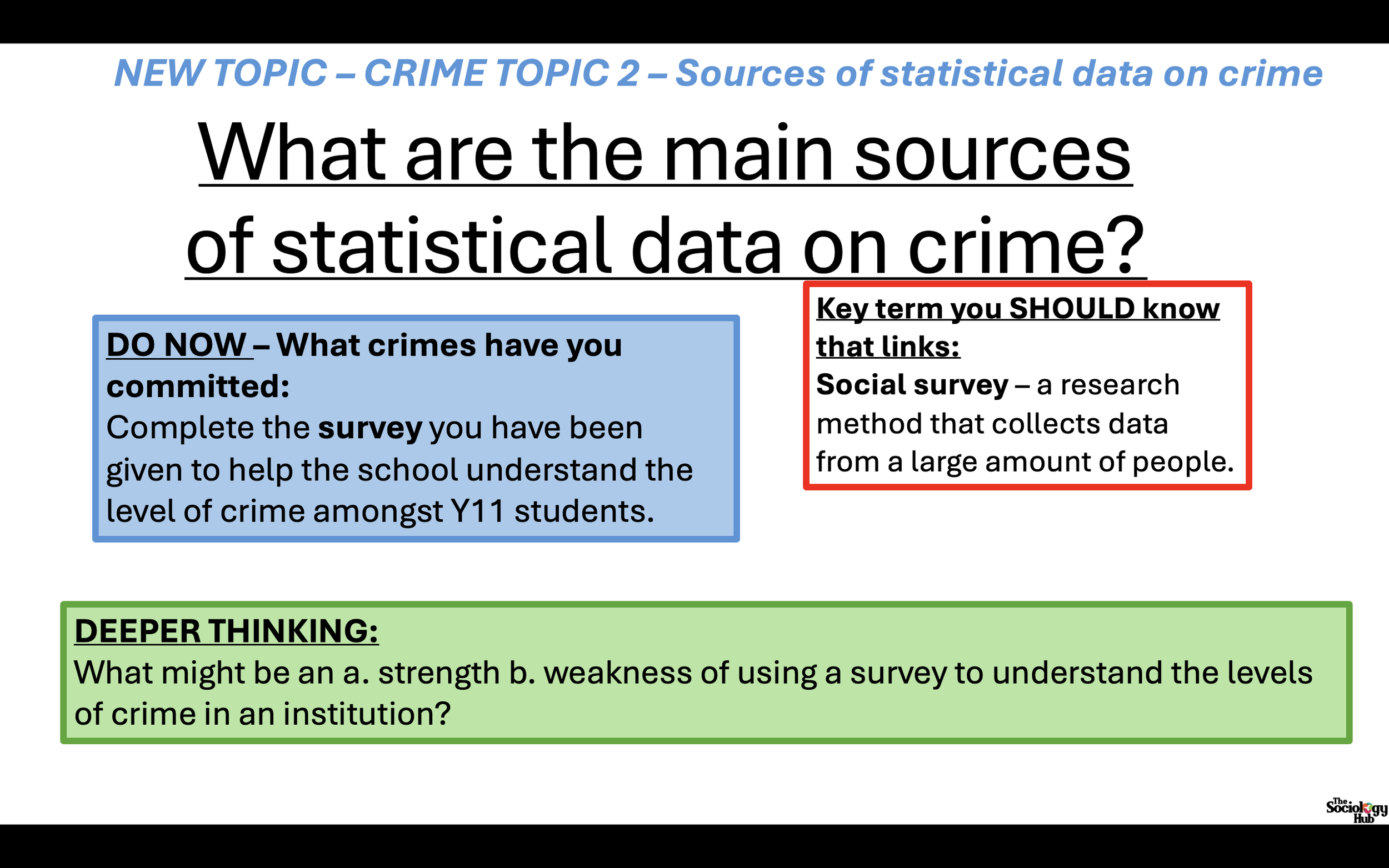 Image 2 of 2
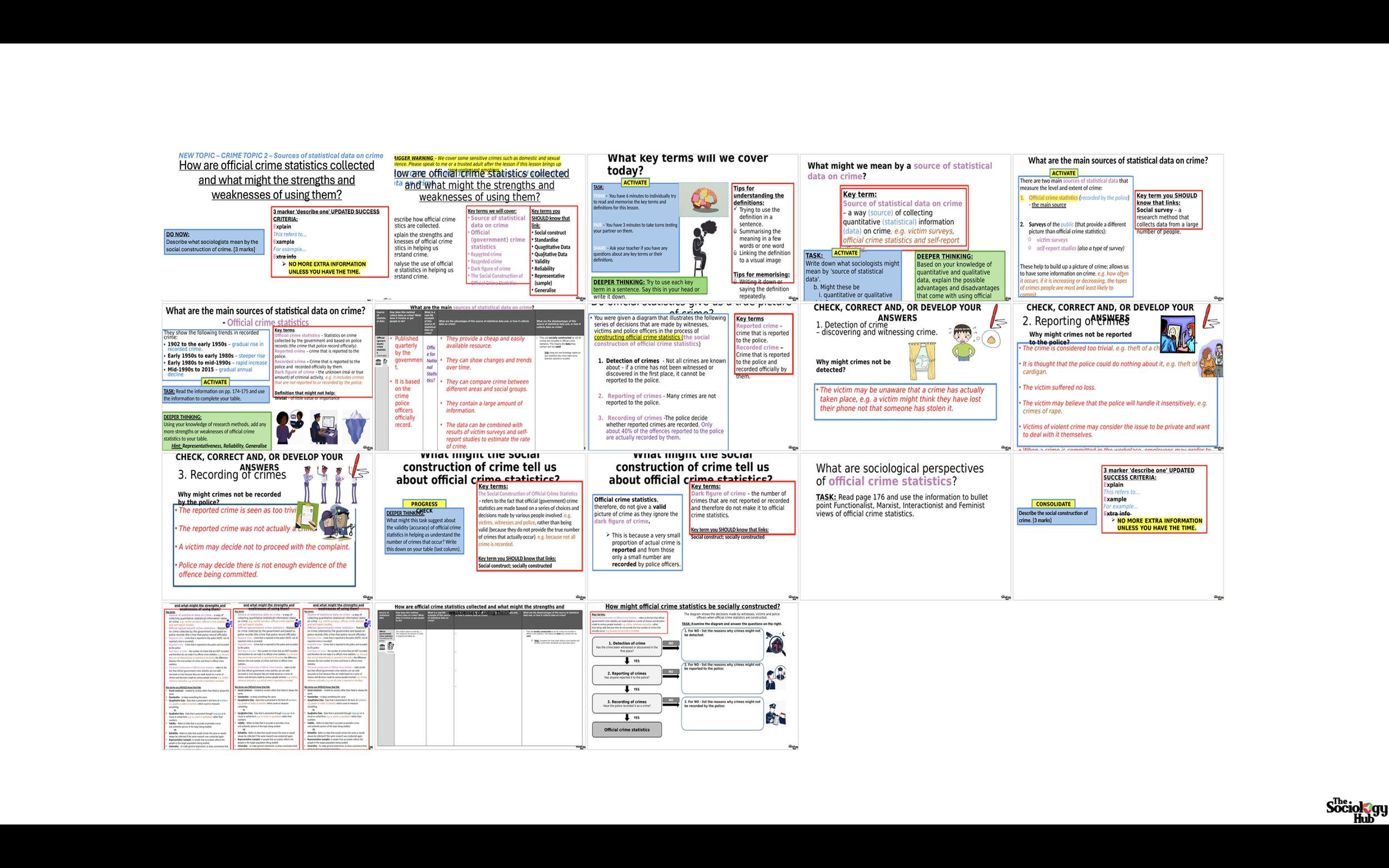
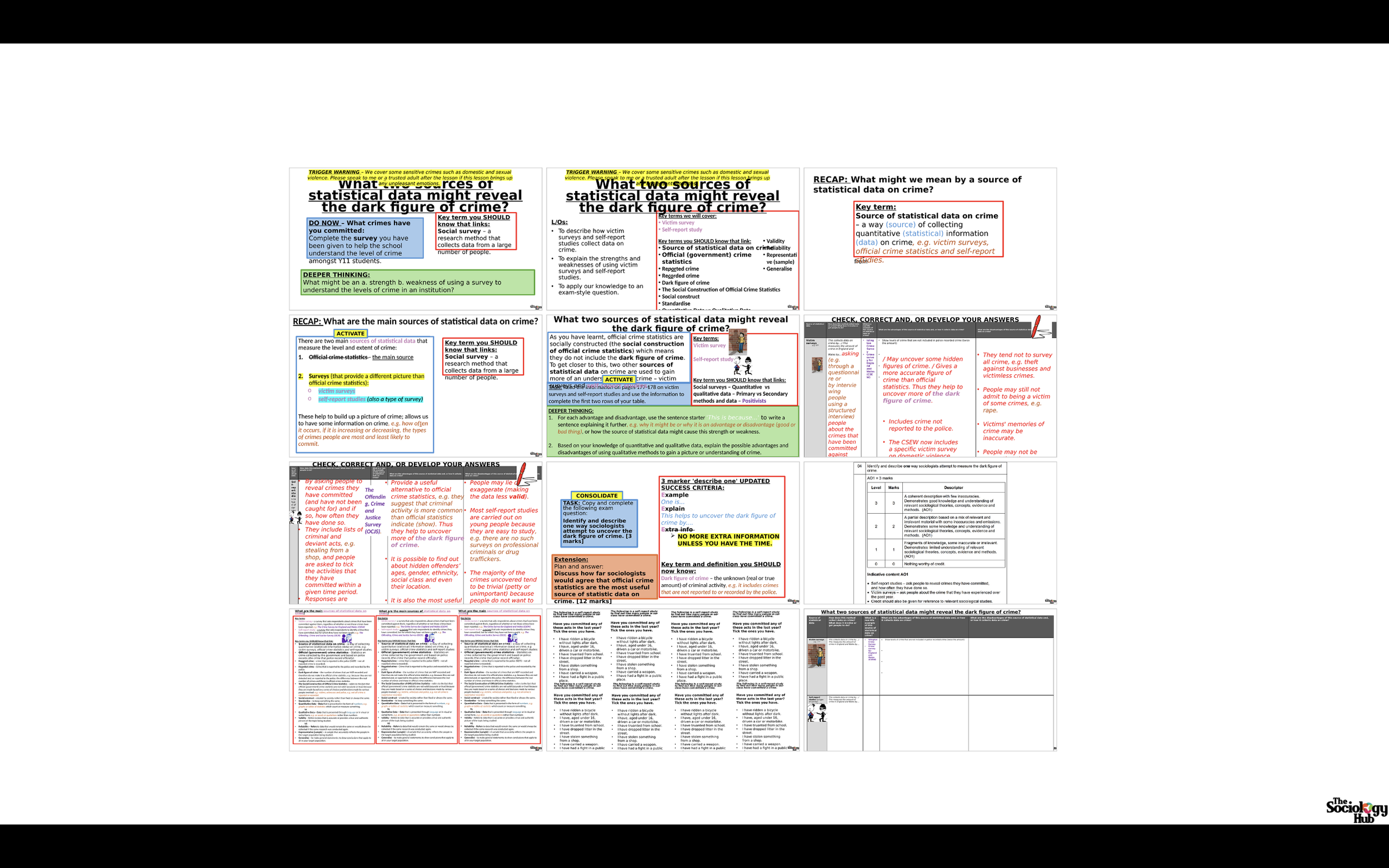
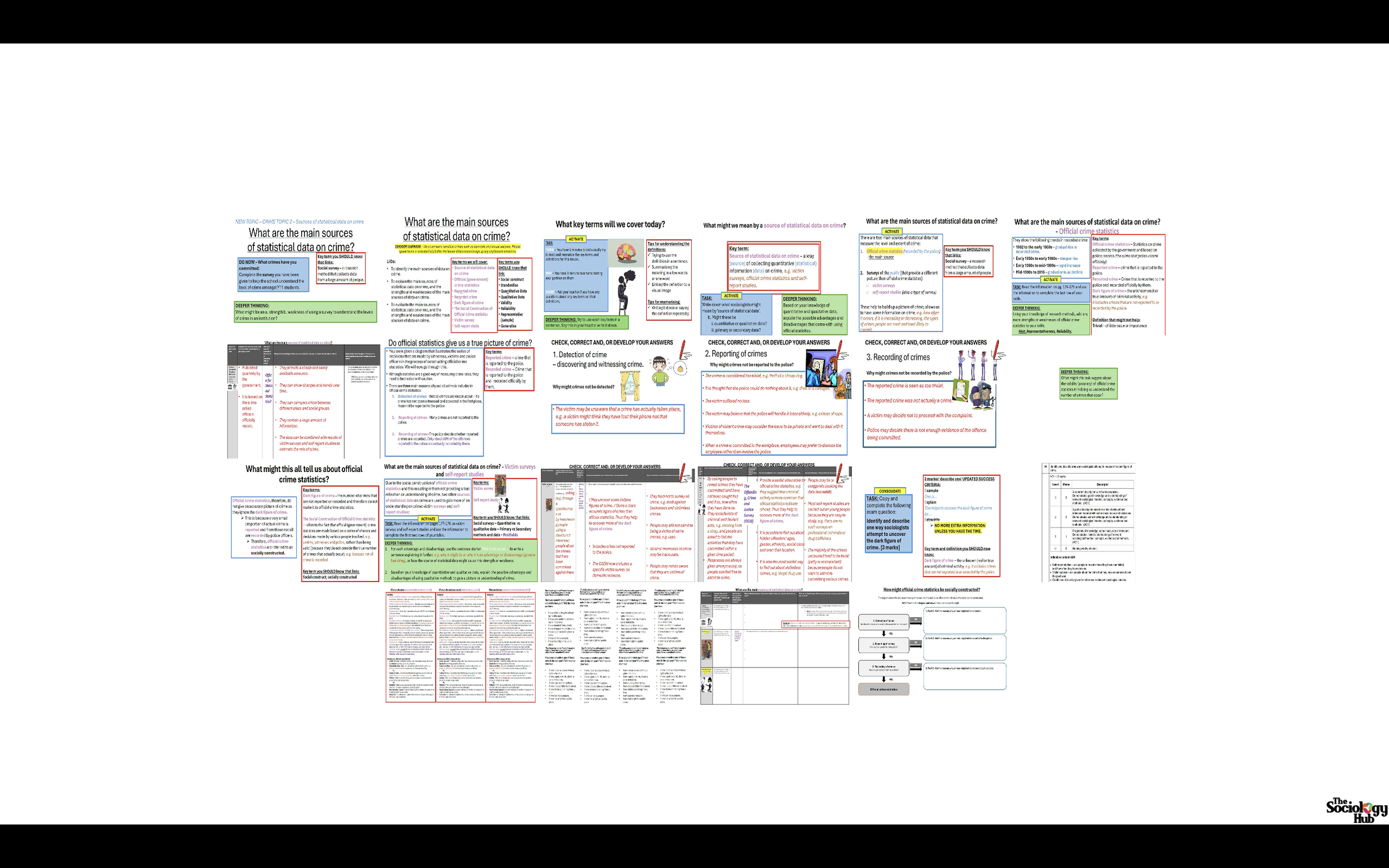
•Detailed lesson with lots of scaffolding based on adaptive teaching that helps students identify the main sources of statistical data on crime (official crime statistics, victim surveys and self-report studies), and explain and evaluate their strengths and weaknesses.
•Covers how and why official crime statistics are socially constructed through the detection, reporting and recording of crime, and what this means for the dark figure of crime and the validity of the data.
•Covers the following key terms: Source of statistical data on crime, Official (government) crime statistics, Reported crime, Recorded crime, Dark figure of crime, The Social Construction of Official Crime Statistics, Victim survey, Self-report study.
•Makes reference to the following key terms students should already know, to promote a spiral curriculum: Social survey – Social construct – Standardise – Quantitative data – Qualitative data – Validity – Reliability – Representative (sample) – Generalise – Primary and secondary methods and data – Positivists.
•Real-life examples included: the Crime Survey for England and Wales (CSEW), the Islington Crime Survey and the Offending, Crime and Justice Survey (OCJS).
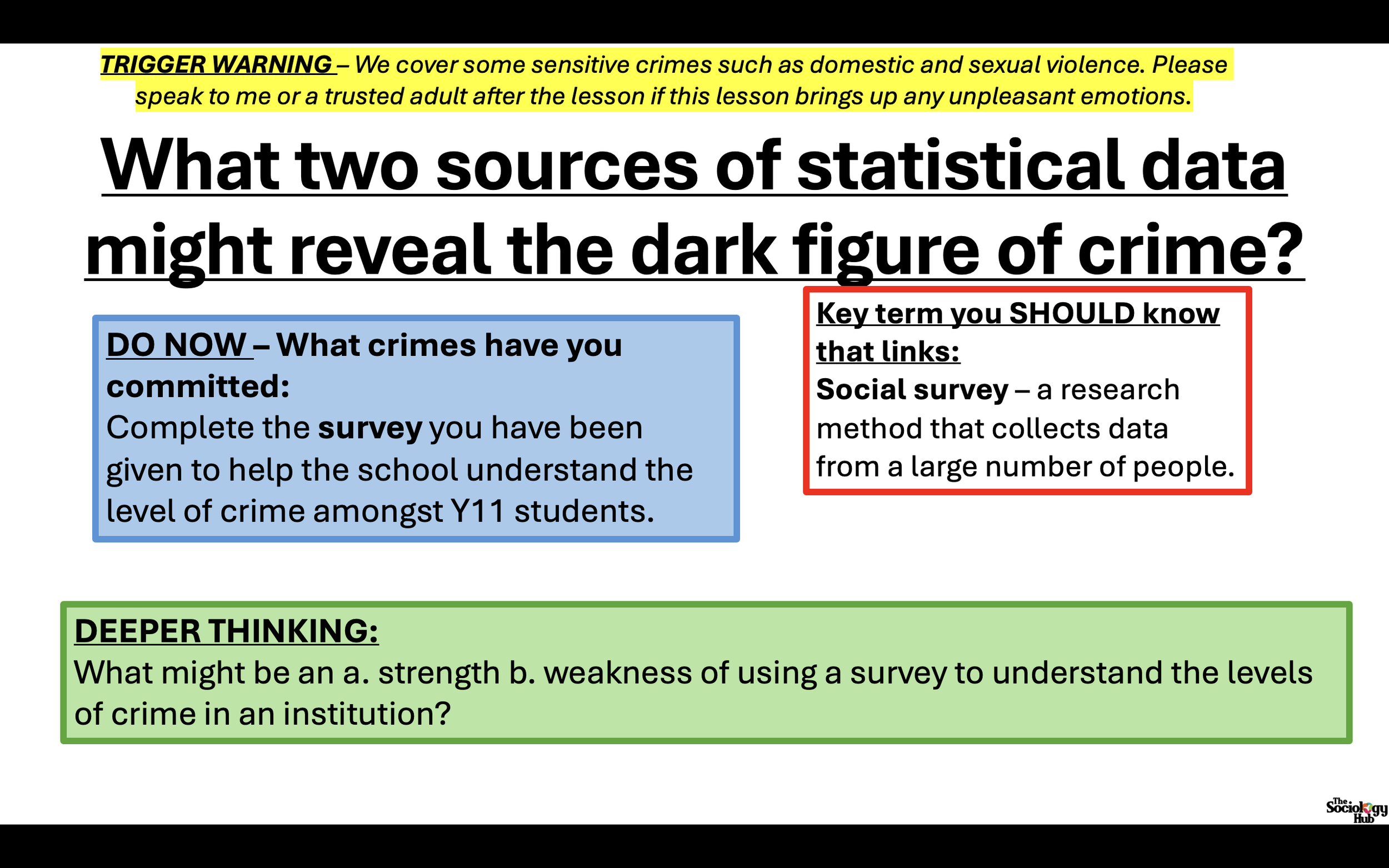
•DO NOW self-report study activity that students complete about their own behaviour.
•Think, Pair, Share explicit vocabulary activity with memorisation and understanding strategies modelled for students.
•‘Decoding a key term’ modelling activity for ‘source of statistical data on crime’.
•Summary table activity comparing official crime statistics, victim surveys and self-report studies, with CHECK, CORRECT AND, OR DEVELOP YOUR ANSWERS slides.
•‘How might official crime statistics be socially constructed?’ worksheet built around a decision-making flow diagram.
•DEEPER THINKING stretch and challenge prompts on every activity.
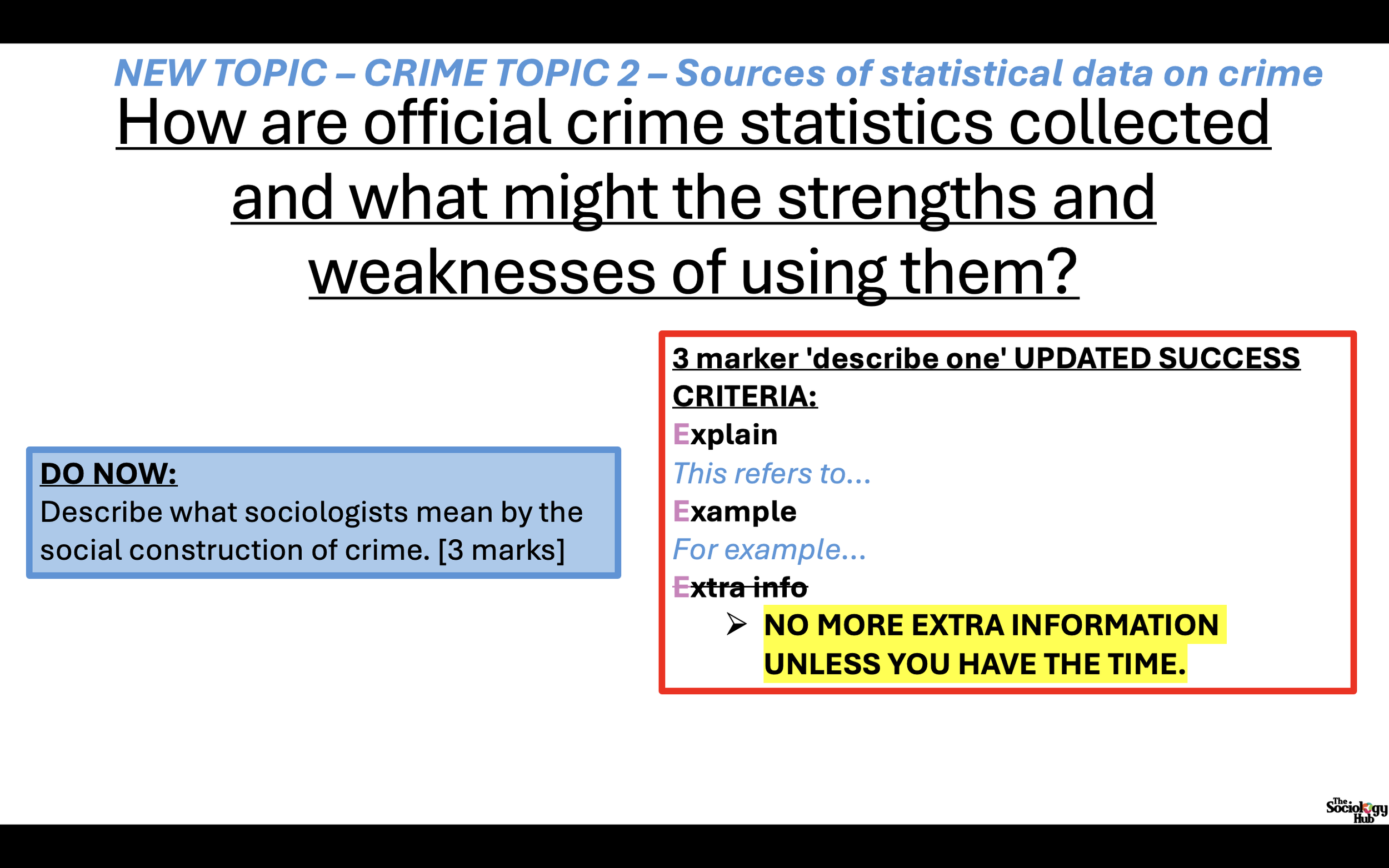
•3 mark ‘identify and describe one’ exam question with updated success criteria and sentence starters.
•Trigger warning slide included for sensitive crimes.
•INCLUDES A KEY TERM SHEET WITH DEFINITIONS FOR THE LESSON.
•ANSWERS TO MAIN ACTIVITIES INCLUDED.
•Main activities require pages 174–178 of the 9-1 AQA GCSE Sociology textbook by Bown.
•Has a brief task on sociological perspectives of official crime statistics
•RESOURCES CAN BE FOUND AT THE END OF THE PPT..
•Detailed lesson with lots of scaffolding based on adaptive teaching that helps students identify the main sources of statistical data on crime (official crime statistics, victim surveys and self-report studies), and explain and evaluate their strengths and weaknesses.
•Covers how and why official crime statistics are socially constructed through the detection, reporting and recording of crime, and what this means for the dark figure of crime and the validity of the data.
•Covers the following key terms: Source of statistical data on crime, Official (government) crime statistics, Reported crime, Recorded crime, Dark figure of crime, The Social Construction of Official Crime Statistics, Victim survey, Self-report study.
•Makes reference to the following key terms students should already know, to promote a spiral curriculum: Social survey – Social construct – Standardise – Quantitative data – Qualitative data – Validity – Reliability – Representative (sample) – Generalise – Primary and secondary methods and data – Positivists.
•Real-life examples included: the Crime Survey for England and Wales (CSEW), the Islington Crime Survey and the Offending, Crime and Justice Survey (OCJS).
•DO NOW self-report study activity that students complete about their own behaviour.
•Think, Pair, Share explicit vocabulary activity with memorisation and understanding strategies modelled for students.
•‘Decoding a key term’ modelling activity for ‘source of statistical data on crime’.
•Summary table activity comparing official crime statistics, victim surveys and self-report studies, with CHECK, CORRECT AND, OR DEVELOP YOUR ANSWERS slides.
•‘How might official crime statistics be socially constructed?’ worksheet built around a decision-making flow diagram.
•DEEPER THINKING stretch and challenge prompts on every activity.
•3 mark ‘identify and describe one’ exam question with updated success criteria and sentence starters.
•Trigger warning slide included for sensitive crimes.
•INCLUDES A KEY TERM SHEET WITH DEFINITIONS FOR THE LESSON.
•ANSWERS TO MAIN ACTIVITIES INCLUDED.
•Main activities require pages 174–178 of the 9-1 AQA GCSE Sociology textbook by Bown.
•Has a brief task on sociological perspectives of official crime statistics
•RESOURCES CAN BE FOUND AT THE END OF THE PPT..