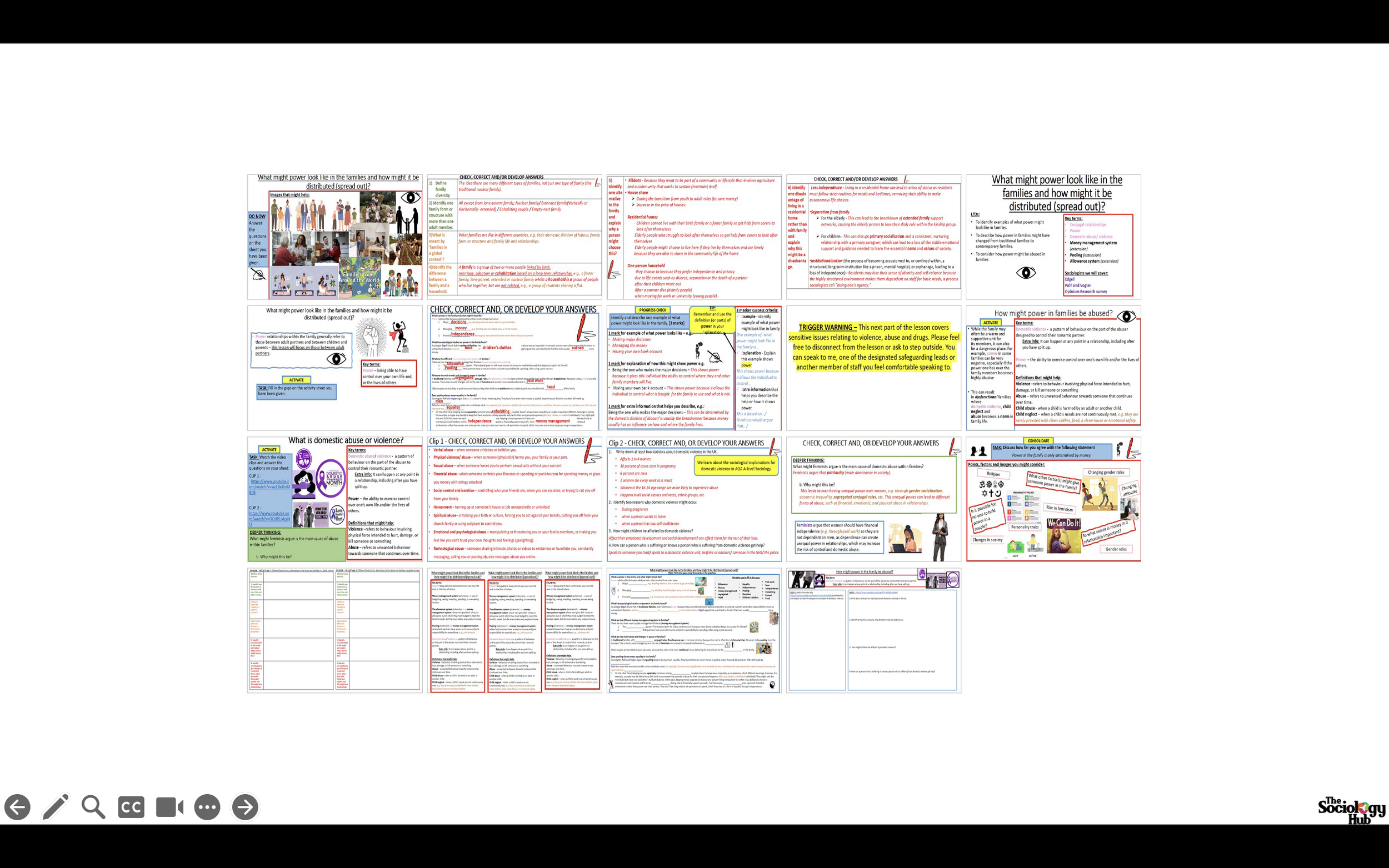
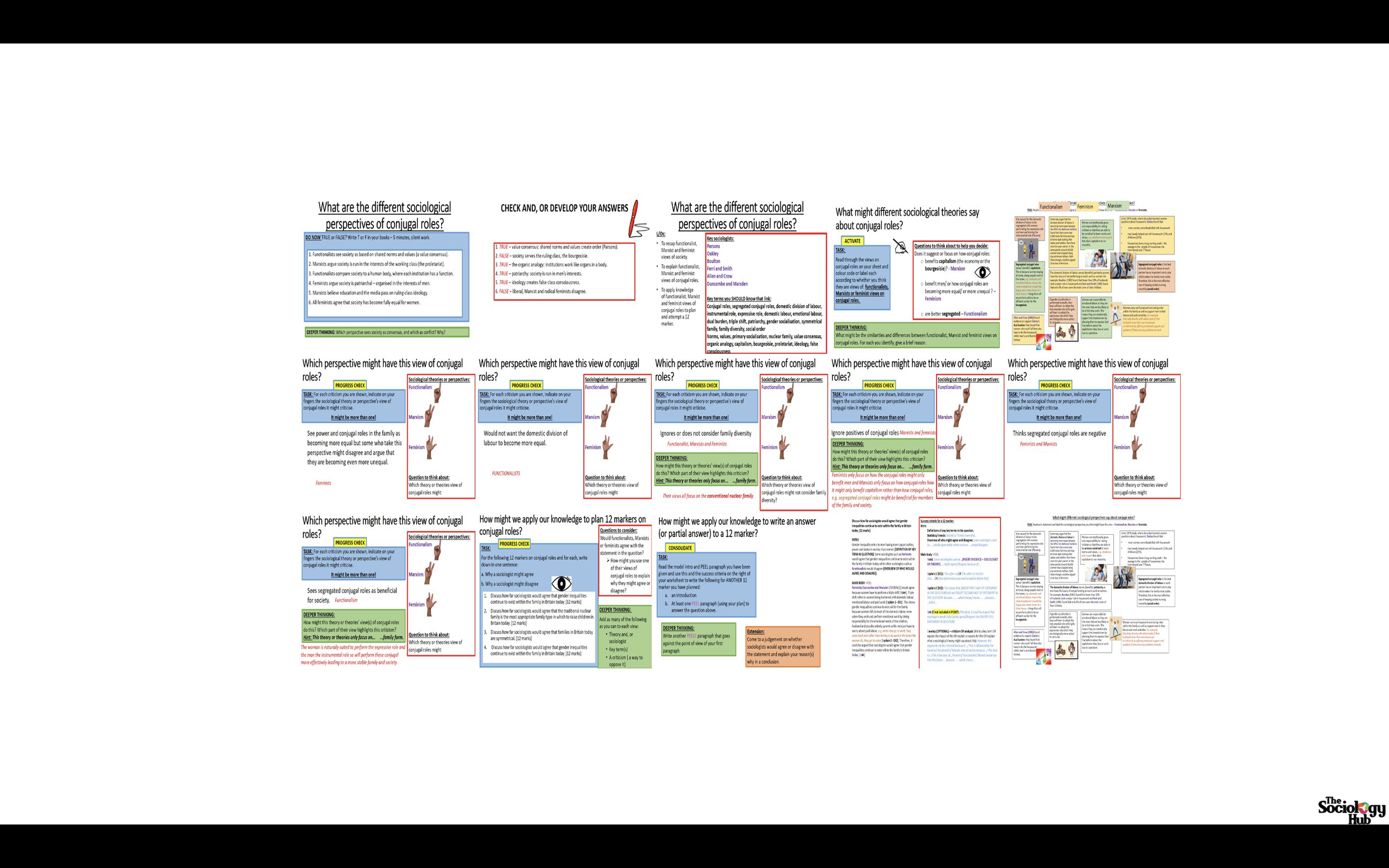
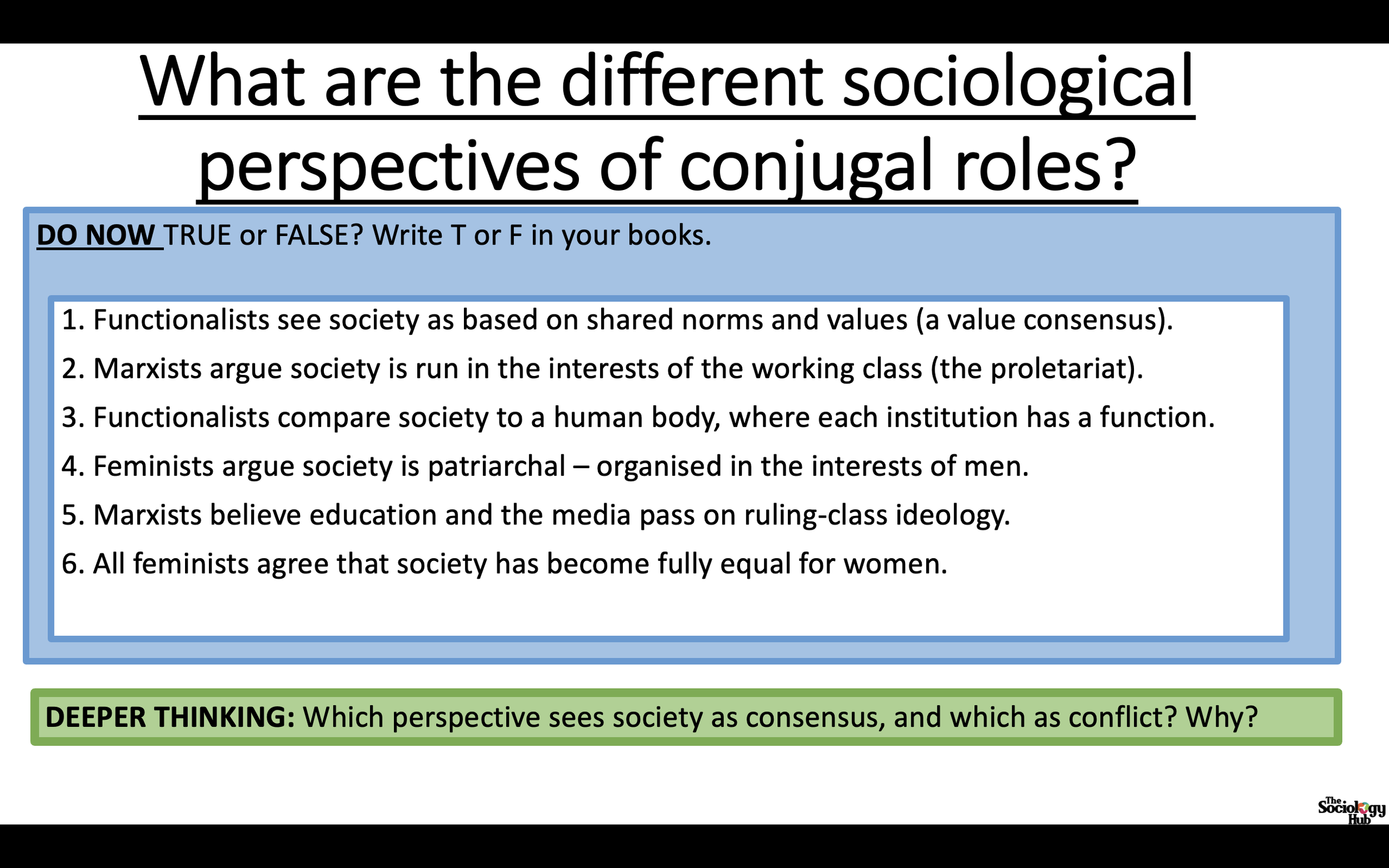
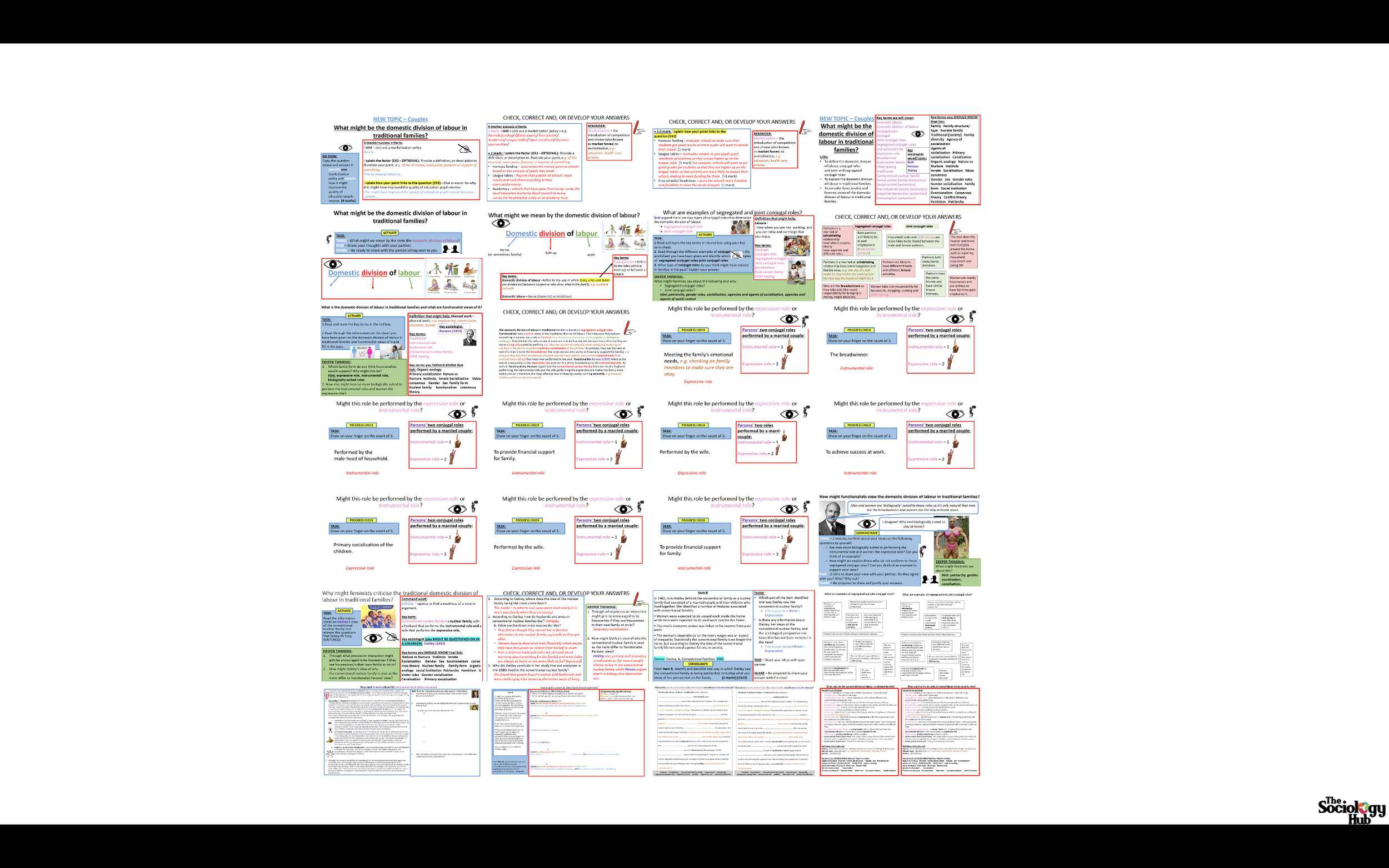
 Image 1 of 2
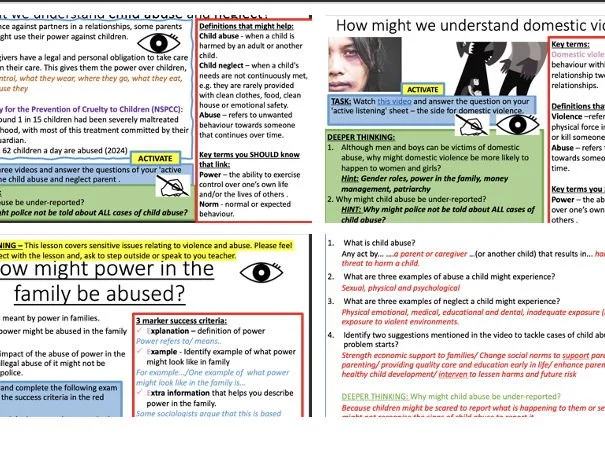
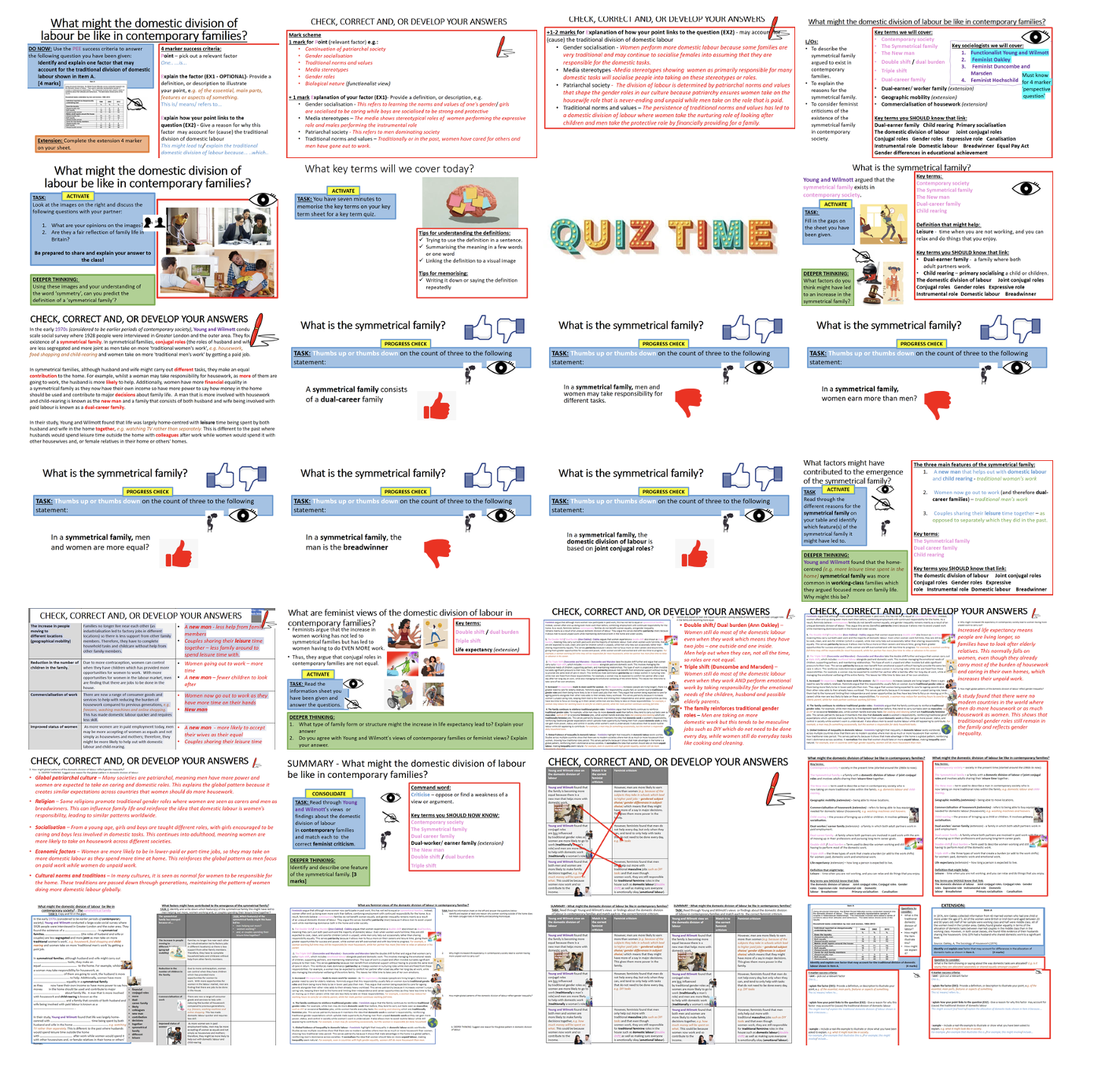
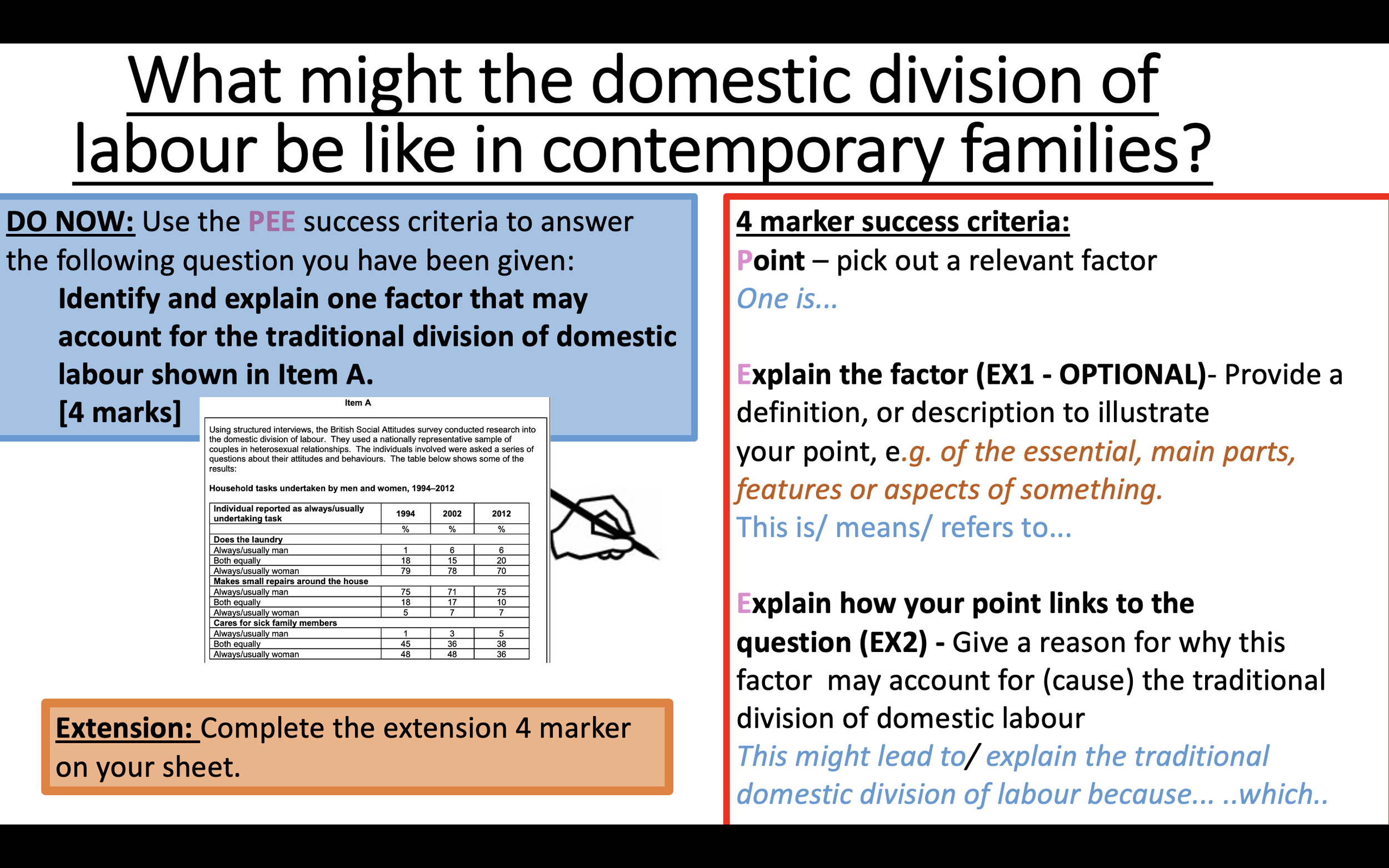 Image 2 of 2
•Detailed lesson with lots of scaffolding based on adaptive teaching that helps students describe the symmetrical family argued to exist in contemporary families, explain the reasons for the symmetrical family and consider feminist criticisms of its existence in contemporary society.
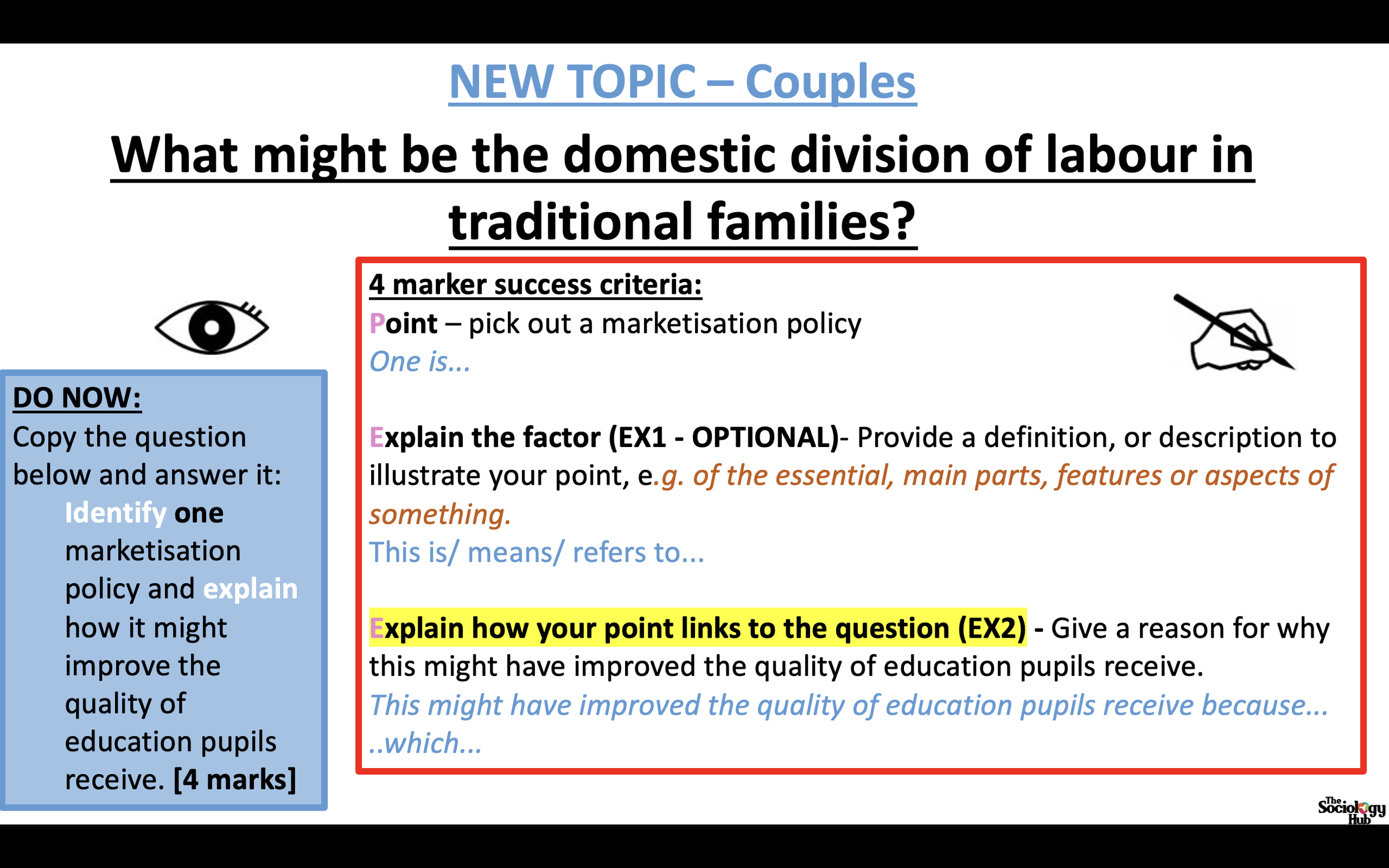
•Two 4 marker item A questions on the traditional domestic division of labour (last lesson) with student friendly mark-scheme for one of them.
•Includes a teaching to all activity.
•Includes deeper thinking prompts for stretch and challenge on every main task.
•Covers the following key terms: Contemporary society, The symmetrical family, The new man, Double shift / dual burden, Triple shift, Dual-career family. Dual-earner / worker family (extension), Geographic mobility (extension), Commercialisation of housework (extension), Child rearing and Life expectancy (extension).
•Covers the following sociologists: Functionalist Young and Wilmott, feminist Oakley, feminist Duncombe and Marsden, feminist Hochschild.
•Makes reference to the following key terms students might know to promote a spiral curriculum: The domestic division of labour – Conjugal roles – Joint conjugal roles – Gender roles – Expressive role – Instrumental role – Domestic labour – Breadwinner – Dual-earner family – Child rearing – Primary socialisation – Canalisation – Equal Pay Act – Gender differences in educational achievement.
•Pedagogical approaches used: retrieval practice, adaptive teaching and scaffolding, dual coding, questioning for deeper thinking, spiral curriculum links, and assessment for learning through check, correct and develop your answers slides.
•ANSWERS TO ALL ACTIVITIES INCLUDED
•INCLUDES A KEY TERM SHEET WITH DEFINITIONS FOR THE LESSON
•RESOURCES CAN BE FOUND AT THE END OF THE PPT
•Detailed lesson with lots of scaffolding based on adaptive teaching that helps students describe the symmetrical family argued to exist in contemporary families, explain the reasons for the symmetrical family and consider feminist criticisms of its existence in contemporary society.
•Two 4 marker item A questions on the traditional domestic division of labour (last lesson) with student friendly mark-scheme for one of them.
•Includes a teaching to all activity.
•Includes deeper thinking prompts for stretch and challenge on every main task.
•Covers the following key terms: Contemporary society, The symmetrical family, The new man, Double shift / dual burden, Triple shift, Dual-career family. Dual-earner / worker family (extension), Geographic mobility (extension), Commercialisation of housework (extension), Child rearing and Life expectancy (extension).
•Covers the following sociologists: Functionalist Young and Wilmott, feminist Oakley, feminist Duncombe and Marsden, feminist Hochschild.
•Makes reference to the following key terms students might know to promote a spiral curriculum: The domestic division of labour – Conjugal roles – Joint conjugal roles – Gender roles – Expressive role – Instrumental role – Domestic labour – Breadwinner – Dual-earner family – Child rearing – Primary socialisation – Canalisation – Equal Pay Act – Gender differences in educational achievement.
•Pedagogical approaches used: retrieval practice, adaptive teaching and scaffolding, dual coding, questioning for deeper thinking, spiral curriculum links, and assessment for learning through check, correct and develop your answers slides.
•ANSWERS TO ALL ACTIVITIES INCLUDED
•INCLUDES A KEY TERM SHEET WITH DEFINITIONS FOR THE LESSON
•RESOURCES CAN BE FOUND AT THE END OF THE PPT