 Image 1 of 1
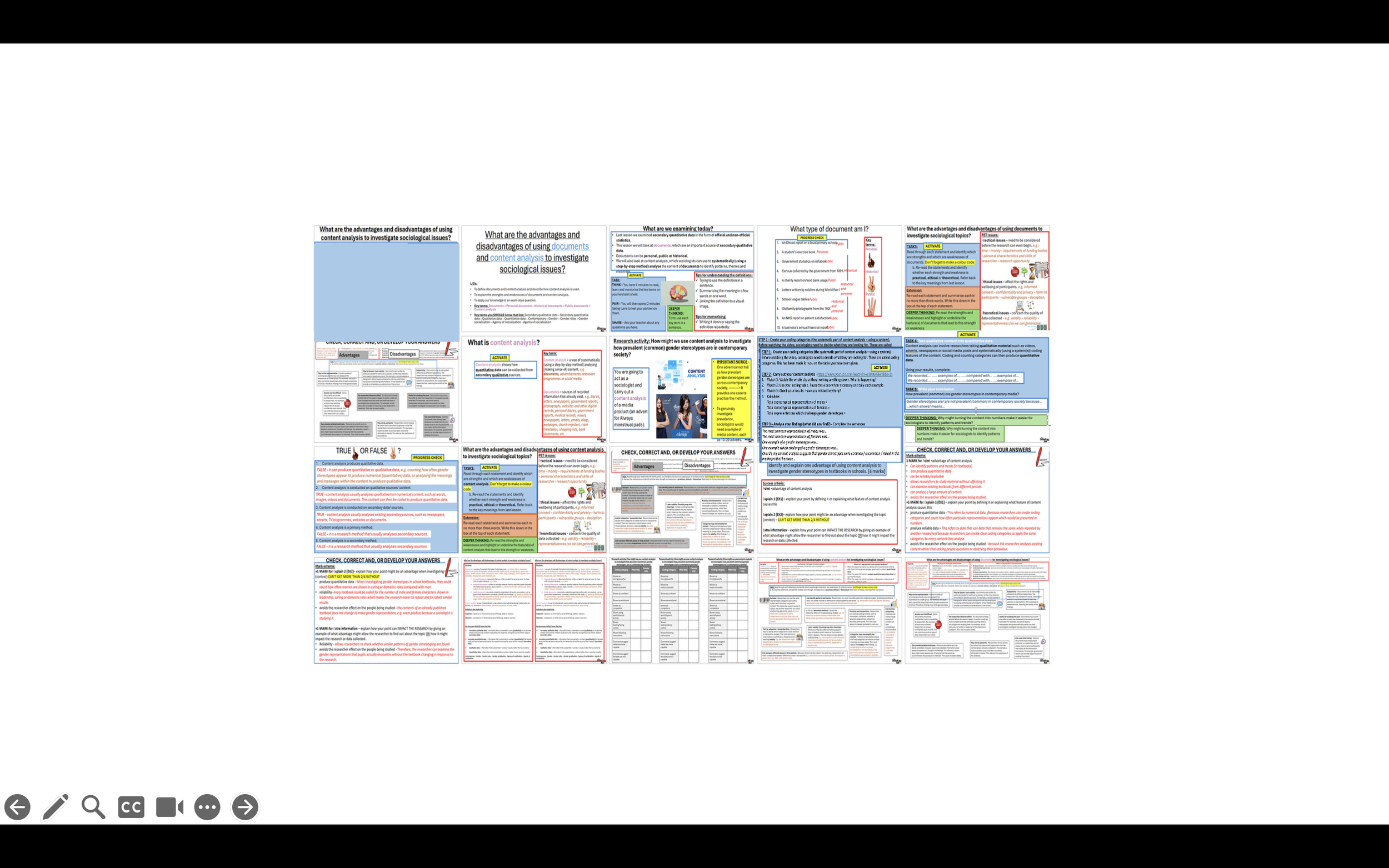
•Detailed lesson with lots of scaffolding based on adaptive teaching that helps students define documents and content analysis, describe how content analysis is used, explain the strengths and weaknesses of documents and content analysis, and apply their knowledge to an exam-style question.
•Covers the following key terms: Documents, Personal document, Historical documents, Public documents, Content analysis
•Makes reference to the following key terms students might know to promote a spiral curriculum: Secondary qualitative data – Secondary quantitative data – Qualitative data – Quantitative data – Contemporary – Gender – Gender roles – Gender socialisation – Agency of socialisation – Agents of socialisation – Official statistics – Non-official statistics – Practical, ethical and theoretical (PET) issues – Validity – Reliability – Representativeness – Generalisability – Researcher bias – Gender stereotypes
•NO STARTER ACTIVITY
•Includes a research activity where students act as sociologists and carry out their own content analysis of a video advert, using a coding table to investigate how prevalent gender stereotypes are and turning qualitative content into quantitative data.
•Includes a Think–Pair–Share key term activity and progress checks (document types; true or false).
•Includes a 4-mark exam question with success criteria and a mark scheme.
•ANSWERS TO MOST ACTIVITIES INCLUDED
•INCLUDES KEY TERM SHEET WITH DEFINITIONS FOR THE LESSON
•RESOURCES CAN BE FOUND AT THE END OF THE PPT