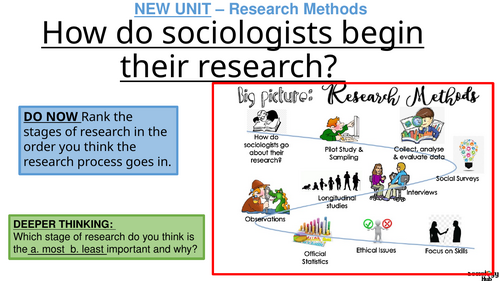
 Image 1 of 2
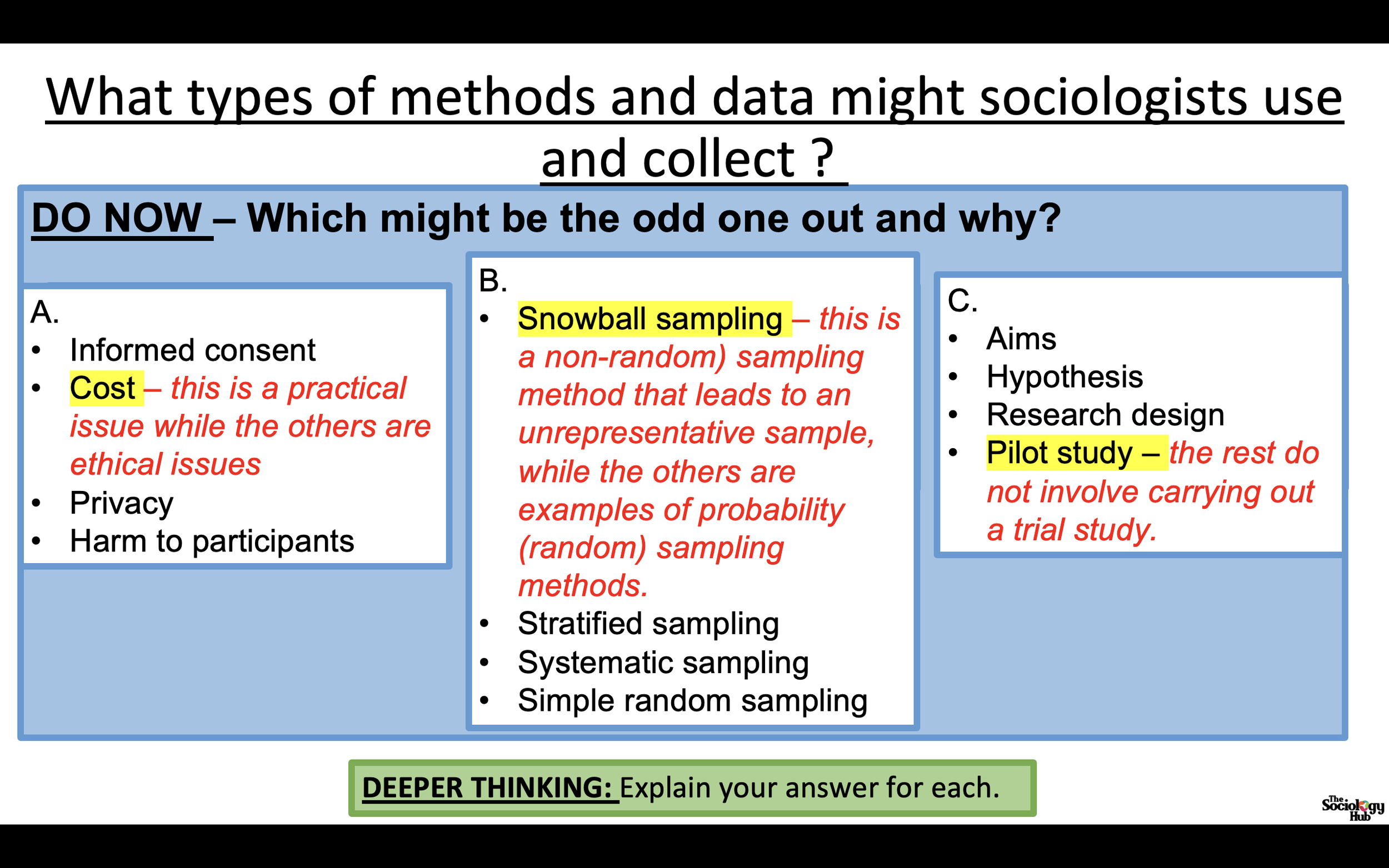 Image 2 of 2
•Detailed lesson with lots of scaffolding based on adaptive teaching that helps students identify the difference between primary and secondary methods, quantitative and qualitative data and open and closed questions, and explain their strengths and weaknesses.
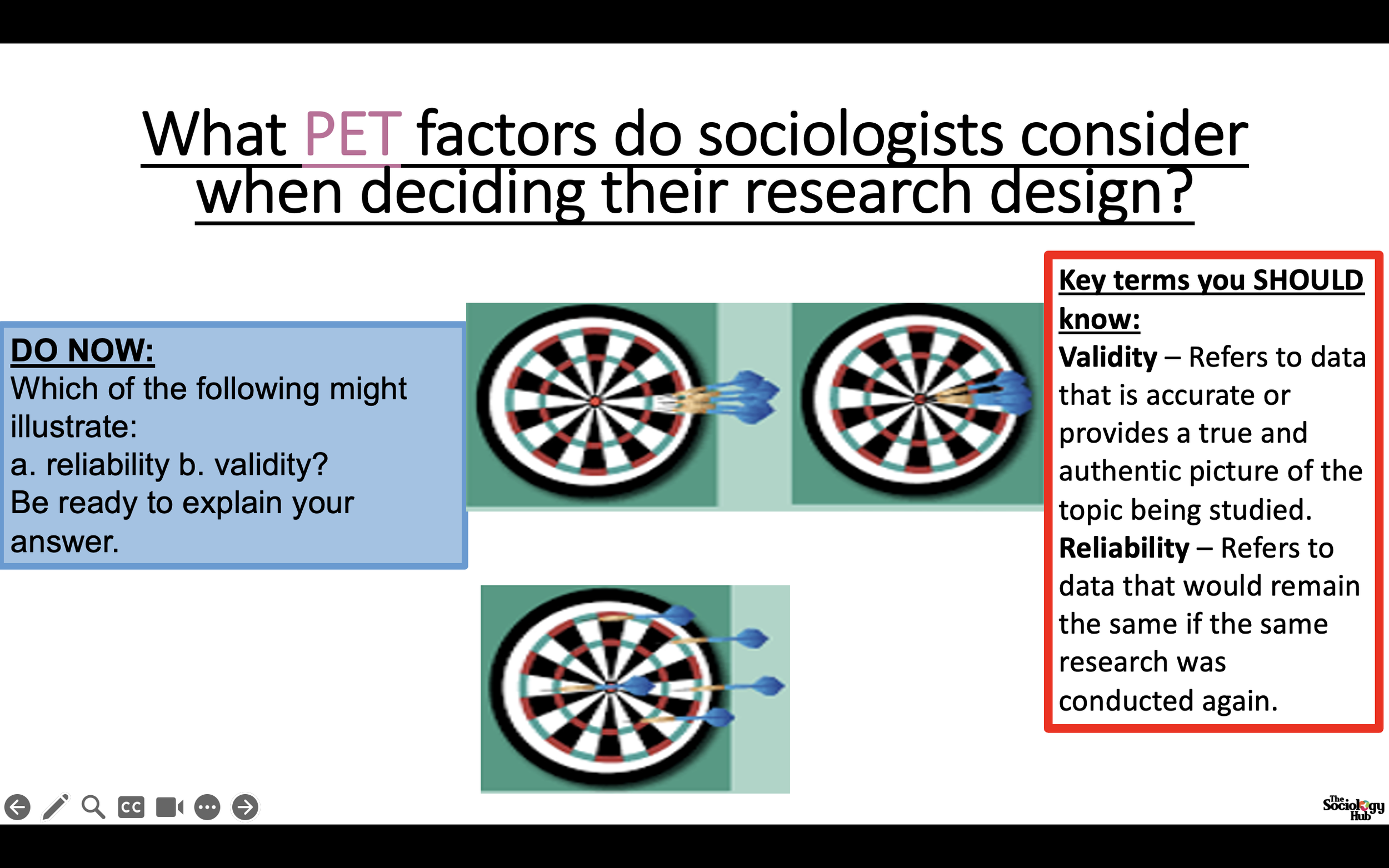
•Covers the following key terms: Research methods, Sociological research, Data, Primary methods, Secondary methods, Qualitative data, Quantitative data, Closed question, Open question, Validity, Reliability, Mixed method approach, Triangulation, Research process (extension) and Standardisation (extension)
•Makes reference to the following key terms students might know to promote a spiral curriculum: [Social] process – Sampling methods (snowball, stratified, systematic, simple random) – Pilot study – Aims – Hypothesis – Research design – Ethical vs practical issues (informed consent, privacy, harm to participants, cost)
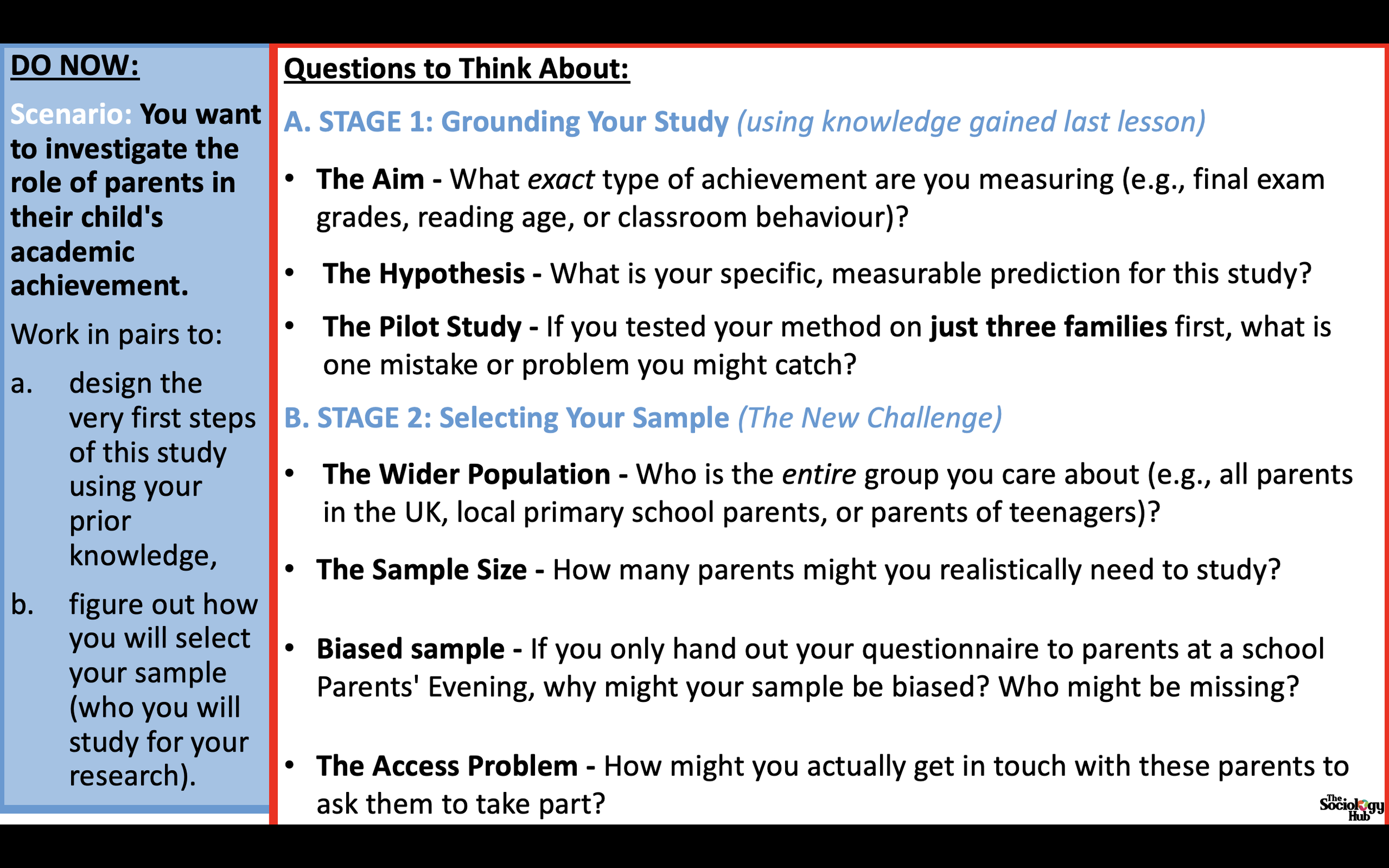
•Starter (Do Now) activity recaps sampling methods, the research process and ethical and practical issues.
•Students apply their knowledge to an 2-marker using success criteria
•Teaching to all activity included
INCLUDES KEY TERM SHEET WITH DEFINITIONS FOR THE LESSON
•ANSWERS TO ALL ACTIVITIES INCLUDED
•RESOURCES CAN BE FOUND AT THE END OF PPT