 Image 1 of 2
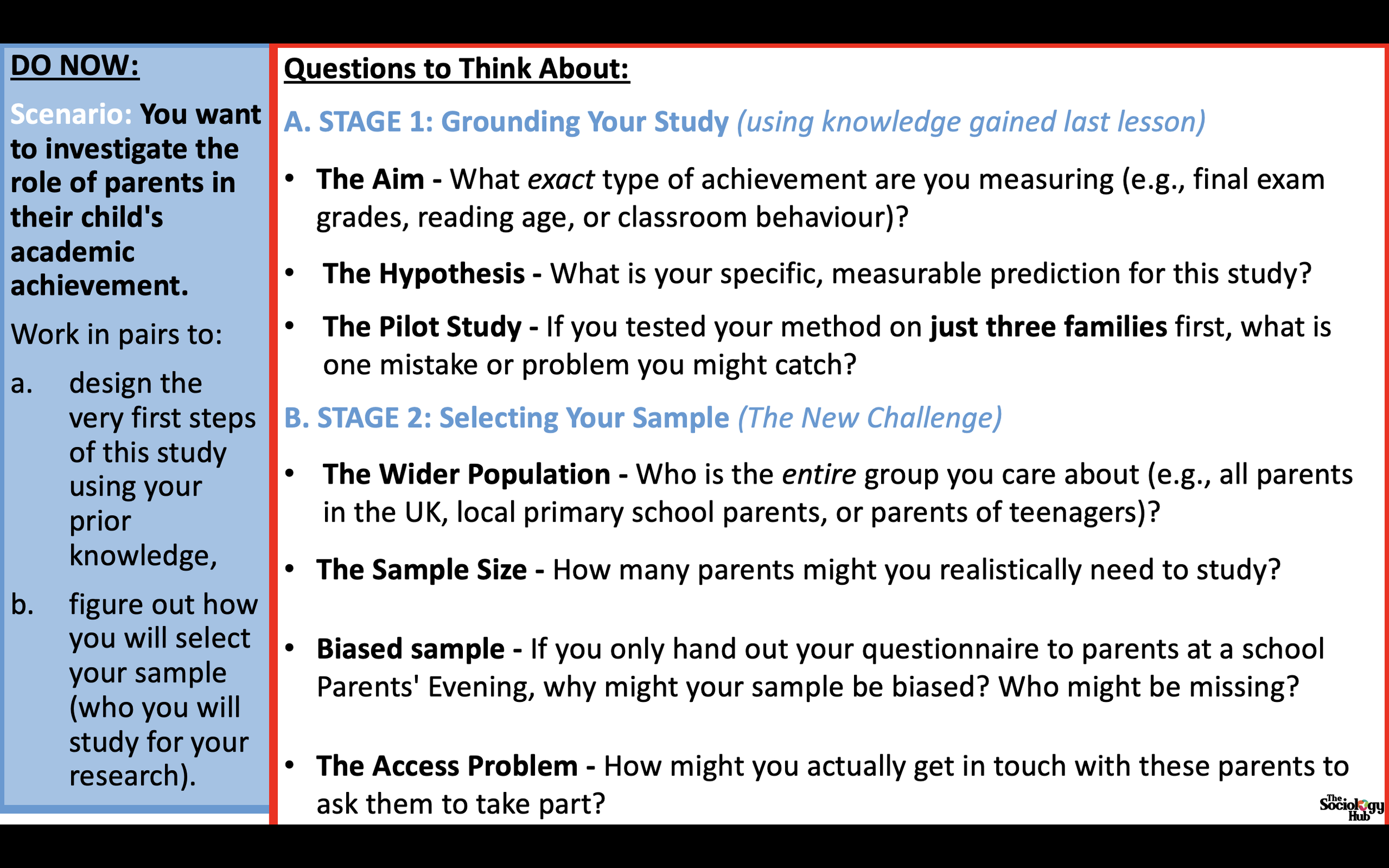 Image 2 of 2
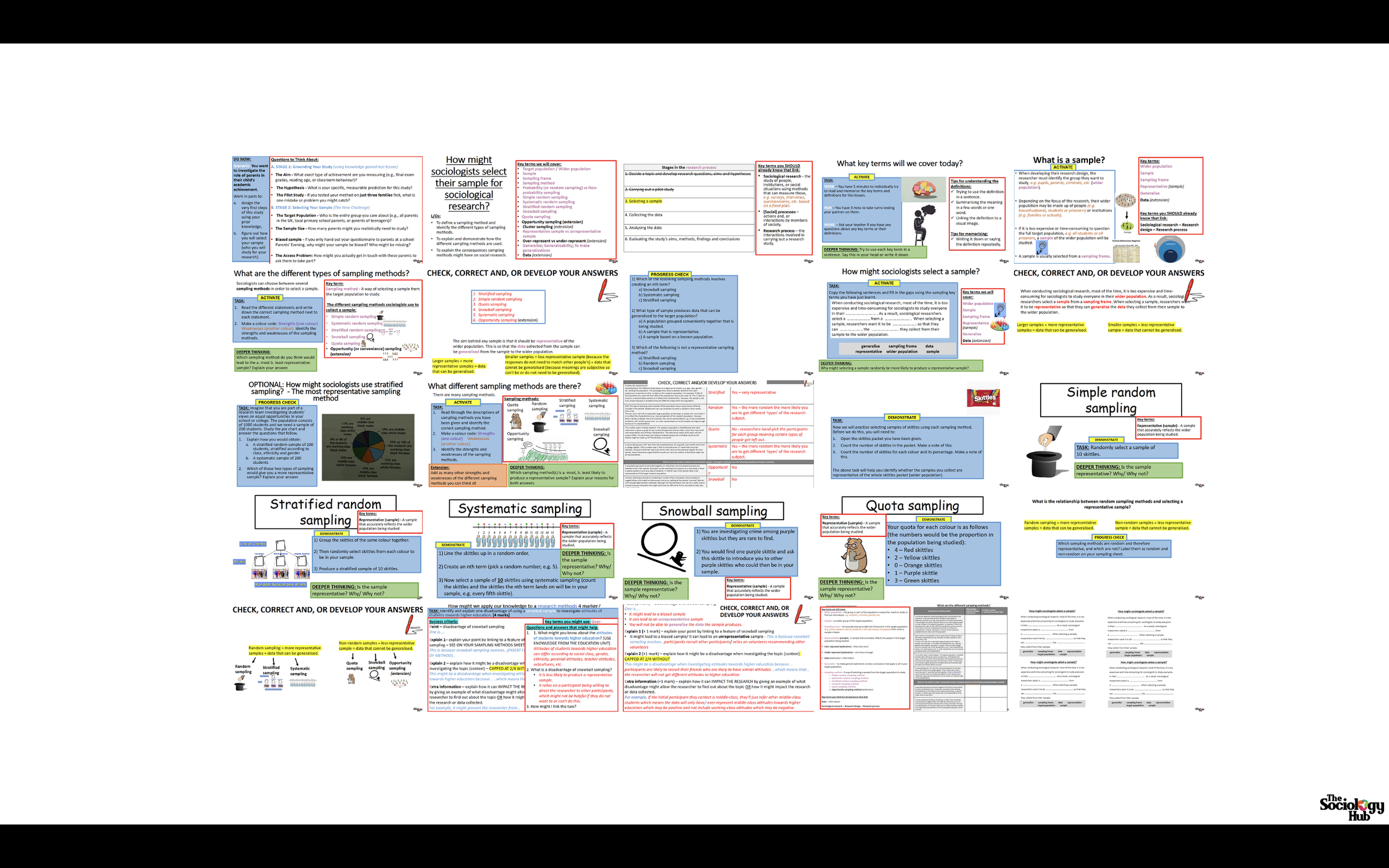
•Detailed lesson with lots of scaffolding based on adaptive teaching that helps students define a sampling method and identify the different types of sampling methods, explain and demonstrate how the different sampling methods are used, and explain the consequences sampling methods might have on social research.
•Covers the following key terms: Target population/Wider population, Sample, Sampling frame, Sampling method, Probability (or random sampling) vs Non-probability sampling, Simple random sampling, Systematic random sampling, Stratified random sampling, Snowball sampling, Quota sampling, Representative vs unrepresentative sample, Generalise/Generalisability. Opportunity sampling (extension), Cluster sampling (extension), Over-represent/Under-represent (extension), Data (extension)
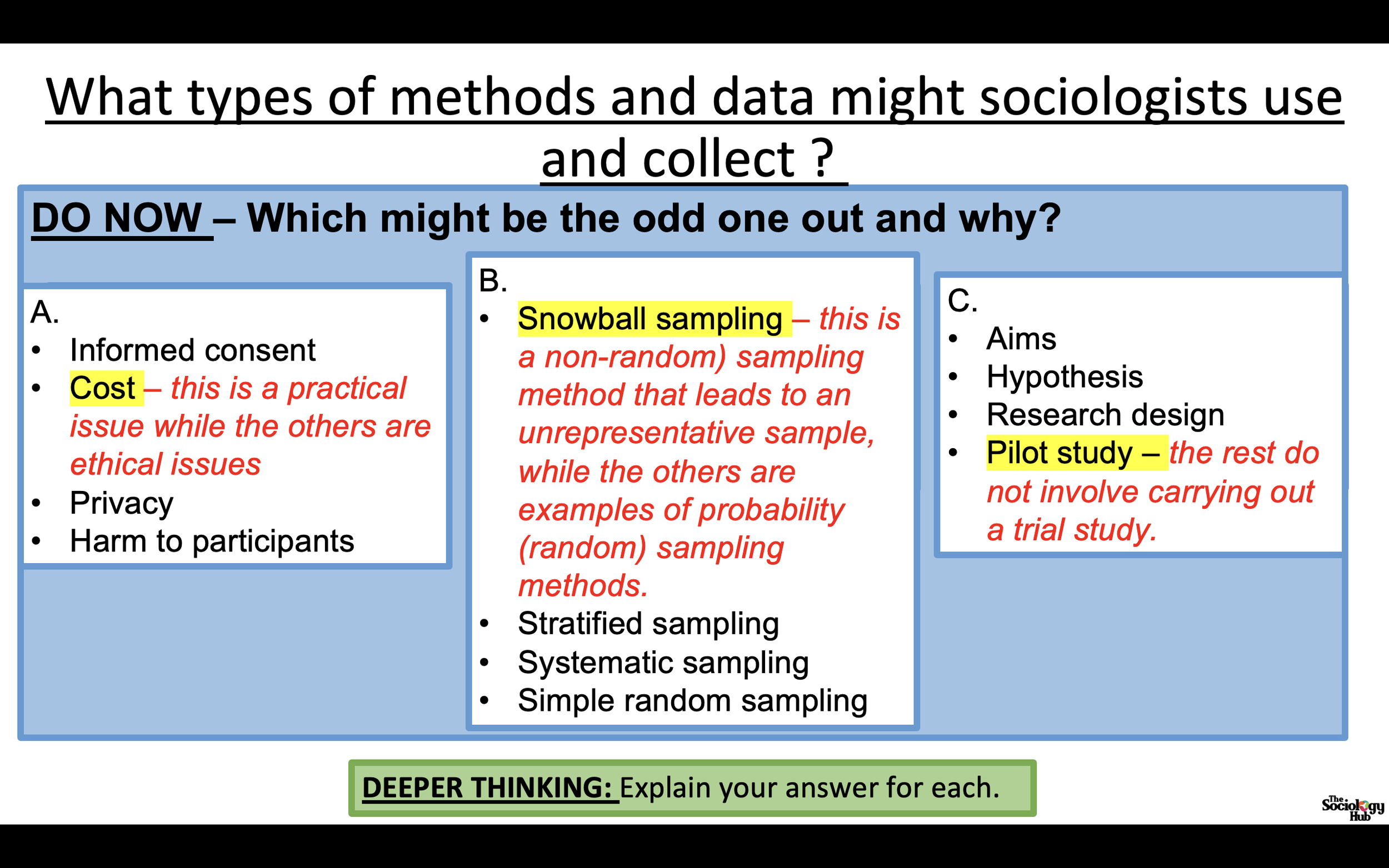
•Makes reference to the following key terms students might know to promote a spiral curriculum: Sociological research – Research design – Research process – [Social] processes – Stages in the research process – Aims – Hypotheses – Pilot study
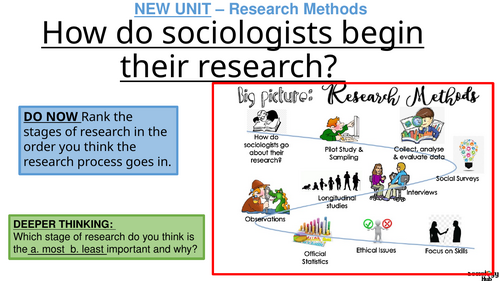
•Includes a Do Now retrieval activity recapping the research process from last lesson
•Includes a Think-Pair-Share key terms activity
•Includes a hands-on Skittles demonstration where students practise each sampling method
•INCLUDES A 4 MARKER WITH SUCCESS CRITERIA AND A MODEL ANSWER
•ANSWERS TO MOST ACTIVITIES INCLUDED
•INCLUDES KEY TERM SHEET WITH DEFINITIONS FOR THE LESSON
•RESOURCES CAN BE FOUND AT THE END OF THE PPT