Image 1 of 2
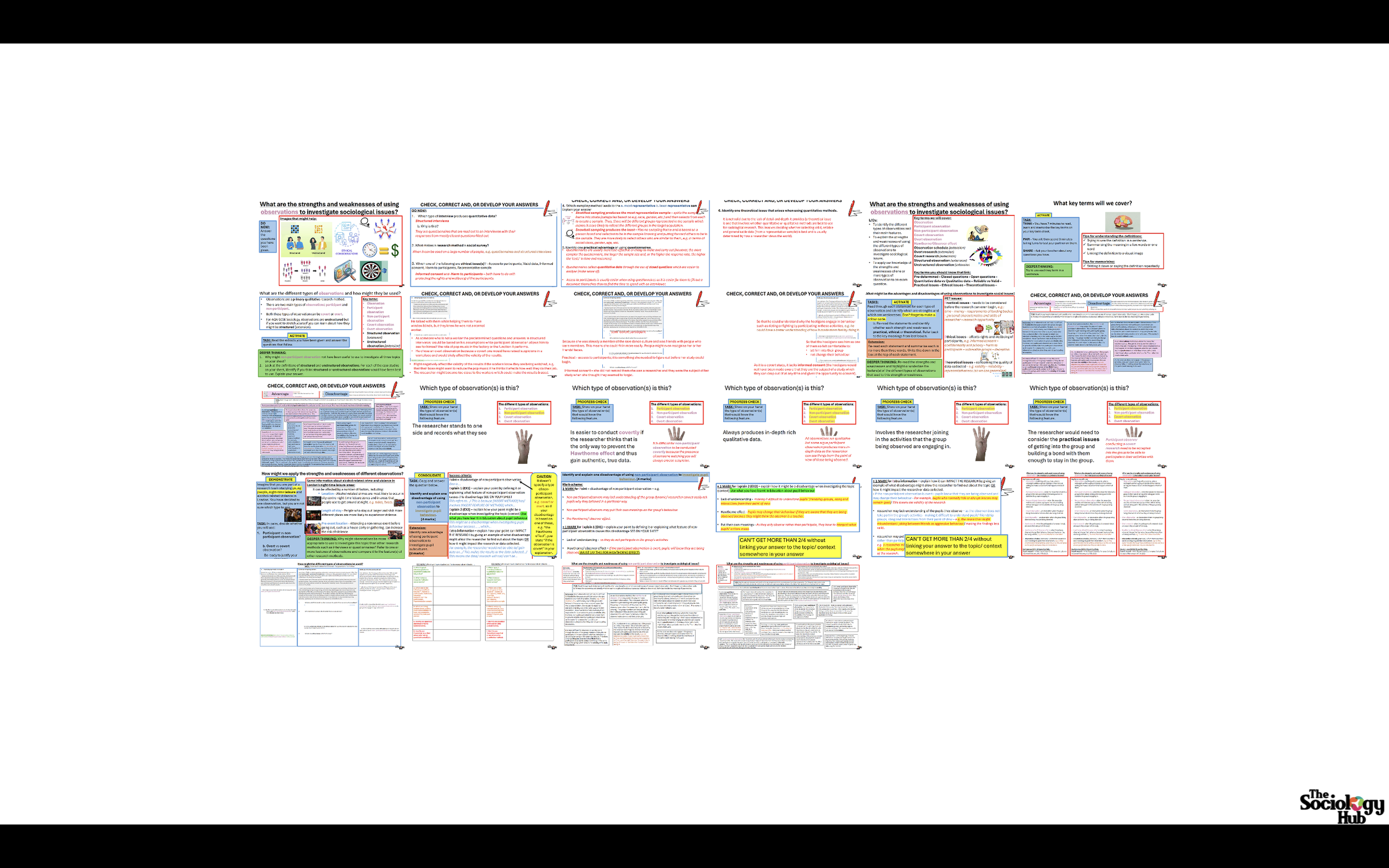 Image 2 of 2
Detailed lesson with lots of scaffolding based on adaptive teaching that helps students identify the different types of observation and their main features, explain the strengths and weaknesses of using them to investigate sociological issues, and apply this knowledge to an exam question.
Covers the following key terms: Observation, Participant observation, Non-participant observation, Covert observation, Overt observation, Hawthorne/Observer effect. Observation schedule (extension), Structured observation (extension) and Unstructured observation (extension).
Covers the following studies: Korczynski (pop music in a factory), Ward (drug-sellers in rave culture), and Williams, Dunning and Murphy (football hooligans abroad).
Makes reference to the following key terms students might know to promote a spiral curriculum: Pre-determined – Closed questions – Open questions – Quantitative data vs Qualitative data – Reliable vs Valid – Practical issues – Ethical issues – Theoretical issues – Sample size – Representative sample – Generalise findings – Respondent – Standardised – Covert vs overt research
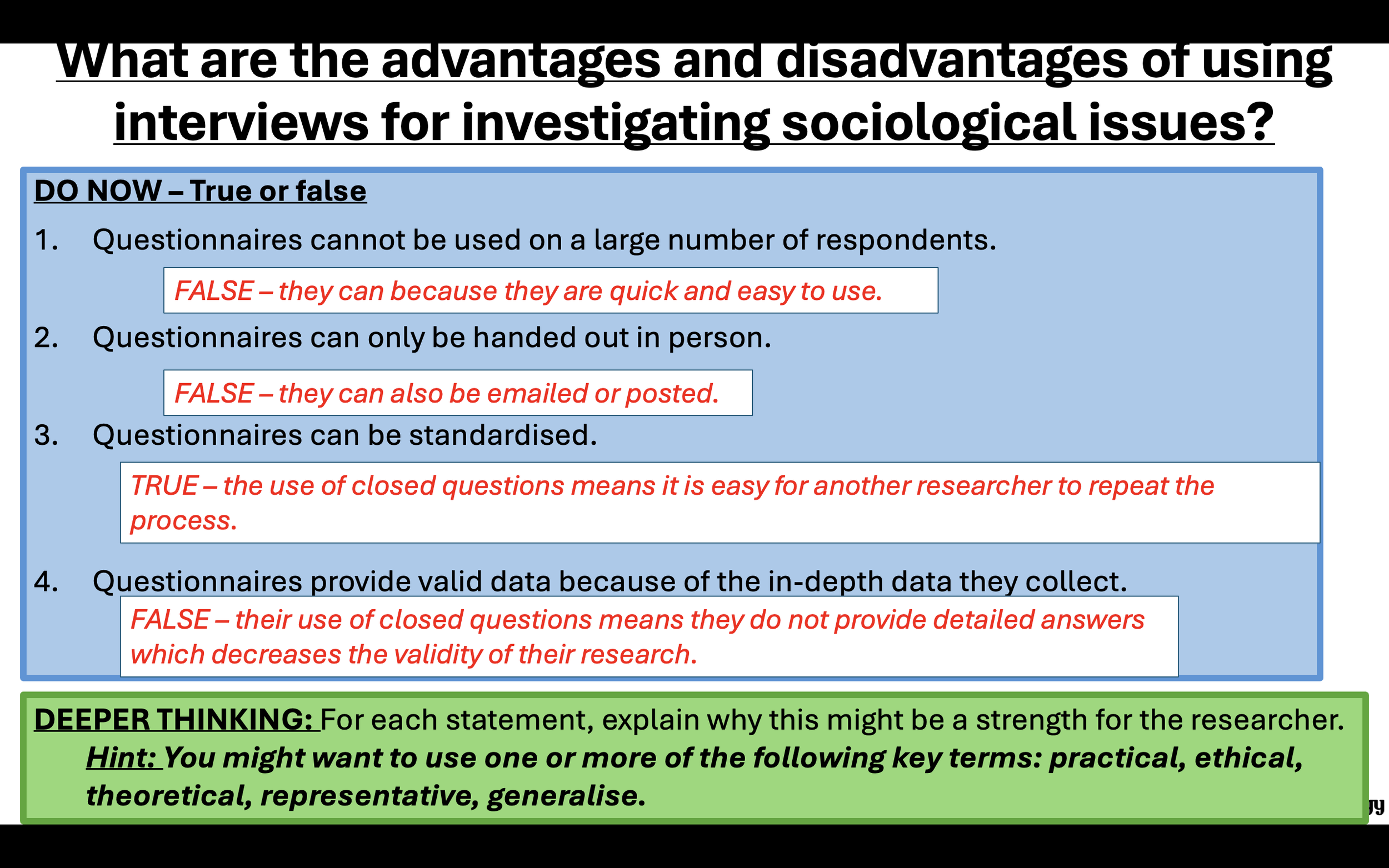
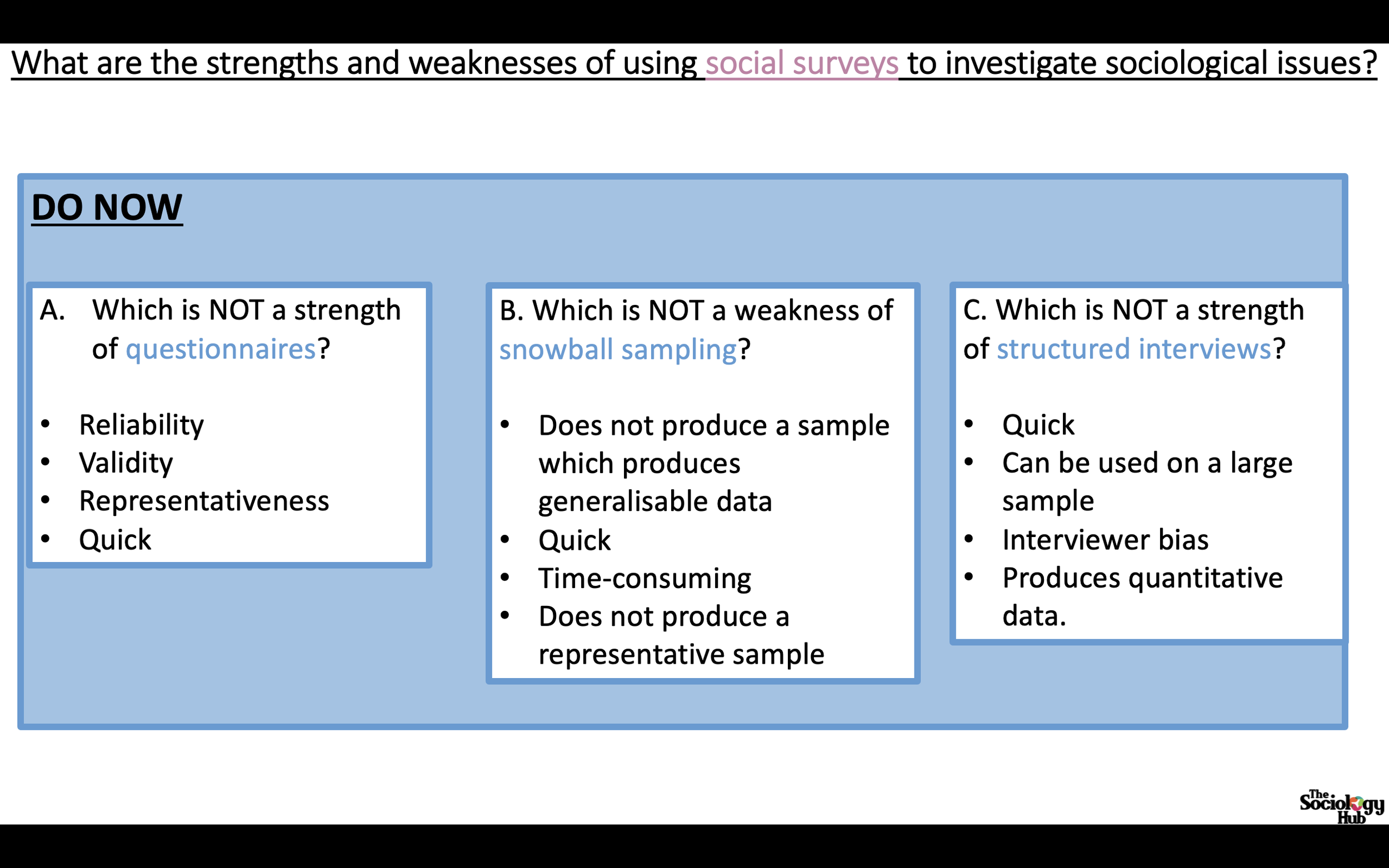
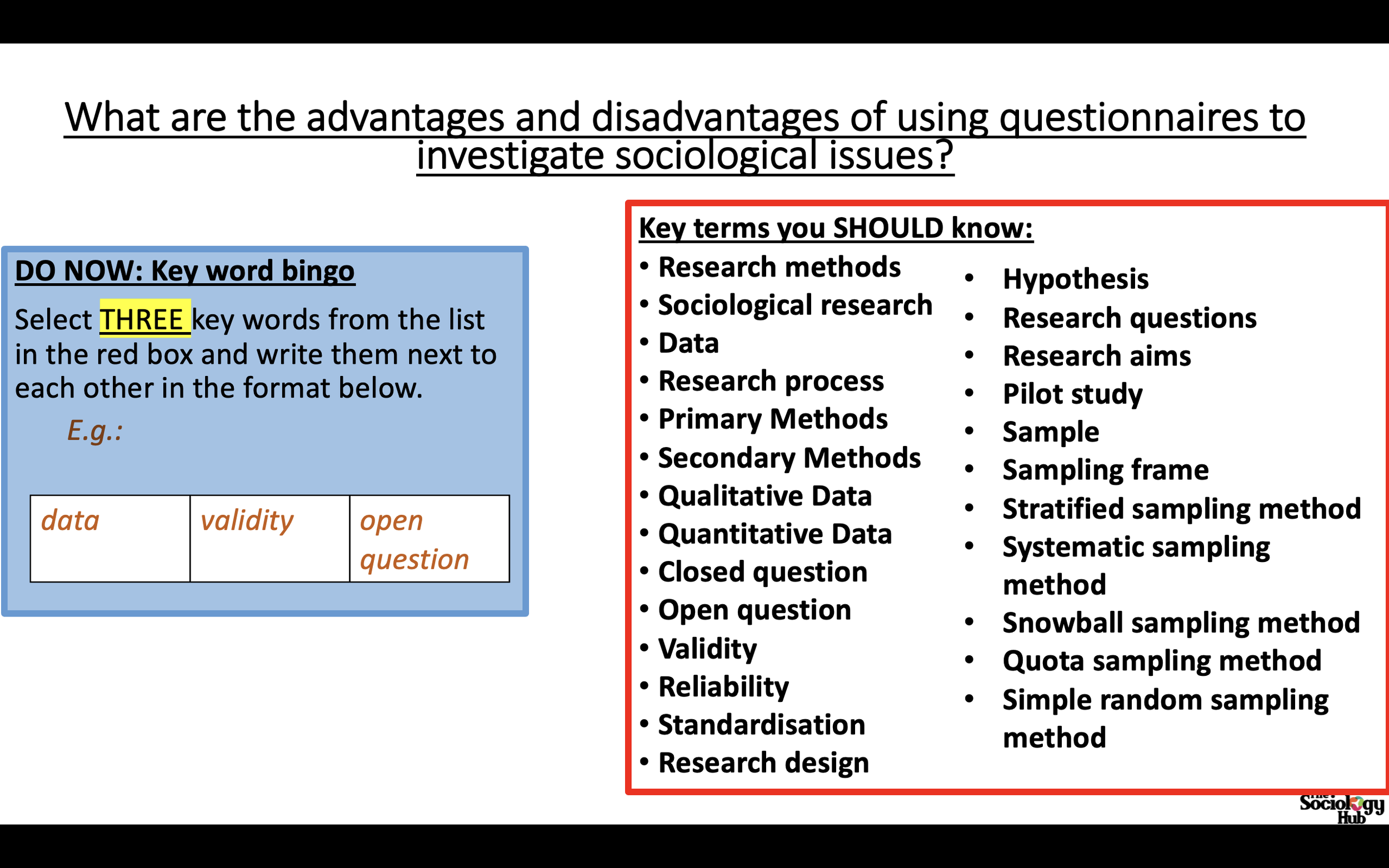
Do Now retrieval starter recaps interviews, social surveys, sampling, questionnaires and PET issues from earlier in the research methods unit.
Includes a Think-Pair-Share key term activity and case-study extract tasks.
Includes hands-up progress check questions.
Includes an applied research scenario (alcohol-related violence in London's night-time leisure areas).
INCLUDES A 4 MARKER WITH SUCCESS CRITERIA AND MARK SCHEME
ANSWERS TO MOST ACTIVITIES INCLUDED
INCLUDES KEY TERM SHEET WITH DEFINITIONS FOR THE LESSON
Resources can be found at the end of the PPT