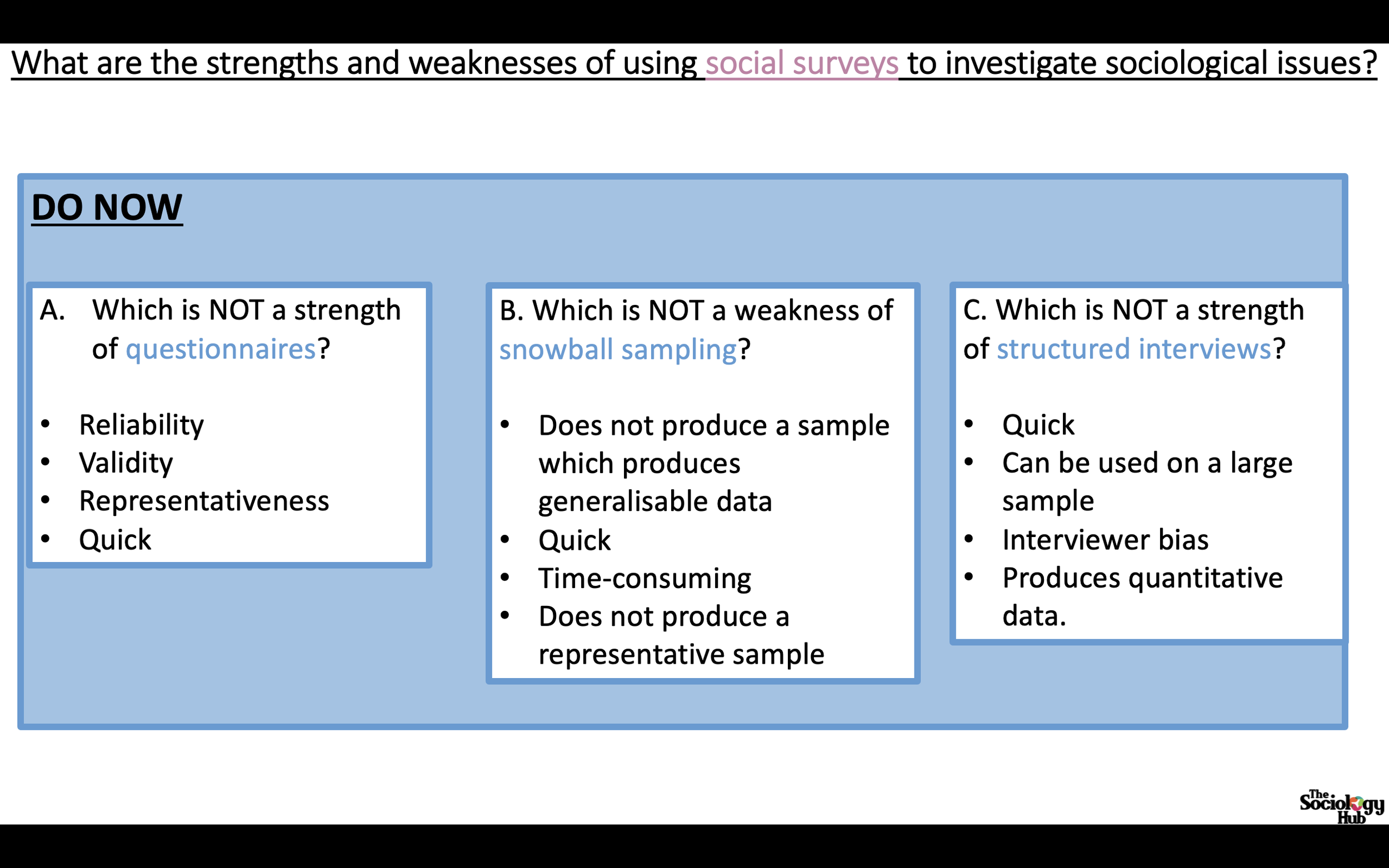
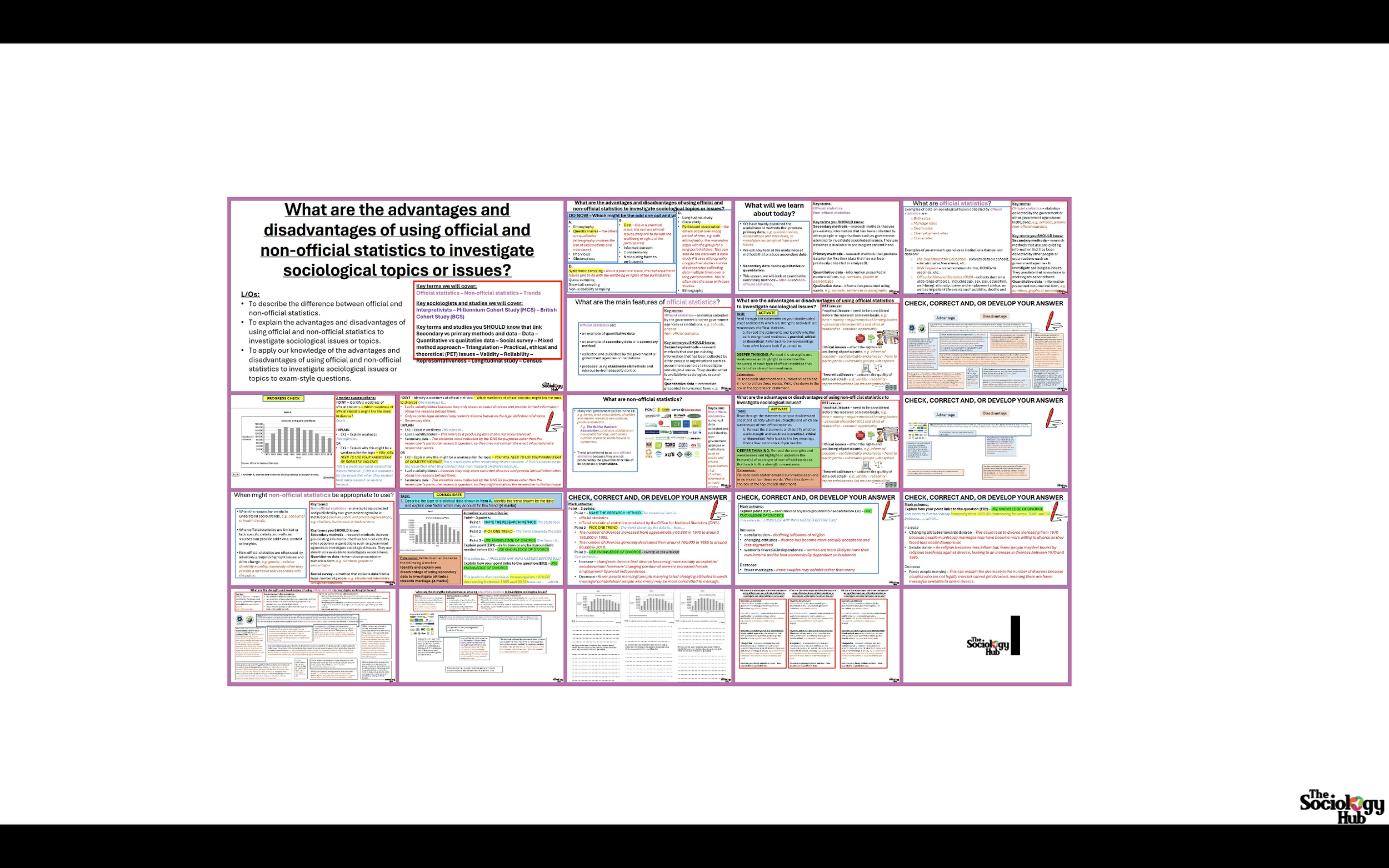
 Image 1 of 2
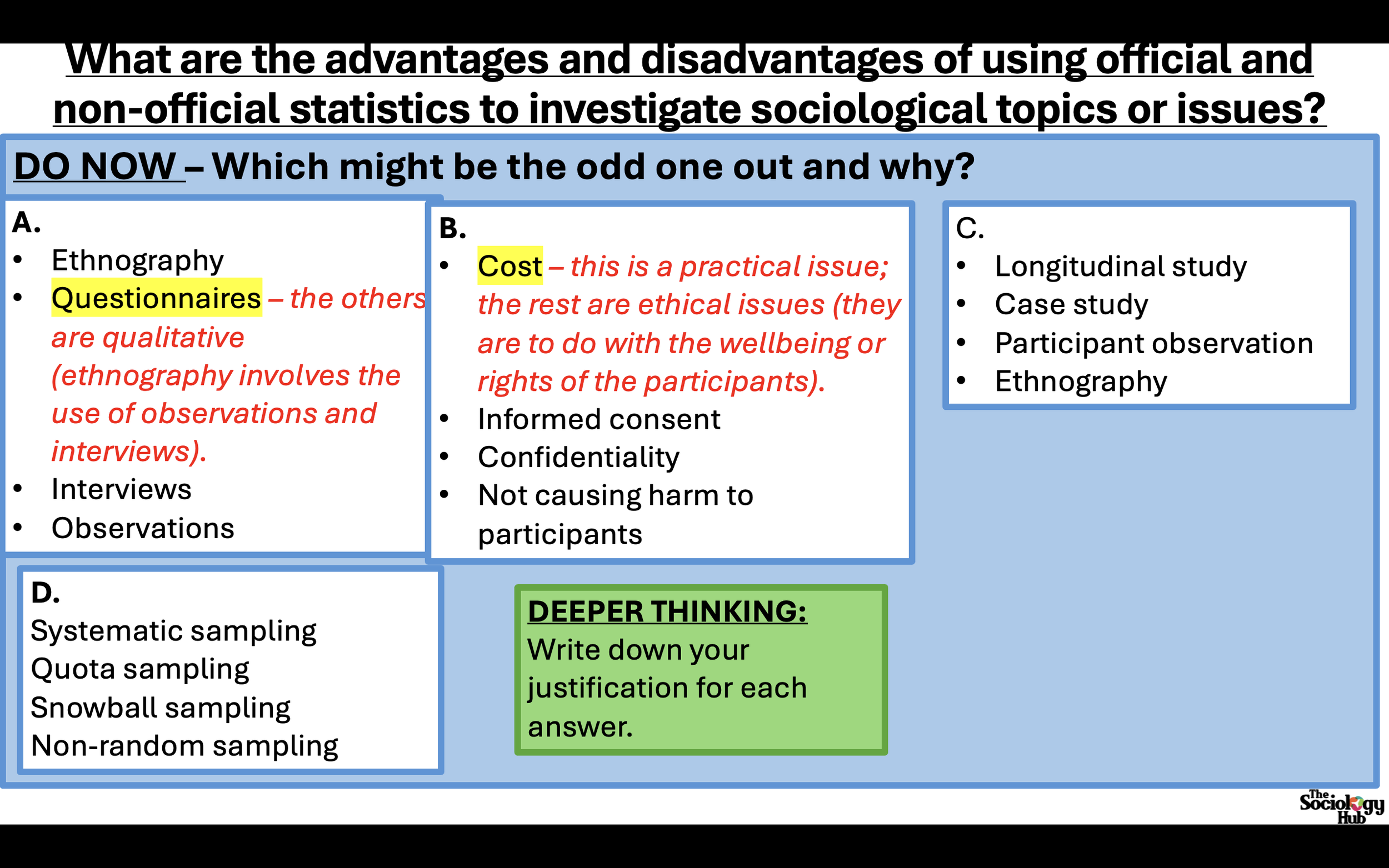 Image 2 of 2
•Detailed lesson with lots of scaffolding based on adaptive teaching that helps students describe the difference between official and non-official statistics, explain the advantages and disadvantages of using them to investigate sociological issues or topics, and apply this knowledge to exam-style questions.
•Covers the following key terms: Official statistics, Non-official statistics, Trends
•Makes reference to the following key terms students might know to promote a spiral curriculum: Secondary vs primary methods and data – Data – Quantitative vs qualitative data – Social survey – Mixed method approach – Triangulation – Practical, ethical and theoretical (PET) issues – Validity – Reliability – Representativeness – Longitudinal study – Census
•DO NOW retrieval starter recaps research methods from previous lessons (odd one out)
•Includes a 2-marker progress check with success criteria and a modelled answer
•Includes 4-marker exam question (Item A – divorce statistics) with success criteria, an extension 4-marker and a full mark scheme
•ANSWERS TO MOST ACTIVITIES INCLUDED
•INCLUDES KEY TERM SHEET WITH DEFINITIONS FOR THE LESSON
RESOURCES CAN BE FOUND AT THE END OF PPT