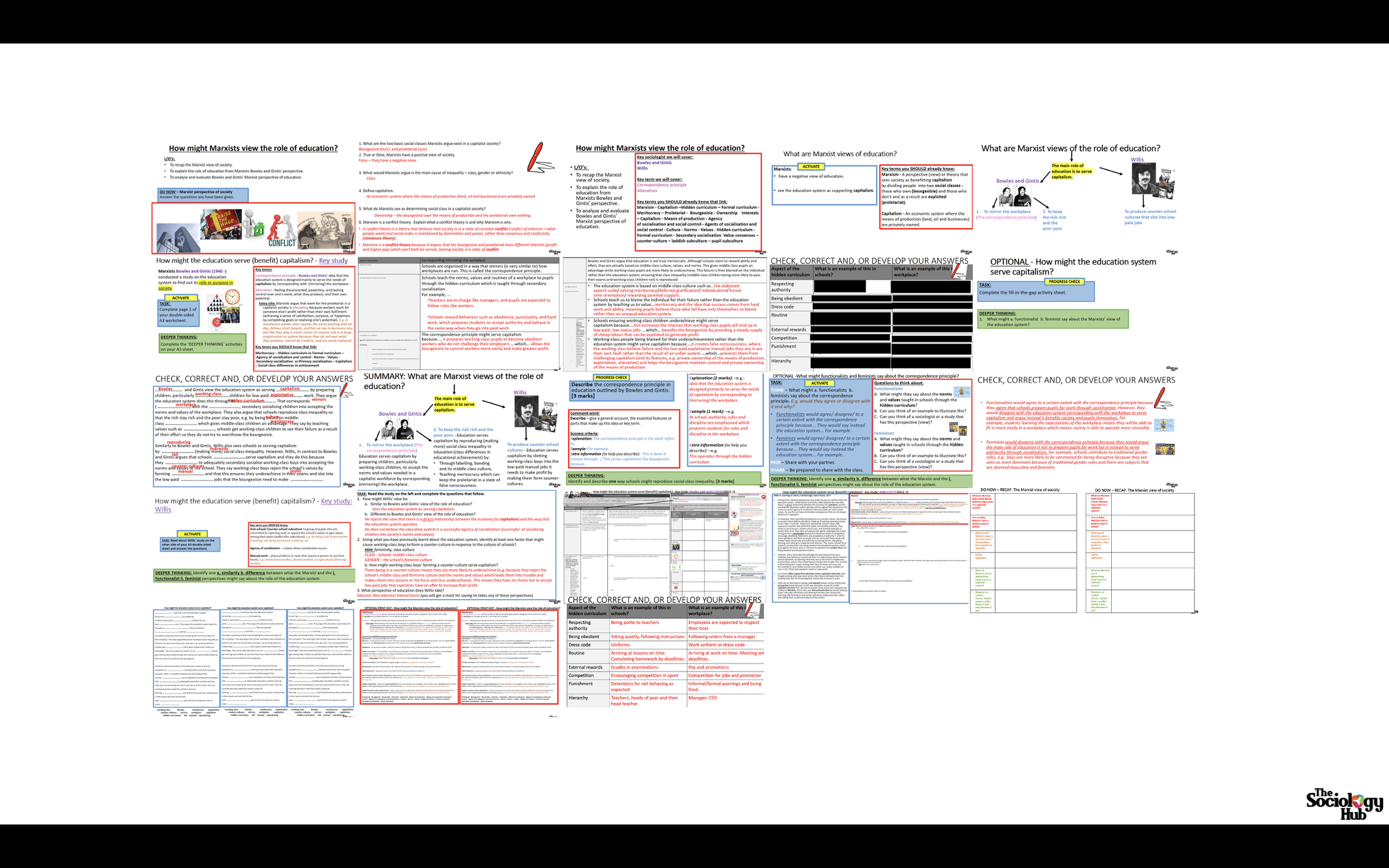
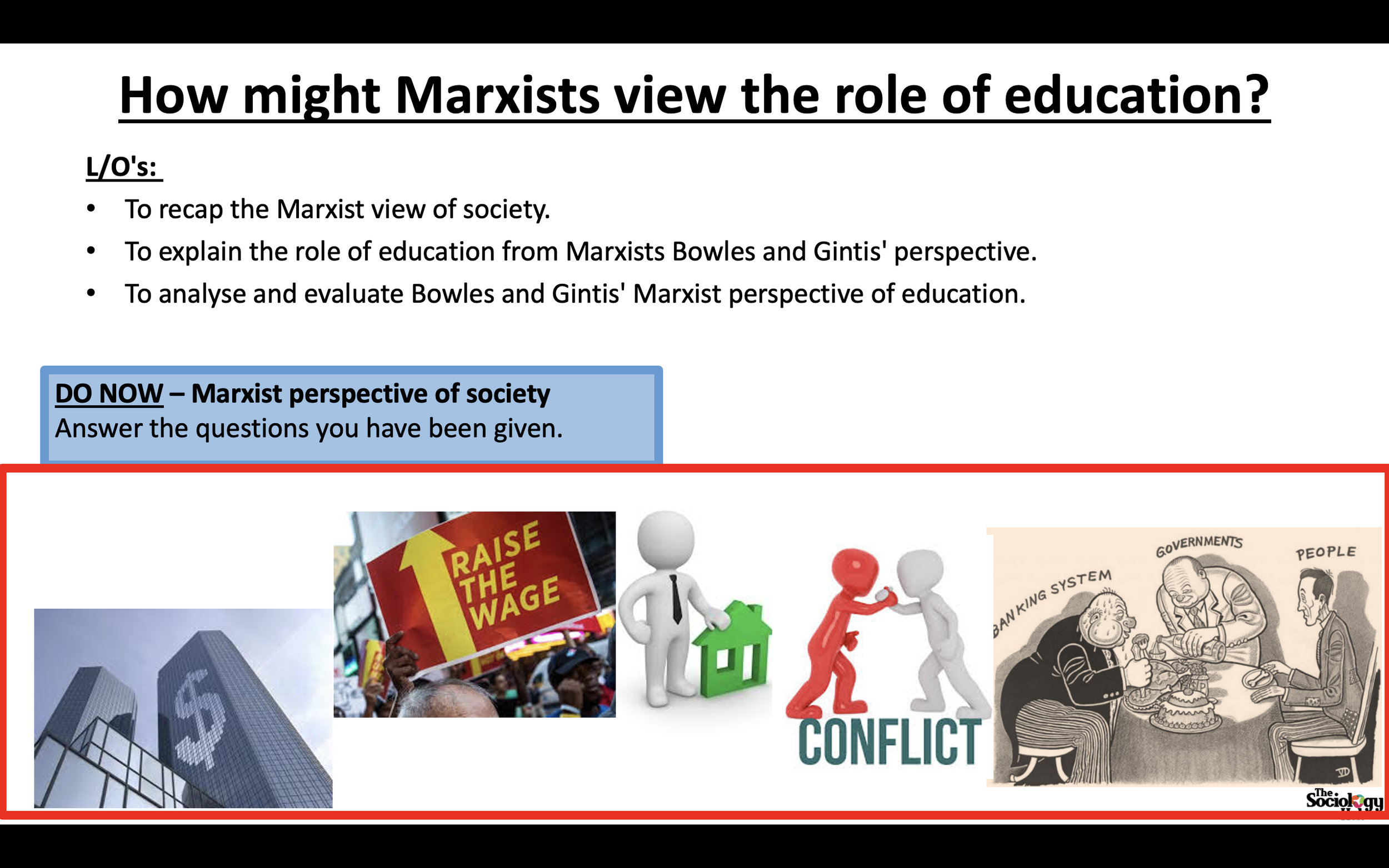
 Image 1 of 2
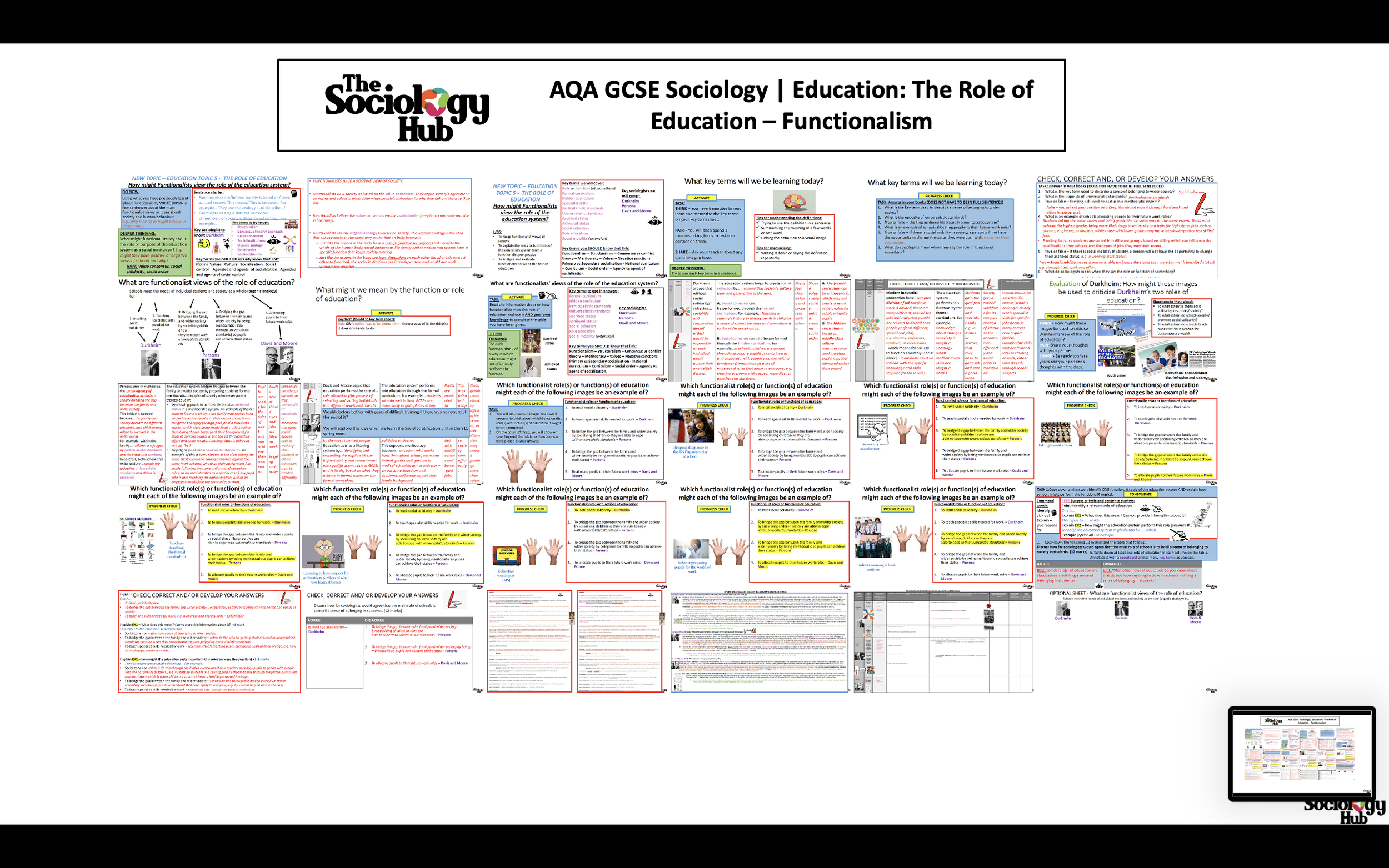
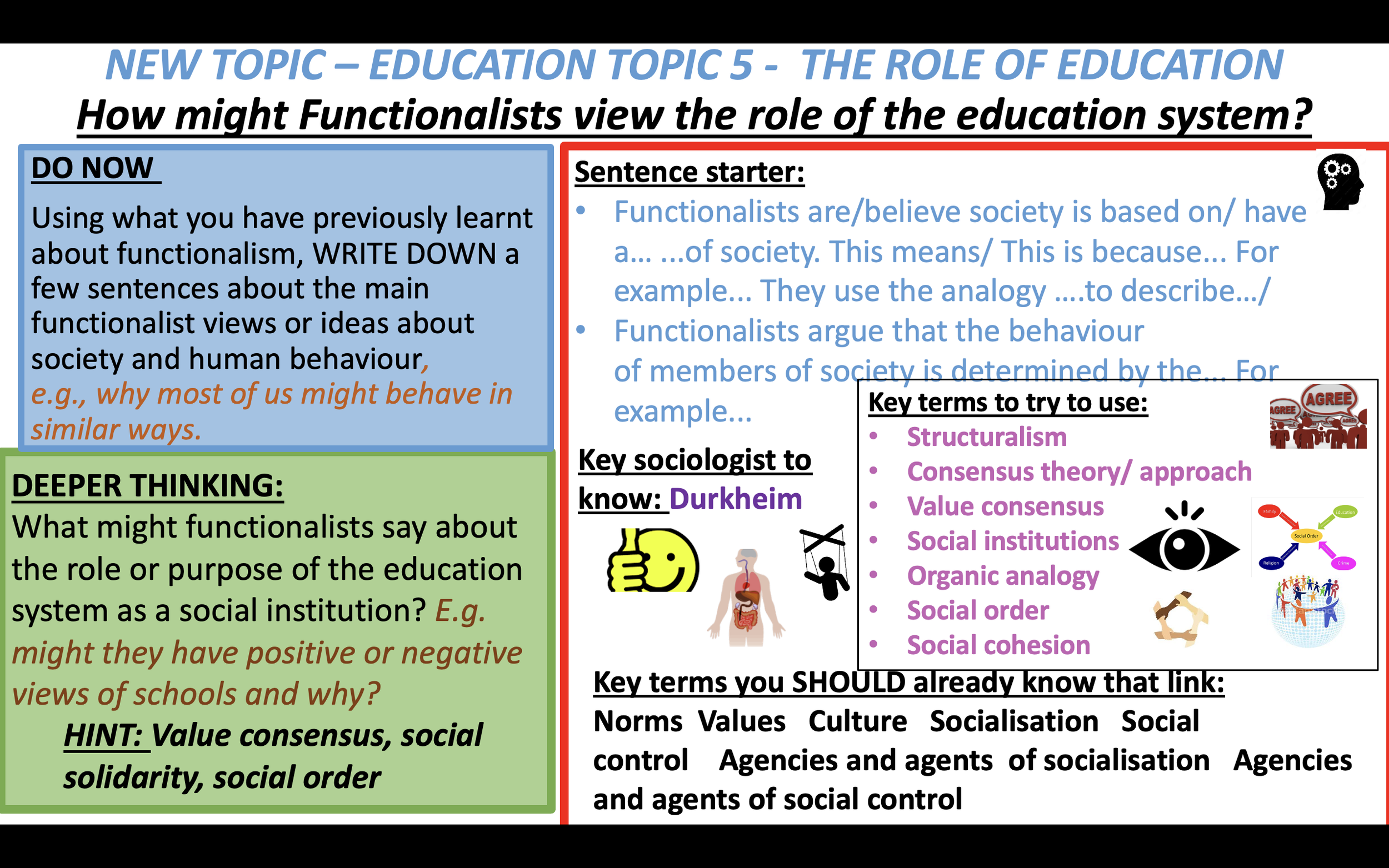
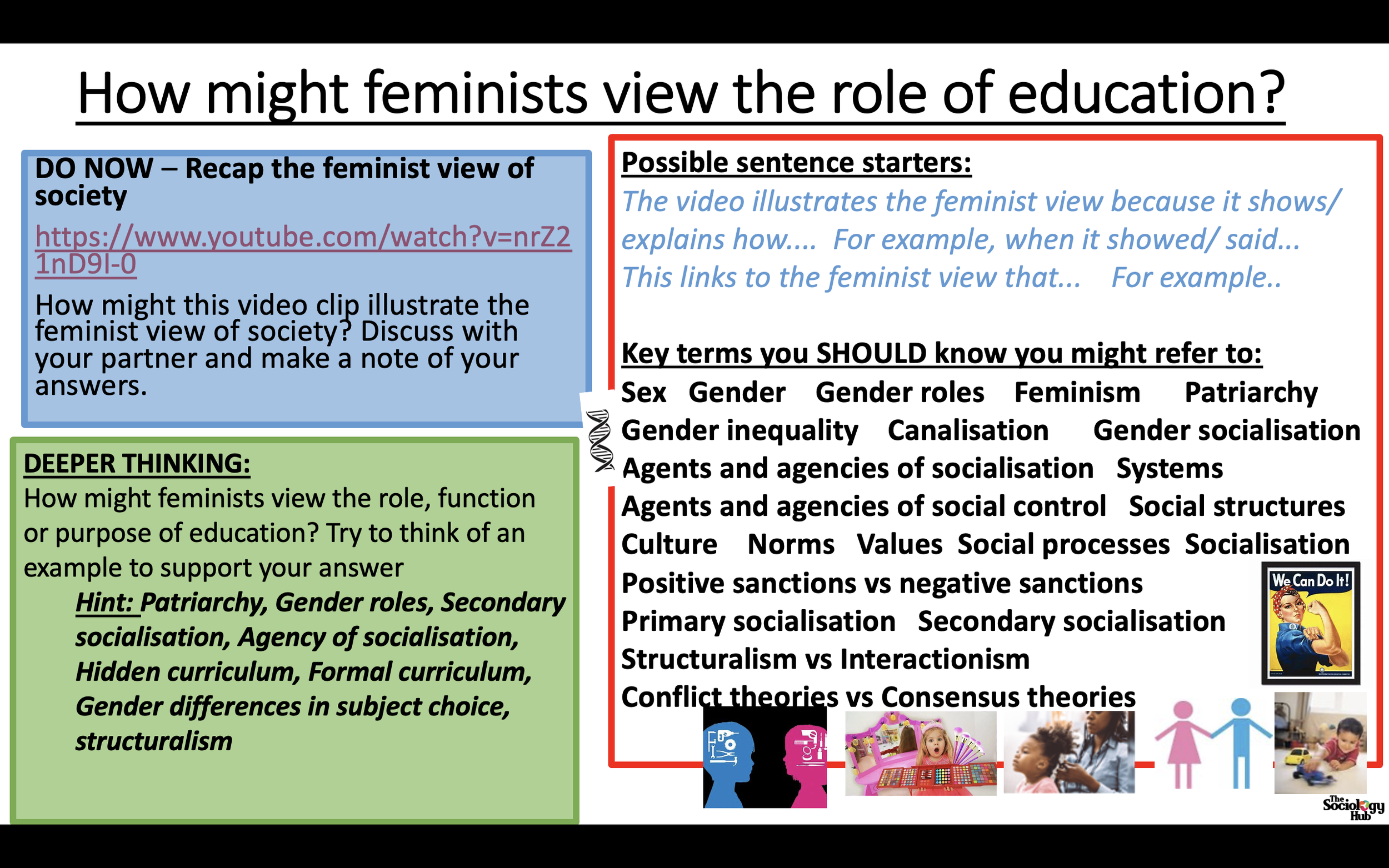 Image 2 of 2
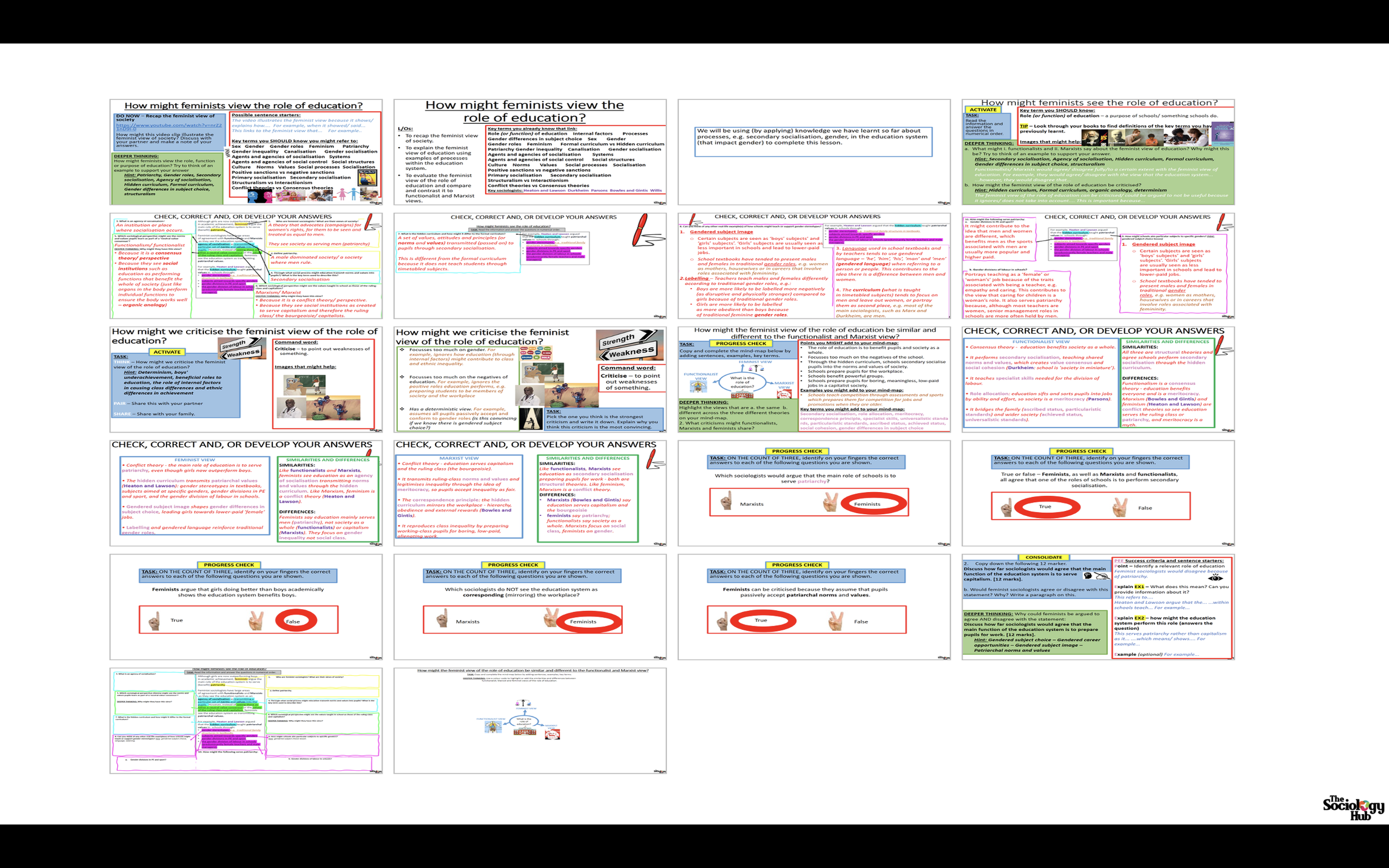
Detailed lesson with lots of scaffolding based on adaptive teaching that helps students recap the feminist view of society, explain the feminist view of the role of education using examples of processes within the education system, and evaluate it by comparing and contrasting it with functionalist and Marxist views.
Covers how the hidden curriculum transmits patriarchal values, gendered subject image and gendered subject choice, gendered language and labelling, and the gender division of labour in schools.
Covers the following key terms: Role (or function) of education, Patriarchy, Hidden curriculum vs Formal curriculum, Gender roles, Gender socialisation, Canalisation, Gender inequality, Gendered subject image, Labelling, Determinism, Meritocracy, Correspondence principle, Role allocation, Specialist skills, Value consensus, Social cohesion
Covers the following sociologists: Heaton and Lawson (and makes reference to the following sociologists students might know Durkheim, Parsons, Bowles and Gintis, Willis)
Makes reference to the following key terms students might know to promote a spiral curriculum: Internal factors – Processes – Gender differences in subject choice – Sex – Gender – Feminism – Agents and agencies of socialisation – Agents and agencies of social control – Social structures – Systems – Culture – Norms – Values – Social processes – Socialisation – Positive sanctions vs Negative sanctions – Primary socialisation – Secondary socialisation – Structuralism vs Interactionism – Conflict theories vs Consensus theories
Includes a video as an activity
Includes a Think–Pair–Share evaluation activity and a whole-class progress check
Includes deeper thinking stretch and challenge tasks throughout, plus a mind-map comparing feminist, functionalist and Marxist views with a similarities and differences breakdown for high-attaining students
Comparison mind-map task with answers of functionalist, Marxist and feminist views, with completed answer slides and similarities/differences
PRINT WORKSHEETS IN A3 DOUBLE-SIDED
INCLUDES 12 MARKER with detailed success criteria and sentence starters
ANSWERS TO ALL MAIN ACTIVITIES INCLUDED
RESOURCES CAN BE FOUND AT THE END OF PPT
Fully editable PowerPoint, ready to teach with no preparation required. Colour-coded throughout: key terms in pink, key sociologists in purple, examples in orange italics and answers in red italics.
Detailed lesson with lots of scaffolding based on adaptive teaching that helps students recap the feminist view of society, explain the feminist view of the role of education using examples of processes within the education system, and evaluate it by comparing and contrasting it with functionalist and Marxist views.
Covers how the hidden curriculum transmits patriarchal values, gendered subject image and gendered subject choice, gendered language and labelling, and the gender division of labour in schools.
Covers the following key terms: Role (or function) of education, Patriarchy, Hidden curriculum vs Formal curriculum, Gender roles, Gender socialisation, Canalisation, Gender inequality, Gendered subject image, Labelling, Determinism, Meritocracy, Correspondence principle, Role allocation, Specialist skills, Value consensus, Social cohesion
Covers the following sociologists: Heaton and Lawson (and makes reference to the following sociologists students might know Durkheim, Parsons, Bowles and Gintis, Willis)
Makes reference to the following key terms students might know to promote a spiral curriculum: Internal factors – Processes – Gender differences in subject choice – Sex – Gender – Feminism – Agents and agencies of socialisation – Agents and agencies of social control – Social structures – Systems – Culture – Norms – Values – Social processes – Socialisation – Positive sanctions vs Negative sanctions – Primary socialisation – Secondary socialisation – Structuralism vs Interactionism – Conflict theories vs Consensus theories
Includes a video as an activity
Includes a Think–Pair–Share evaluation activity and a whole-class progress check
Includes deeper thinking stretch and challenge tasks throughout, plus a mind-map comparing feminist, functionalist and Marxist views with a similarities and differences breakdown for high-attaining students
Comparison mind-map task with answers of functionalist, Marxist and feminist views, with completed answer slides and similarities/differences
PRINT WORKSHEETS IN A3 DOUBLE-SIDED
INCLUDES 12 MARKER with detailed success criteria and sentence starters
ANSWERS TO ALL MAIN ACTIVITIES INCLUDED
RESOURCES CAN BE FOUND AT THE END OF PPT
Fully editable PowerPoint, ready to teach with no preparation required. Colour-coded throughout: key terms in pink, key sociologists in purple, examples in orange italics and answers in red italics.