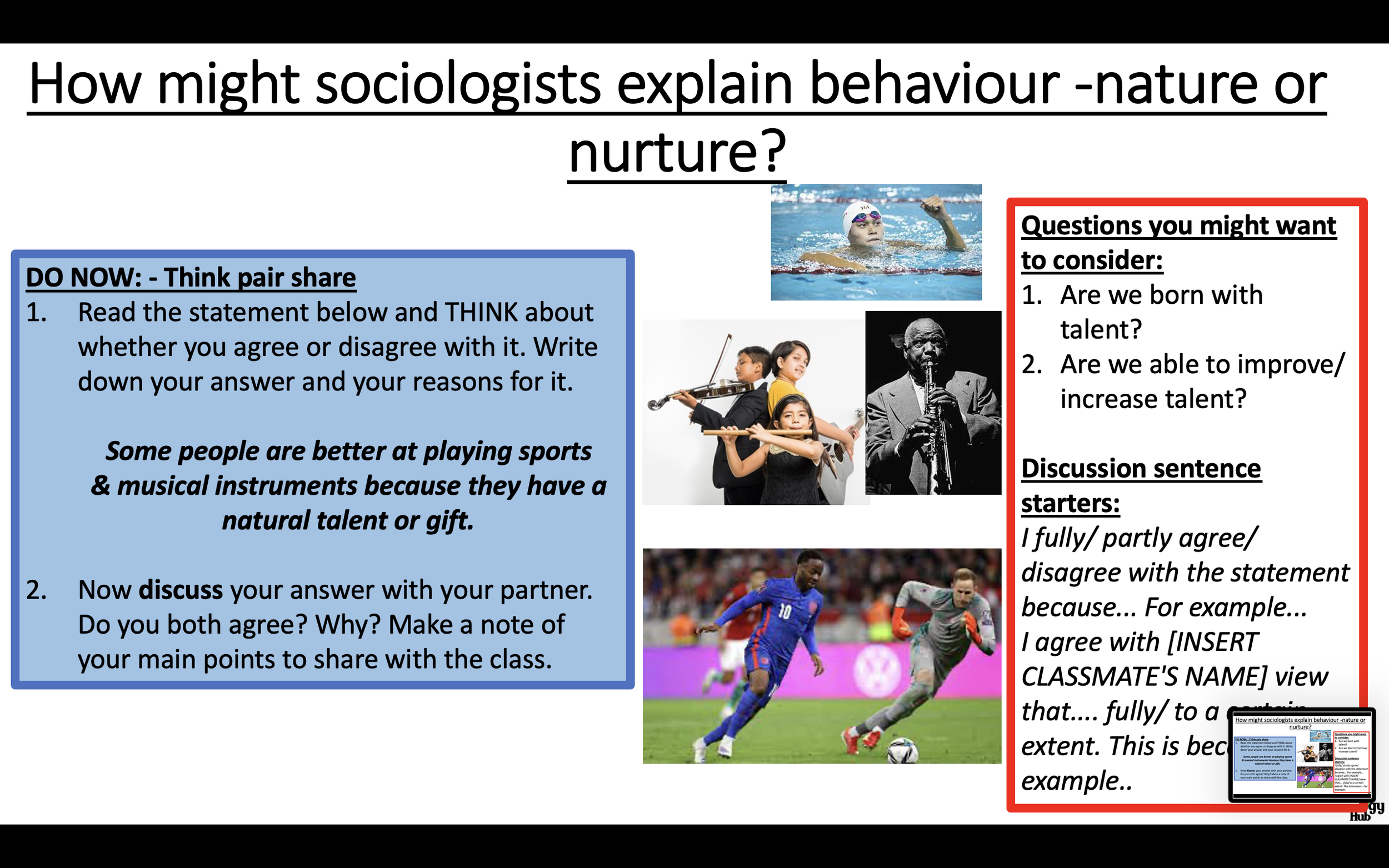
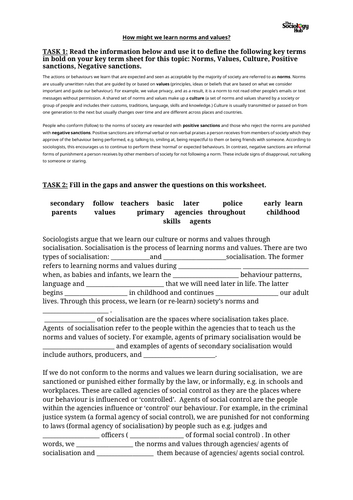
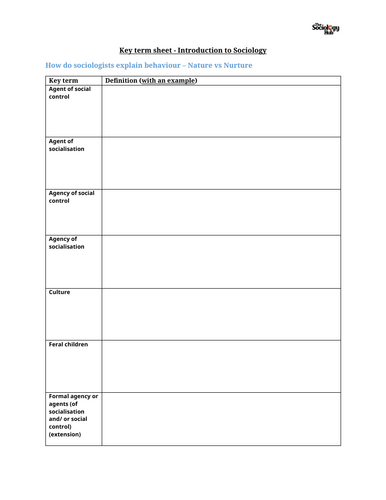
 Image 1 of 3
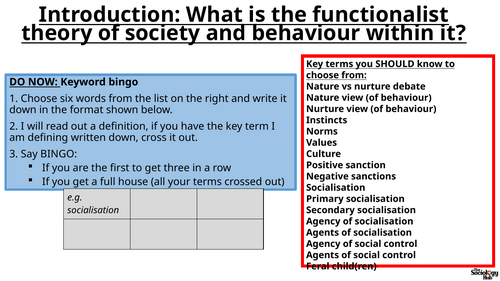 Image 2 of 3
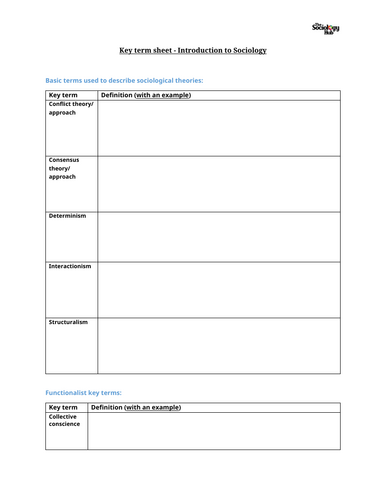 Image 3 of 3
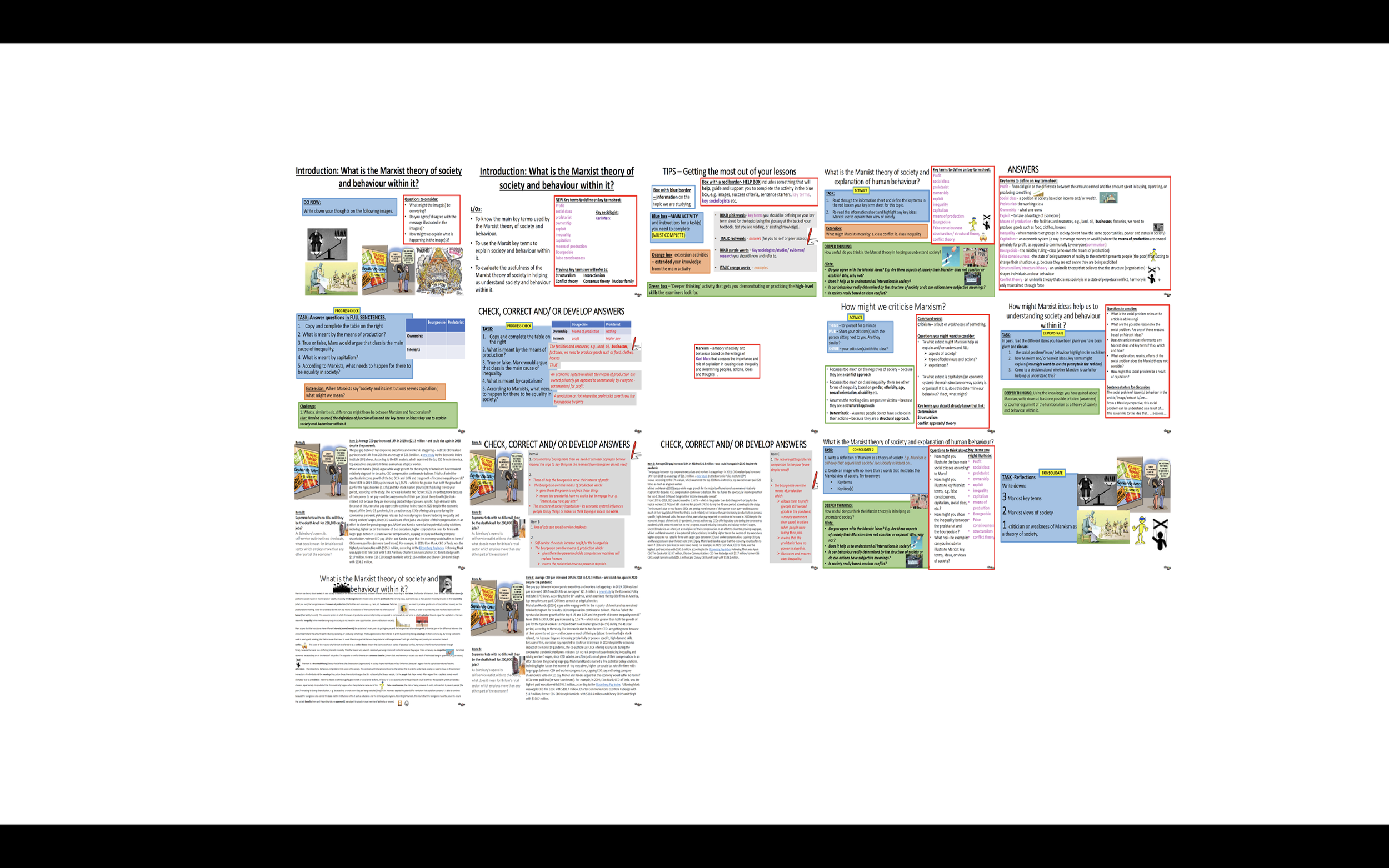
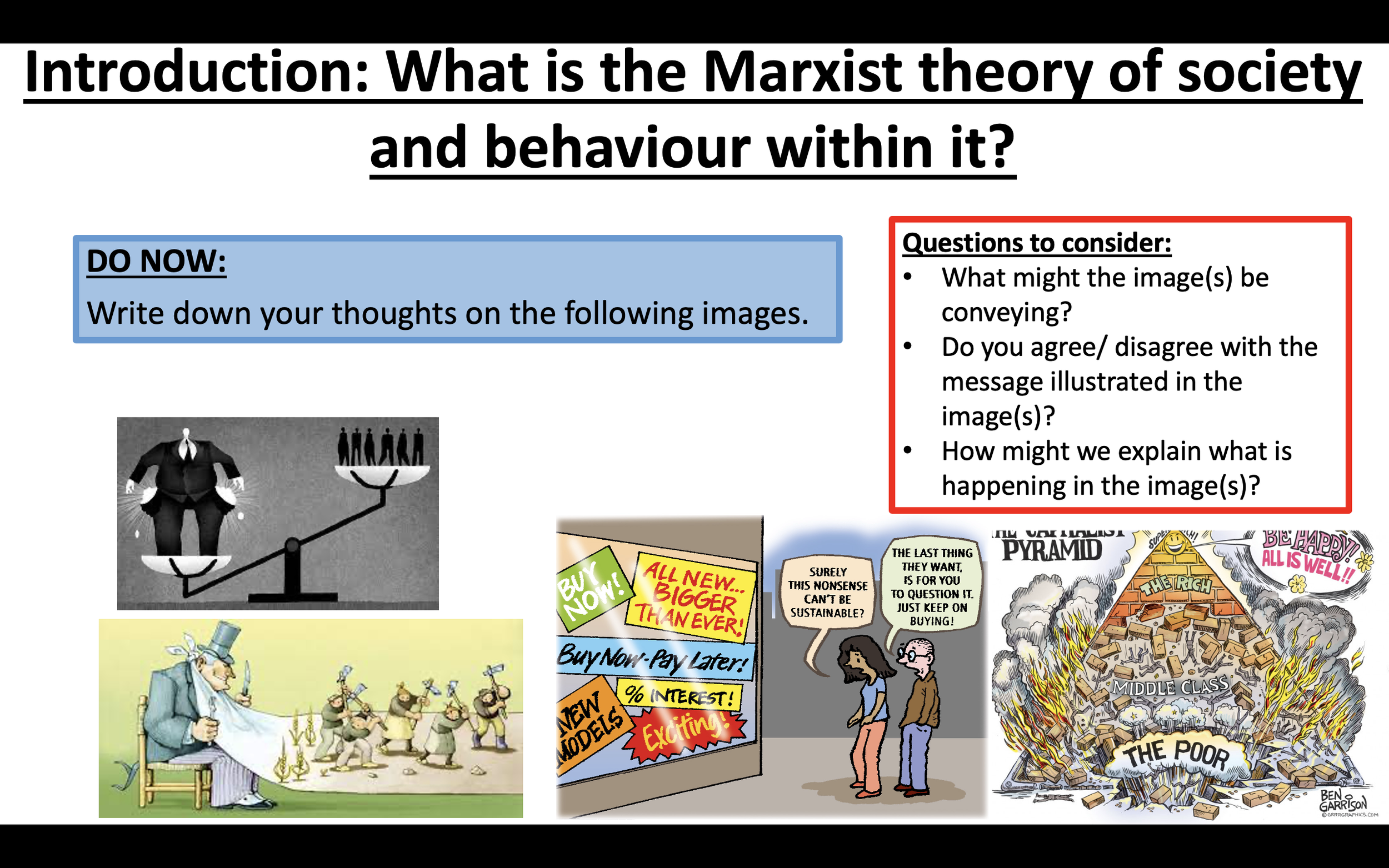
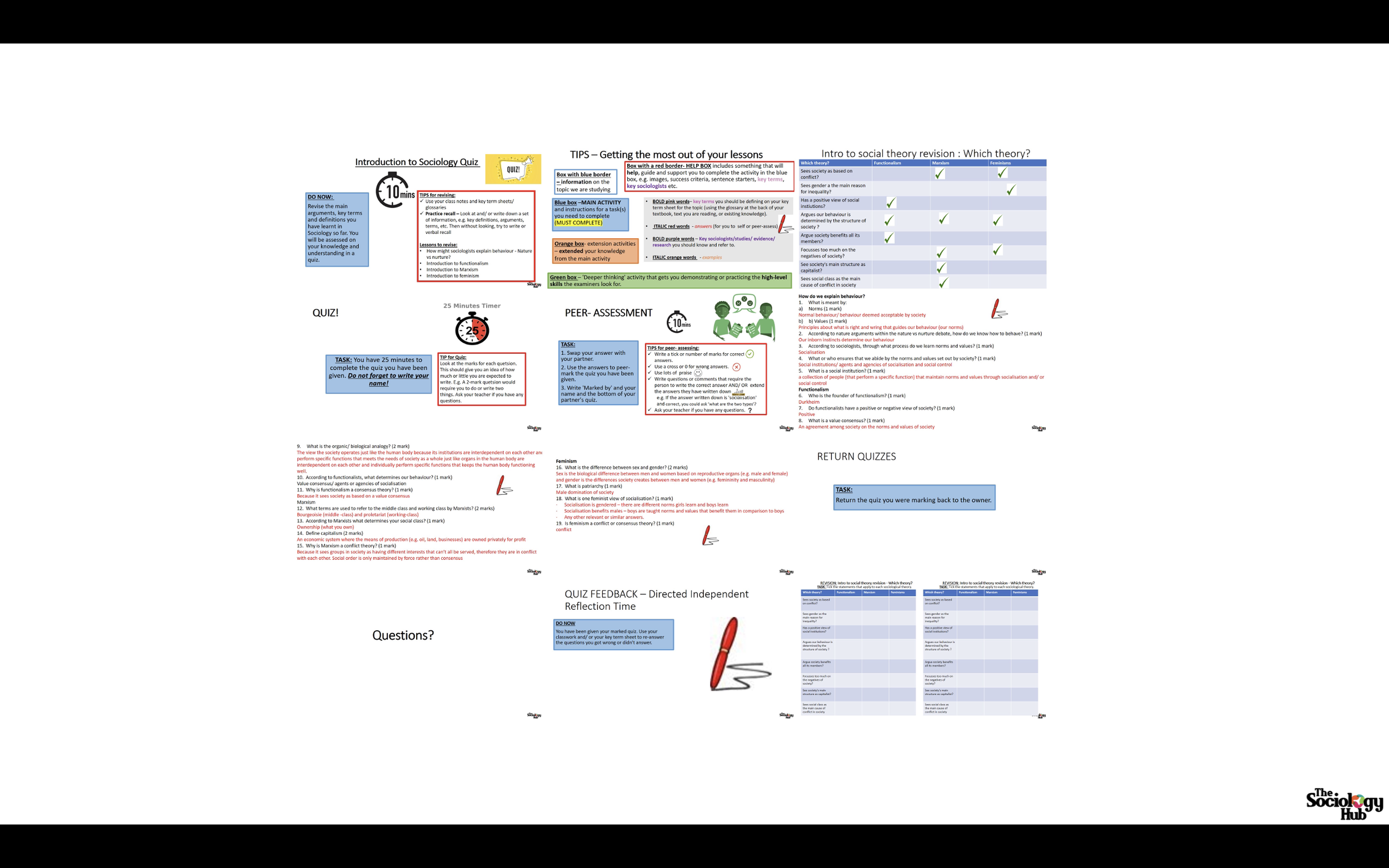
•Detailed lesson with lots of scaffolding based on adaptive teaching that helps students describe the key features of the functionalist theory, use key terms to explain the functionalist view of society and behaviour within it, and analyse and evaluate functionalism as a theory of society and behaviour within it.
•Covers the following key terms: Functionalism, Structuralism, Interactionism, Consensus theory/ approach, Value consensus, Conflict theory/ approach, Collective conscience, Social institutions, Organic/ biological analogy, Social order, Social solidarity and Determinism.
•Covers the following sociologist: Emile Durkheim.
•Makes reference to the following key terms students should already know, to promote a spiral curriculum: Nature vs nurture debate – Nature view of behaviour – Nurture view of behaviour – Instincts – Norms – Values – Culture – Positive sanctions – Negative sanctions – Socialisation – Primary socialisation – Secondary socialisation – Agencies of socialisation – Agents of socialisation – Agencies of social control – Agents of social control – Feral children.
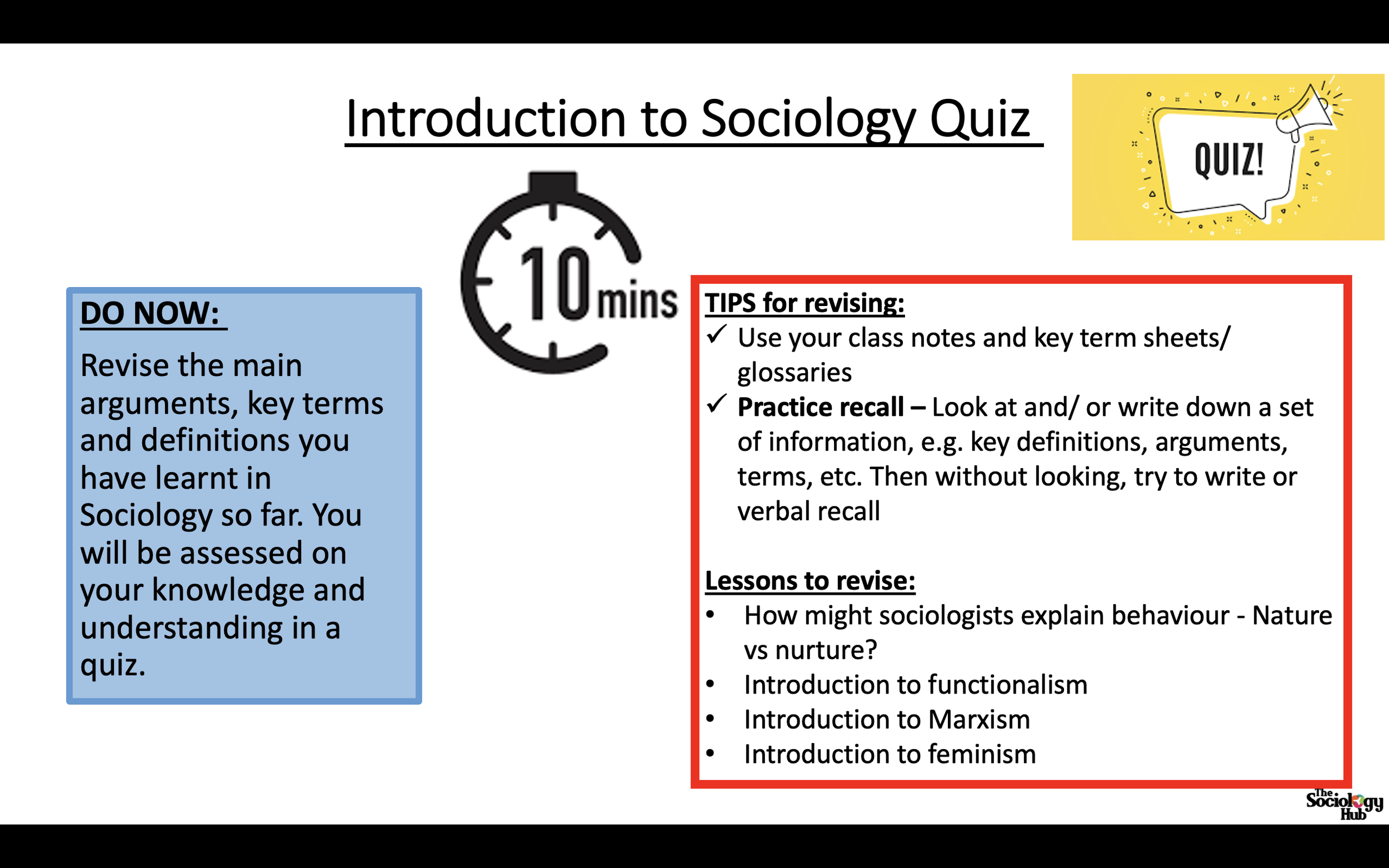
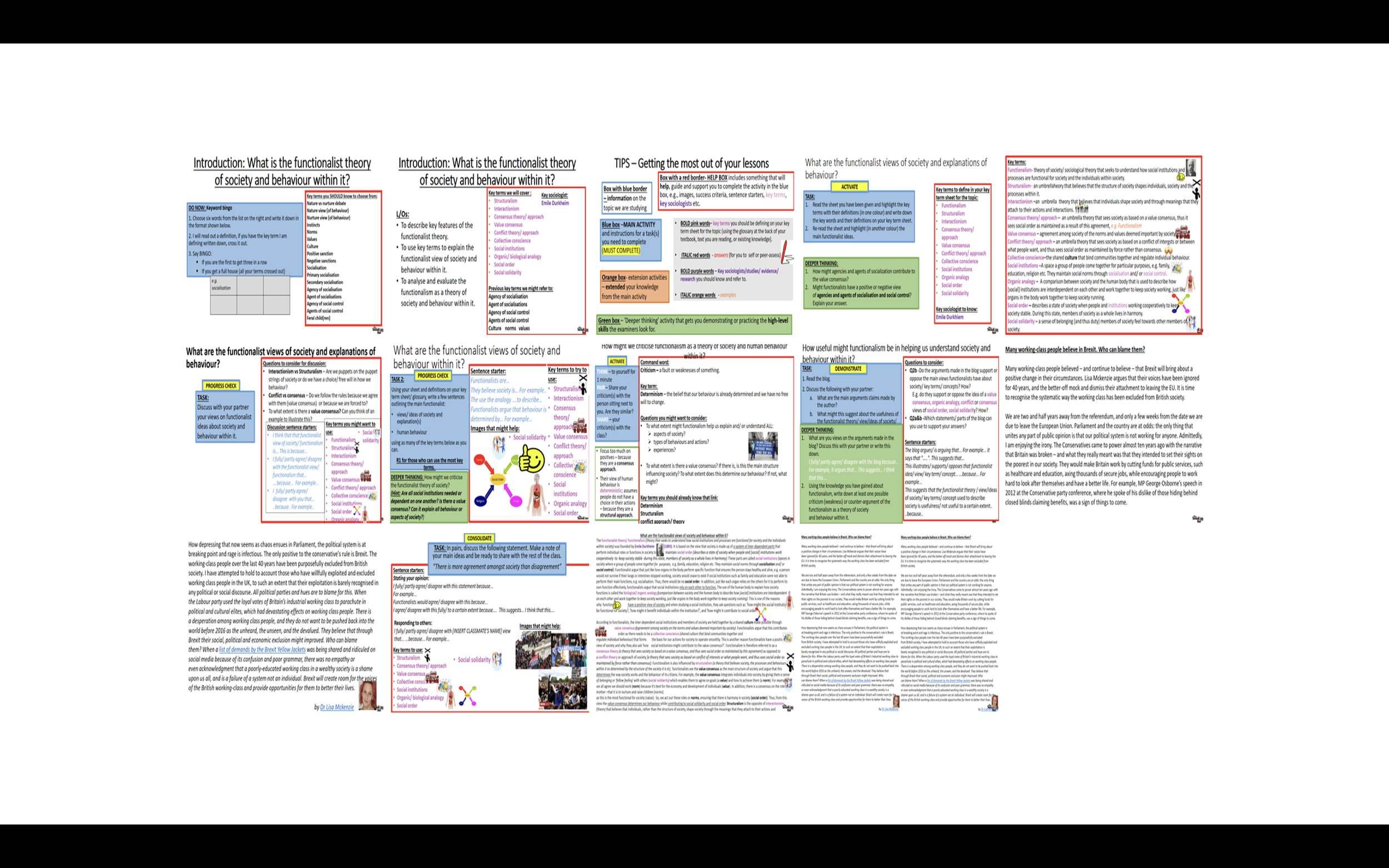
•Includes a DO NOW retrieval starter (keyword bingo) that revisits prior knowledge key terms.
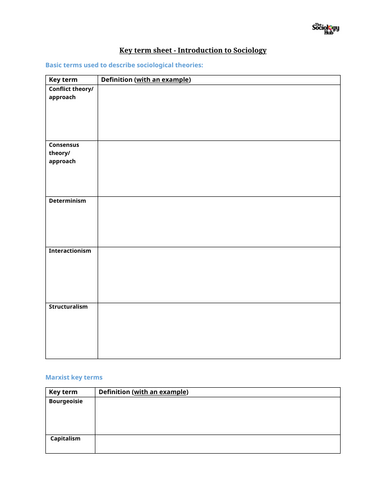
•Includes key term sheet for students to fill out definitions of key terms covered in lesson
•Includes a source-based activity using a blog by Dr Lisa Mckenzie, so students can assess the usefulness of functionalism using evidence.
•Includes a consolidation discussion task on the statement "There is more agreement amongst society than disagreement".
•RESOURCES CAN BE FOUND AT THE END OF THE PPT.
•Detailed lesson with lots of scaffolding based on adaptive teaching that helps students describe the key features of the functionalist theory, use key terms to explain the functionalist view of society and behaviour within it, and analyse and evaluate functionalism as a theory of society and behaviour within it.
•Covers the following key terms: Functionalism, Structuralism, Interactionism, Consensus theory/ approach, Value consensus, Conflict theory/ approach, Collective conscience, Social institutions, Organic/ biological analogy, Social order, Social solidarity and Determinism.
•Covers the following sociologist: Emile Durkheim.
•Makes reference to the following key terms students should already know, to promote a spiral curriculum: Nature vs nurture debate – Nature view of behaviour – Nurture view of behaviour – Instincts – Norms – Values – Culture – Positive sanctions – Negative sanctions – Socialisation – Primary socialisation – Secondary socialisation – Agencies of socialisation – Agents of socialisation – Agencies of social control – Agents of social control – Feral children.
•Includes a DO NOW retrieval starter (keyword bingo) that revisits prior knowledge key terms.
•Includes key term sheet for students to fill out definitions of key terms covered in lesson
•Includes a source-based activity using a blog by Dr Lisa Mckenzie, so students can assess the usefulness of functionalism using evidence.
•Includes a consolidation discussion task on the statement "There is more agreement amongst society than disagreement".
•RESOURCES CAN BE FOUND AT THE END OF THE PPT.