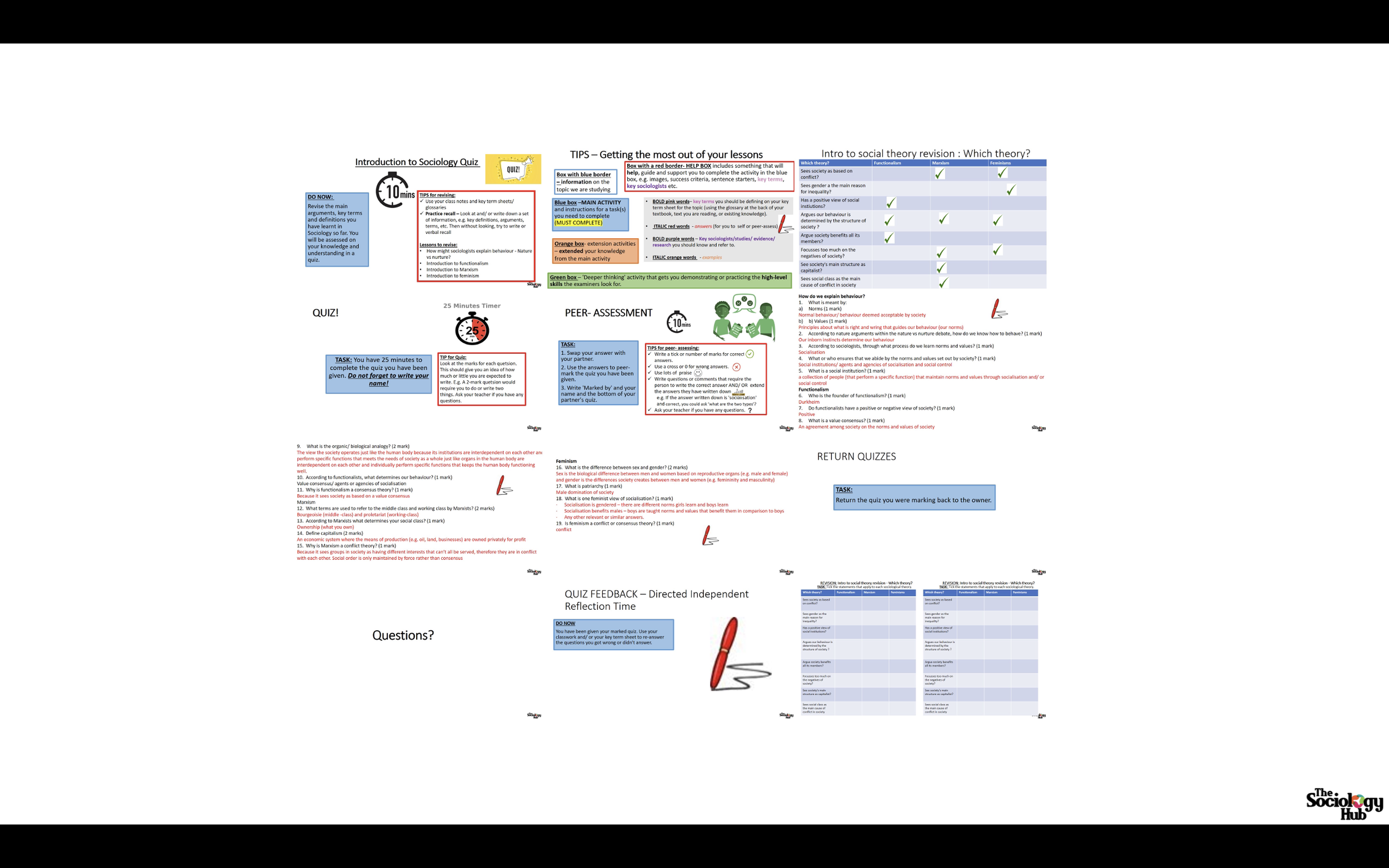
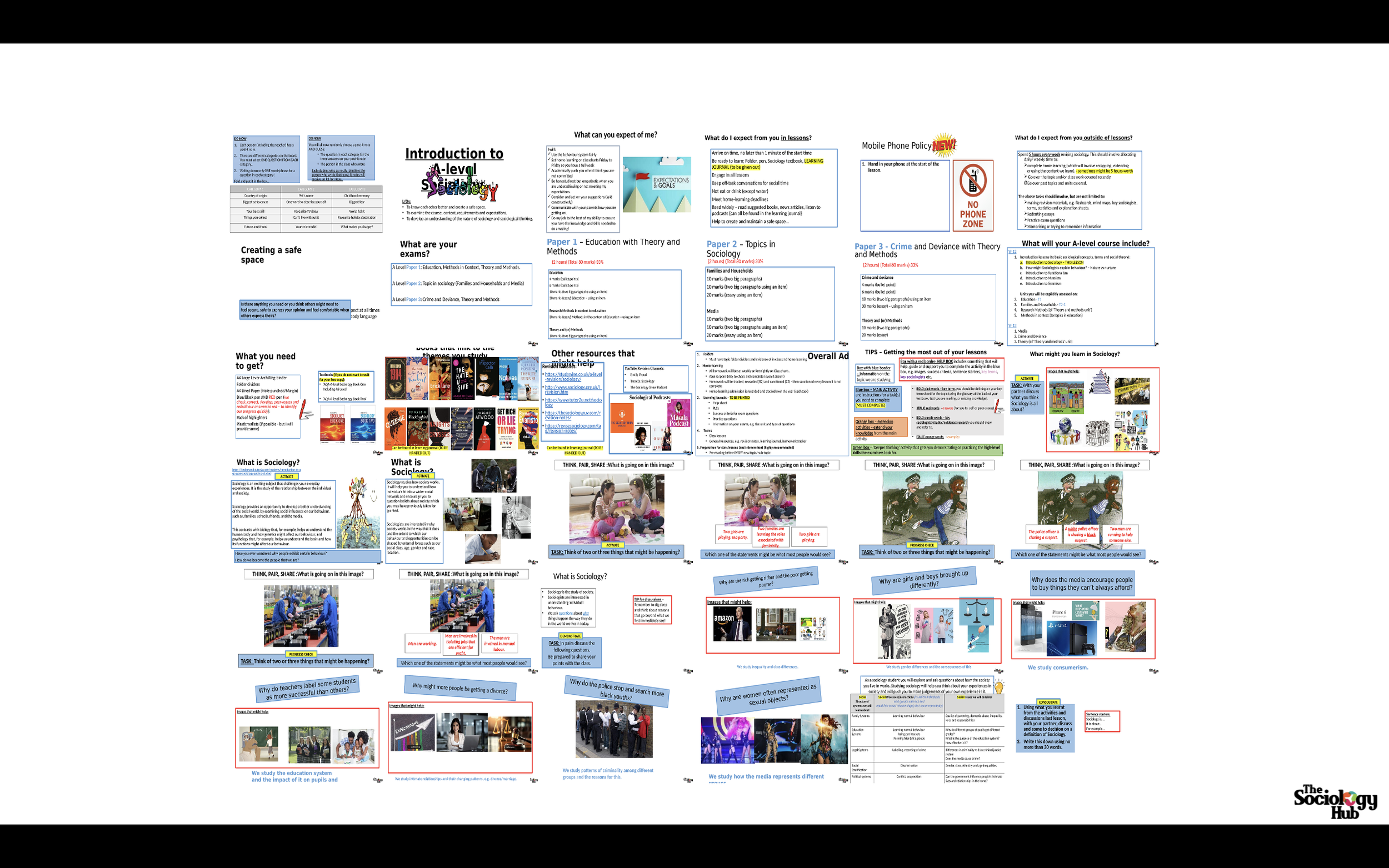
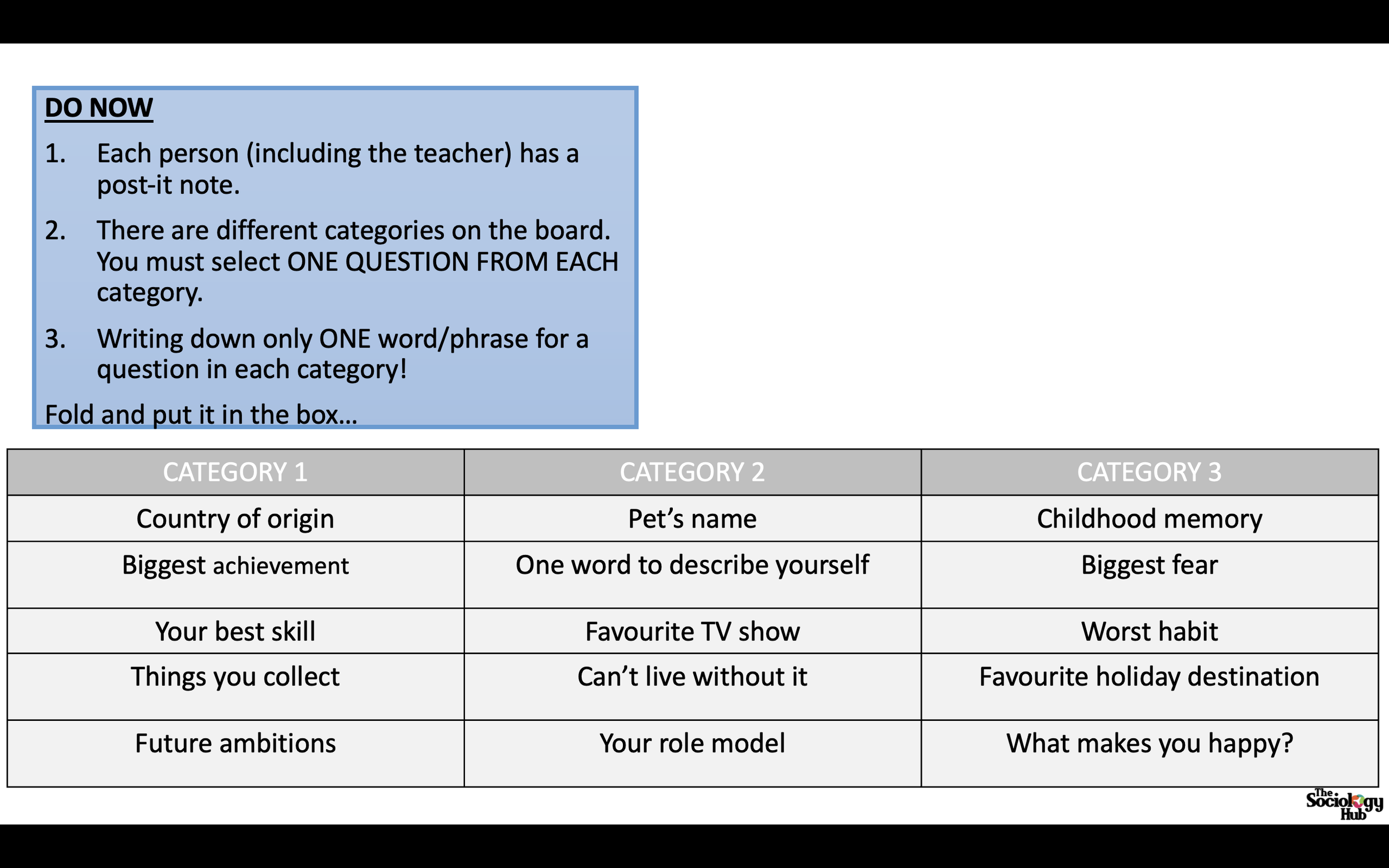
 Image 1 of 3
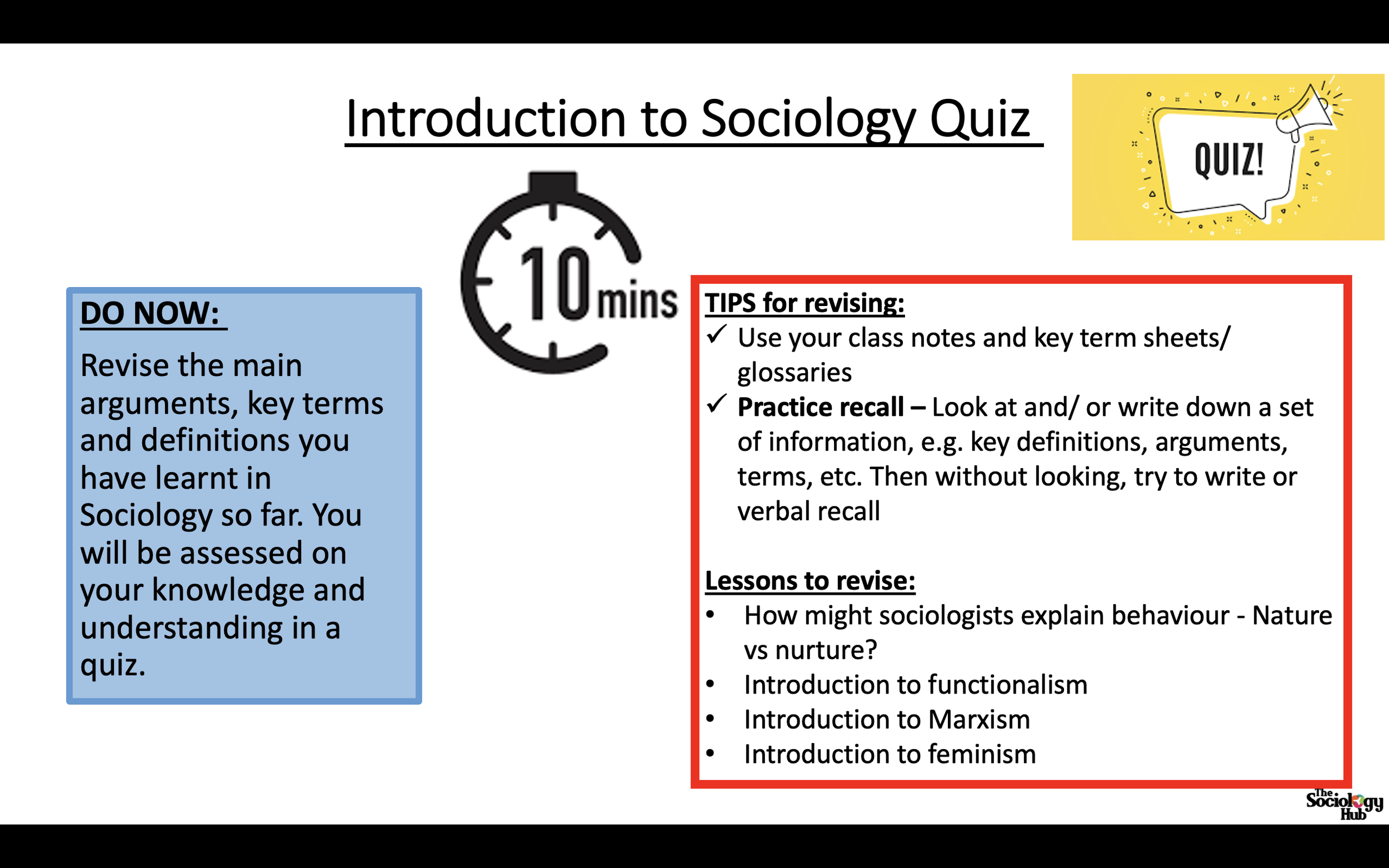
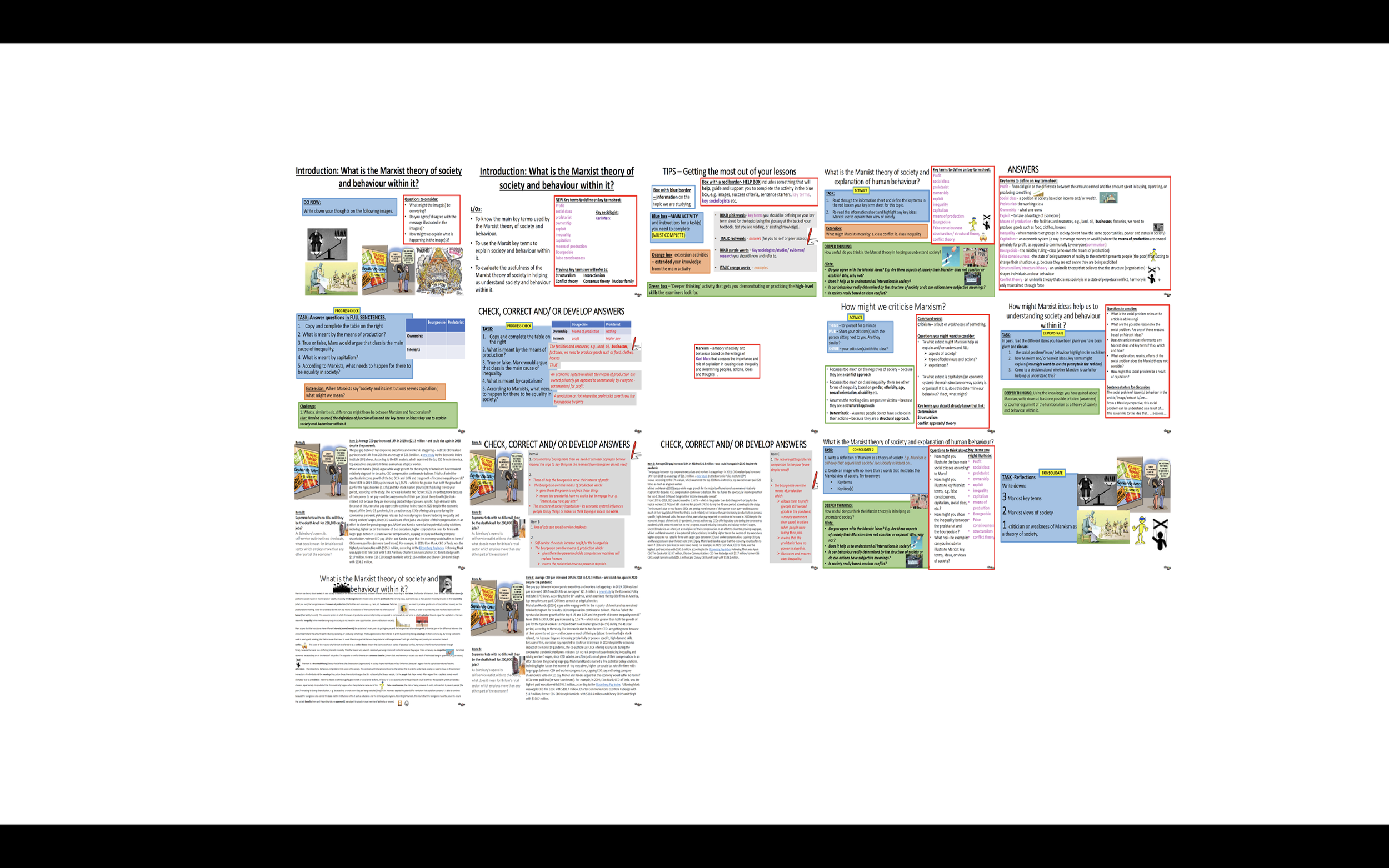
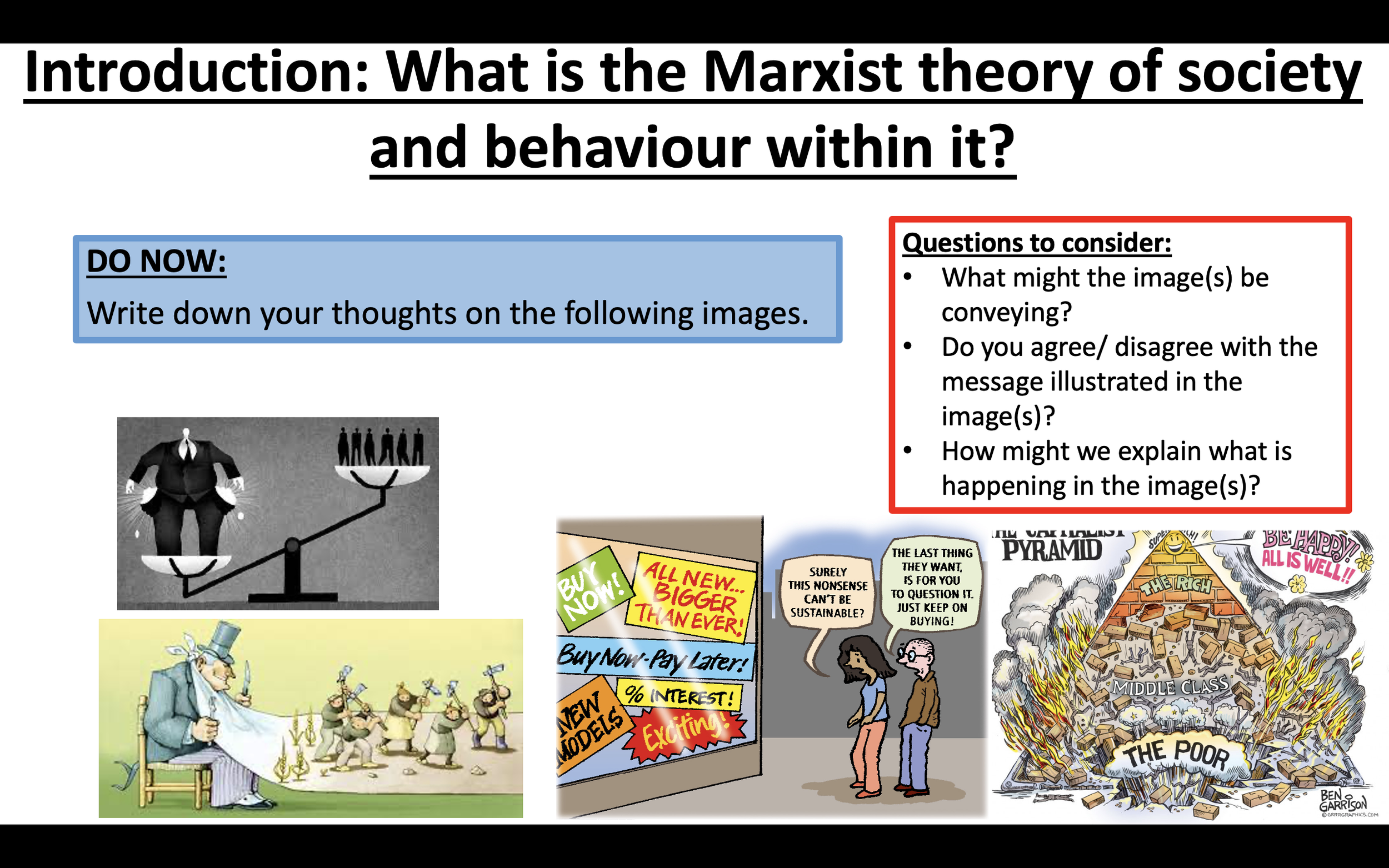 Image 2 of 3
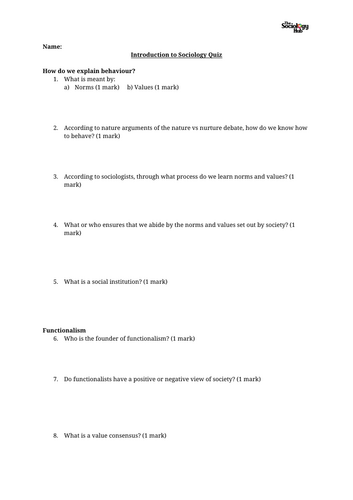
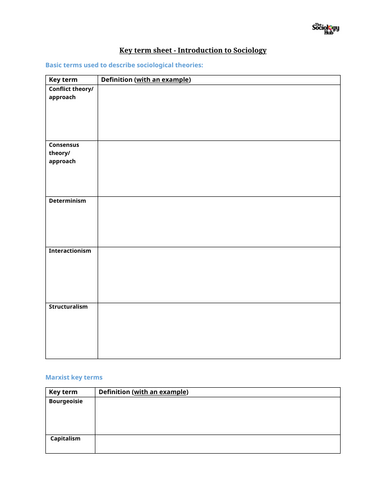 Image 3 of 3
•Detailed lesson with lots of scaffolding based on adaptive teaching that helps students know the key terms used by the Marxist theory, use those key terms to explain society and behaviour within it, and evaluate how useful Marxism is in helping us understand society.
•Covers the following key terms: profit, social class, proletariat, ownership, exploit, inequality, capitalism, means of production, bourgeoisie, false consciousness, structuralism/structural theory and conflict theory.
•Covers the following sociologist: Karl Marx.
•Makes reference to the following key terms students might know, to promote a spiral curriculum: structuralism – interactionism – conflict theory – consensus theory – nuclear family – determinism.
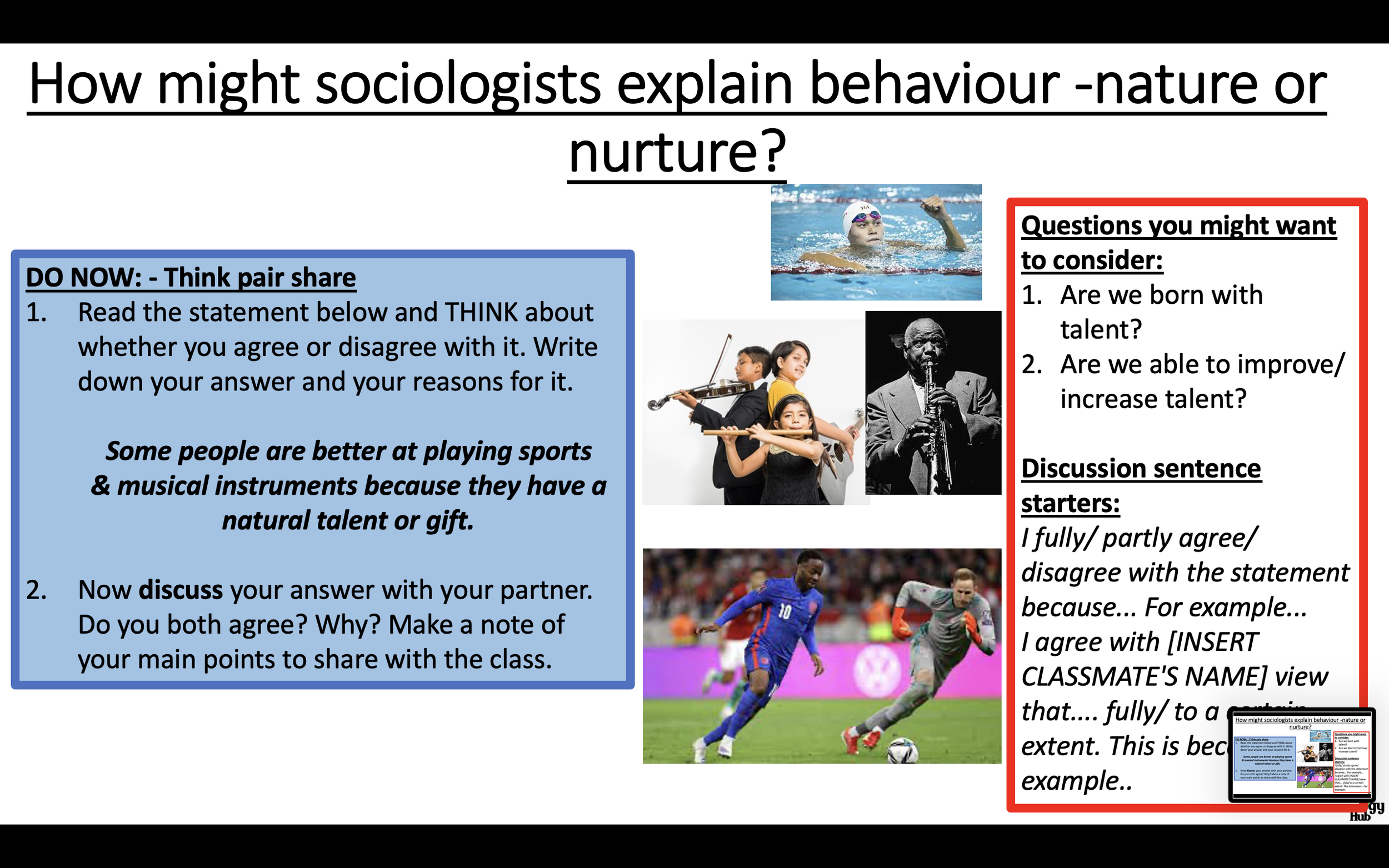
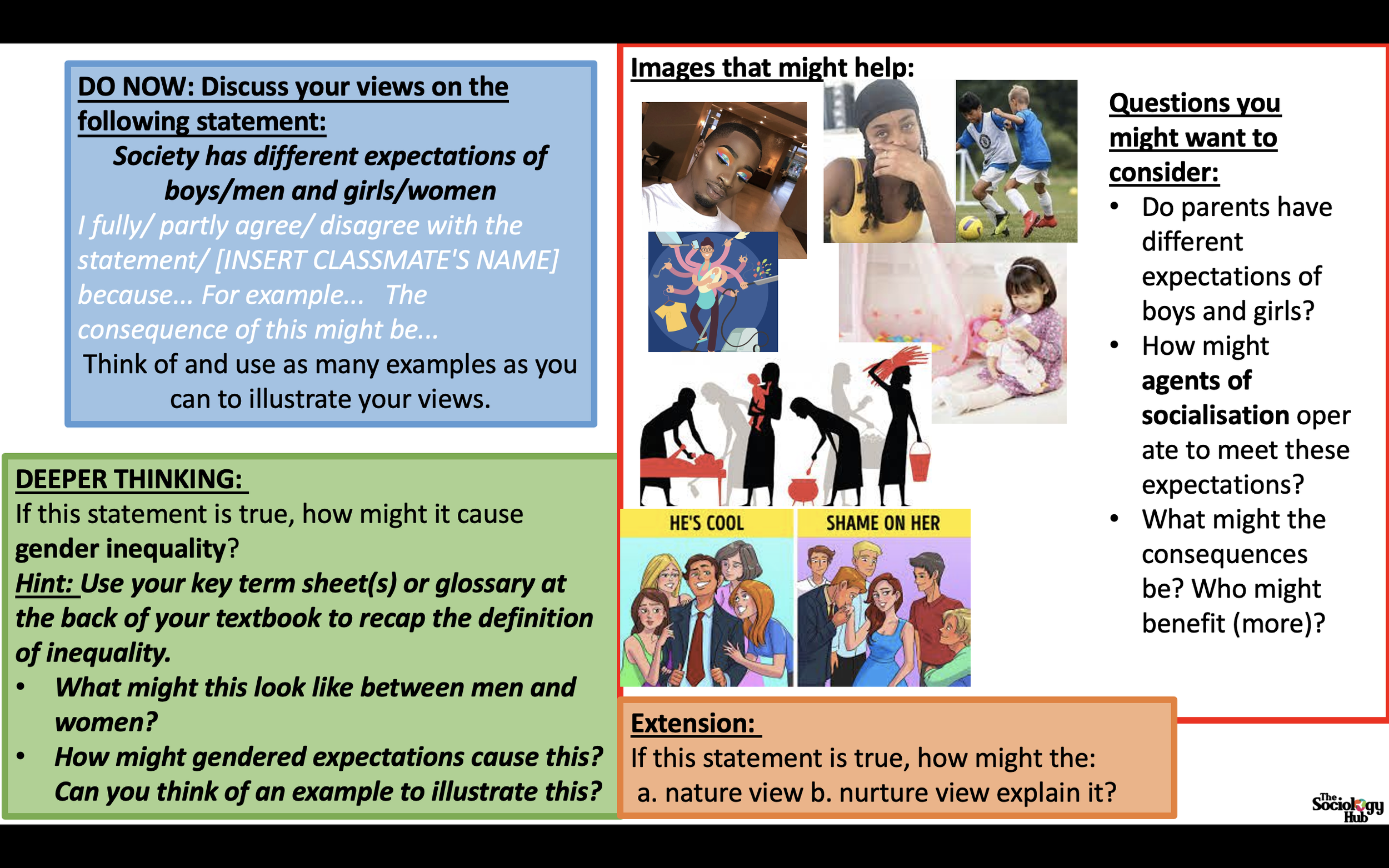
•Includes a ‘Do Now’ image-based discussion starter on inequality, consumerism and capitalism.
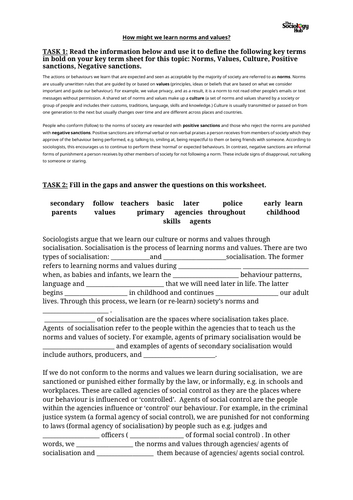
•Includes an information sheet and key term definition activity, a progress check with a bourgeoisie/proletariat comparison table, extension and challenge tasks comparing Marxism with functionalism, and a Think–Pair–Share criticism activity.
•Includes an item-based application activity on consumerism, self-service checkouts and CEO pay with sentence starters for discussion.
•ANSWERS TO MAIN ACTIVITIES INCLUDED.
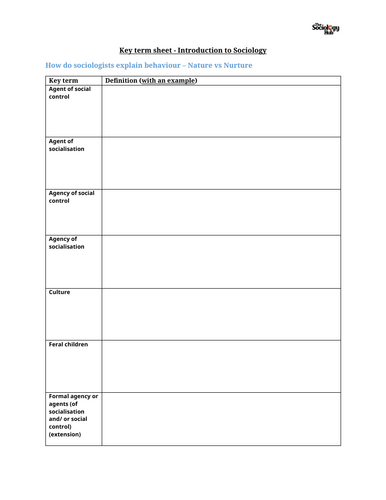
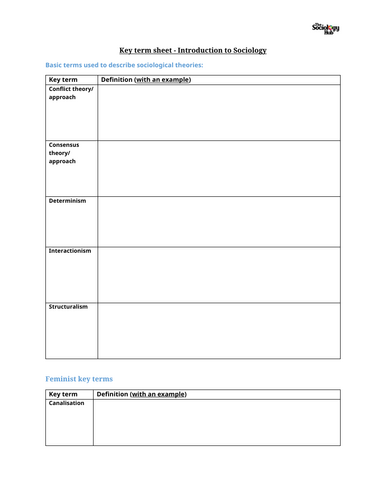
•Includes key term sheet for students to write definitions of key terms in lesson
•RESOURCES CAN BE FOUND AT THE END OF THE PPT.
•Detailed lesson with lots of scaffolding based on adaptive teaching that helps students know the key terms used by the Marxist theory, use those key terms to explain society and behaviour within it, and evaluate how useful Marxism is in helping us understand society.
•Covers the following key terms: profit, social class, proletariat, ownership, exploit, inequality, capitalism, means of production, bourgeoisie, false consciousness, structuralism/structural theory and conflict theory.
•Covers the following sociologist: Karl Marx.
•Makes reference to the following key terms students might know, to promote a spiral curriculum: structuralism – interactionism – conflict theory – consensus theory – nuclear family – determinism.
•Includes a ‘Do Now’ image-based discussion starter on inequality, consumerism and capitalism.
•Includes an information sheet and key term definition activity, a progress check with a bourgeoisie/proletariat comparison table, extension and challenge tasks comparing Marxism with functionalism, and a Think–Pair–Share criticism activity.
•Includes an item-based application activity on consumerism, self-service checkouts and CEO pay with sentence starters for discussion.
•ANSWERS TO MAIN ACTIVITIES INCLUDED.
•Includes key term sheet for students to write definitions of key terms in lesson
•RESOURCES CAN BE FOUND AT THE END OF THE PPT.