 Image 1 of 2
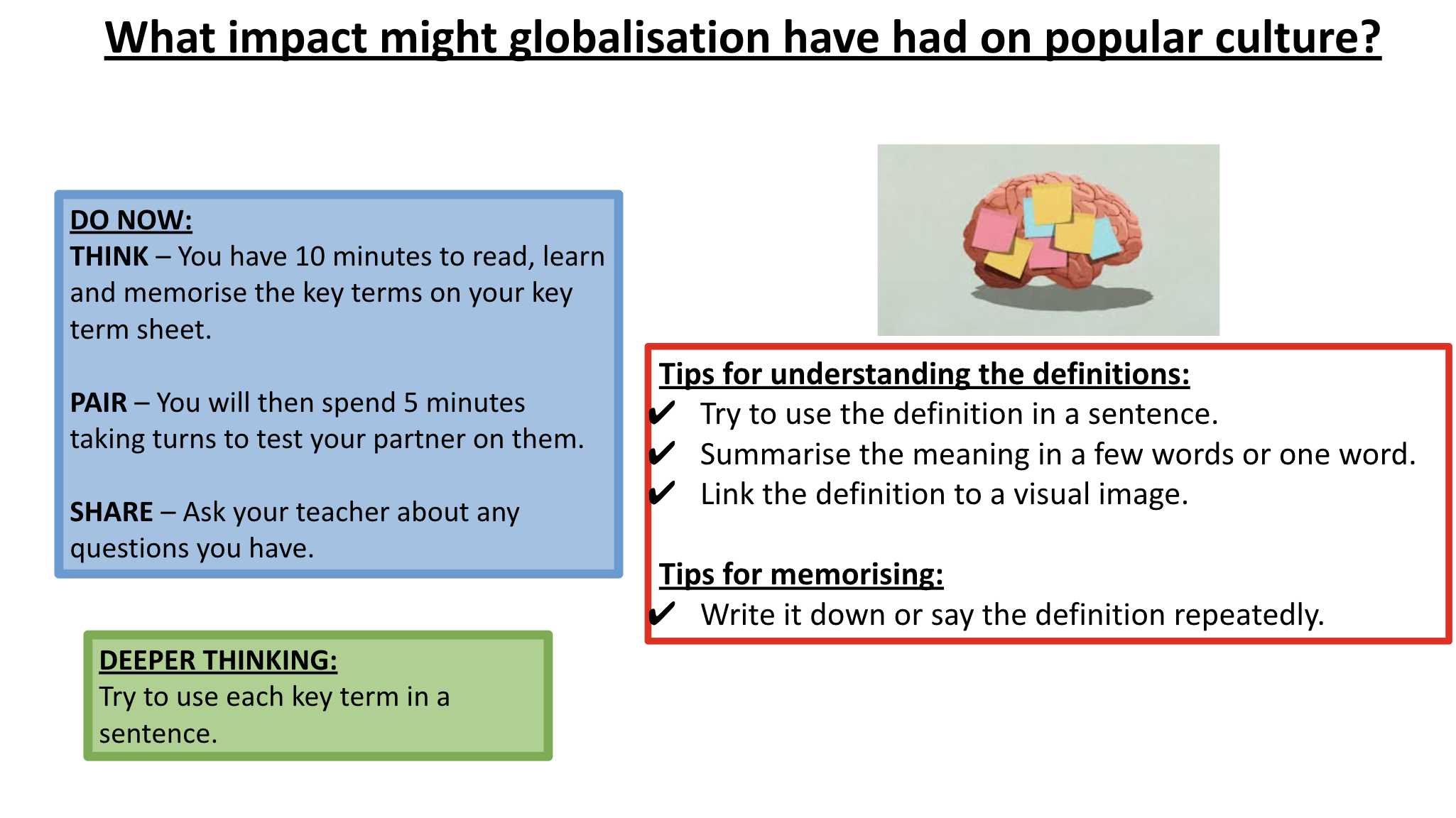 Image 2 of 2
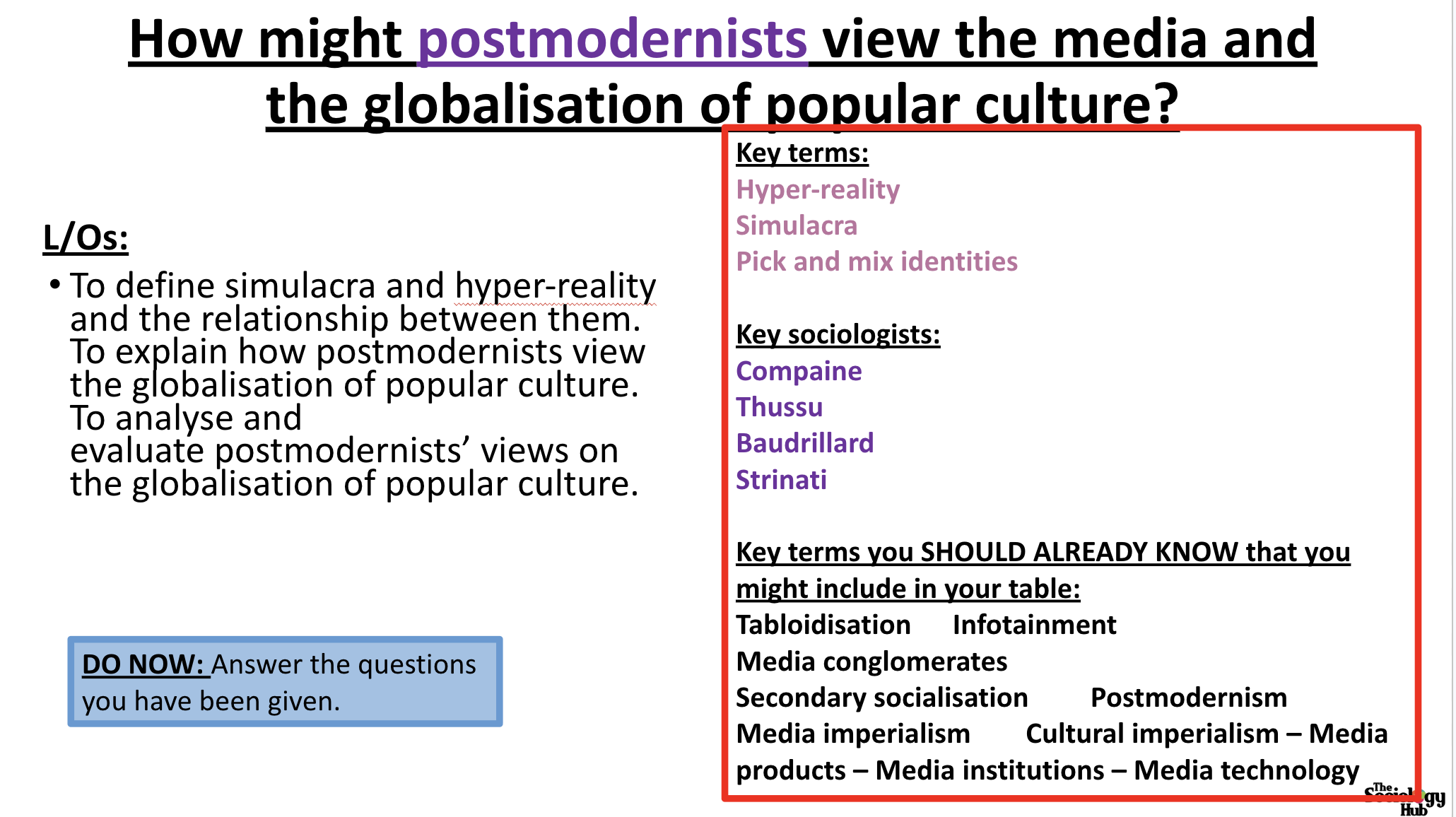
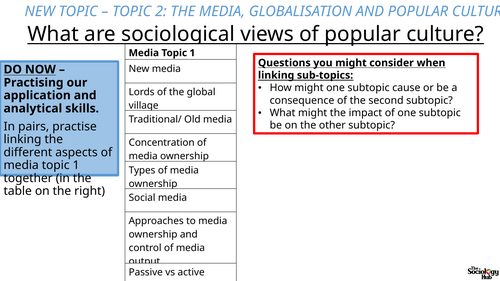
• Detailed lesson with lots of scaffolding based on adaptive teaching that helps students describe globalisation, identify its impact on popular/mass culture, explain the role of the media using examples, and analyse and evaluate these impacts.
• Covers the following key terms: Globalisation, Global media, Cultural homogenisation, Global culture, Cultural imperialism, Media imperialism, Transnational corporations, The Culture-Ideology of Consumerism, Coca-colonisation, Local culture, Global market, Hybrid culture (extension), Cultural Hybridisation (extension), Glocalisation (extension), Consumerism, Cocao-colonisation and Imperialism.
• Key sociologists covered: Strinati, Giddings, Giddens, Kellner, Sklair, Flew, Ritzer, Schiller, Pieterse and Marcuse, with McQuail as an extension and reference to Postmodernists, Pluralists and Marxists.
• Makes reference to the following key terms that students should know: Popular/mass culture – High culture – Low culture – Culture – Cultural products – Norms – Values – Subculture – Cultural capital – Hegemony – Neo-Marxism – Postmodernism – Media conglomerates – Secondary socialisation – Agency of secondary socialisation – Bourgeoisie – Proletariat – Economic capital – Ideology – Capitalism.
• REQUIRES textbook - 'SOCIOLOGY For AQA Volume 2' by Browne, Blundell & Law.
• Resources can be found at the end of the lesson section of the PPT, before the product description and preview collage. Includes a key term sheet, a gap-fill summary with a word bank and a structured information table.
• Teaching to all activities include Think–Pair–Share vocabulary retrieval, metacognitive memorisation prompts, image and video-link progress checks, explanations and examples, deeper-thinking tasks, extension prompts, and scaffolded PED planning and PEELD paragraph writing for a 20-mark evaluation question with AO1, AO2 and AO3 guidance.
• ANSWERS FOR SOME ACTIVITIES INCLUDED, including a completed summary, highlighted progress-check responses and supporting/opposing argument guidance.