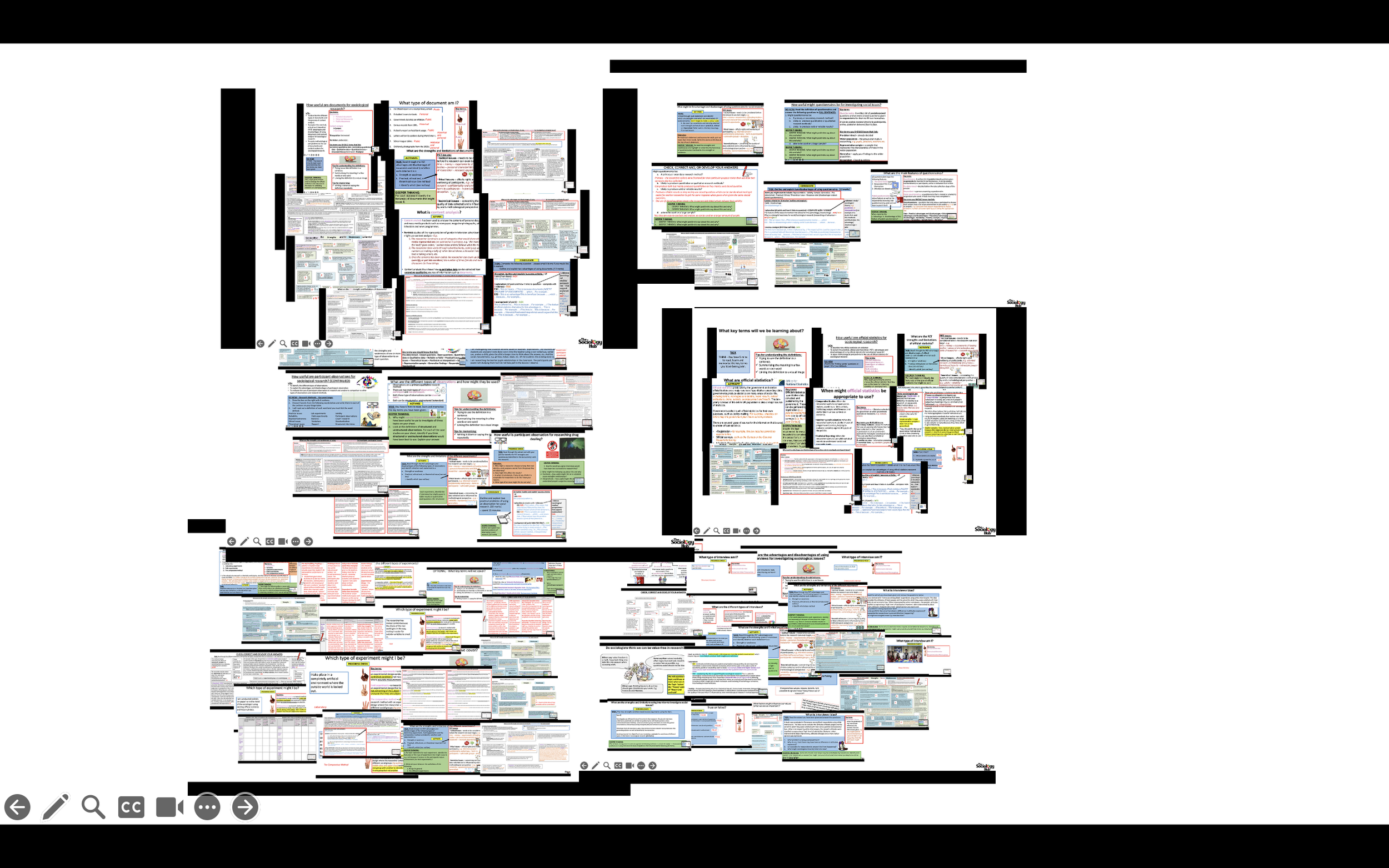
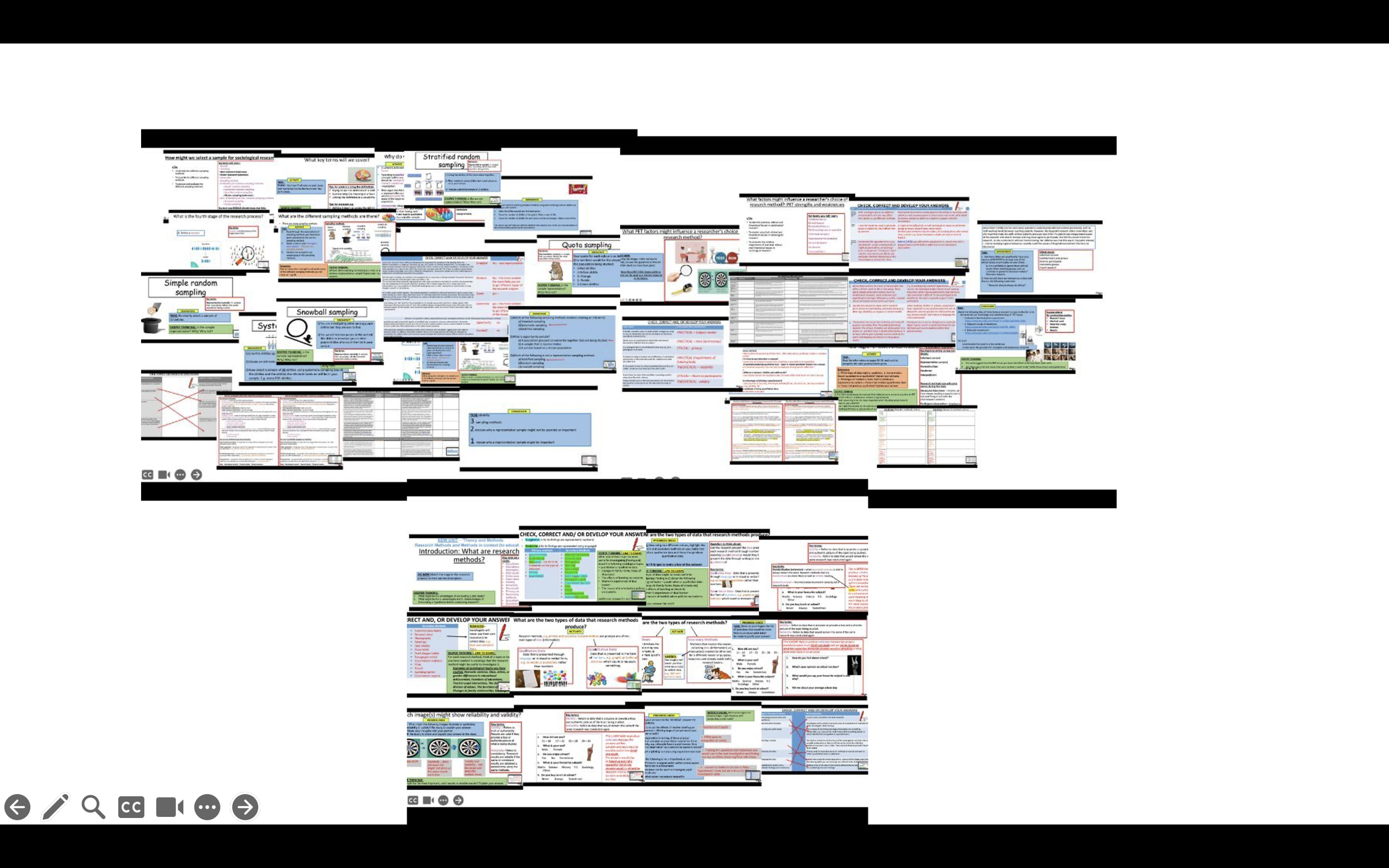
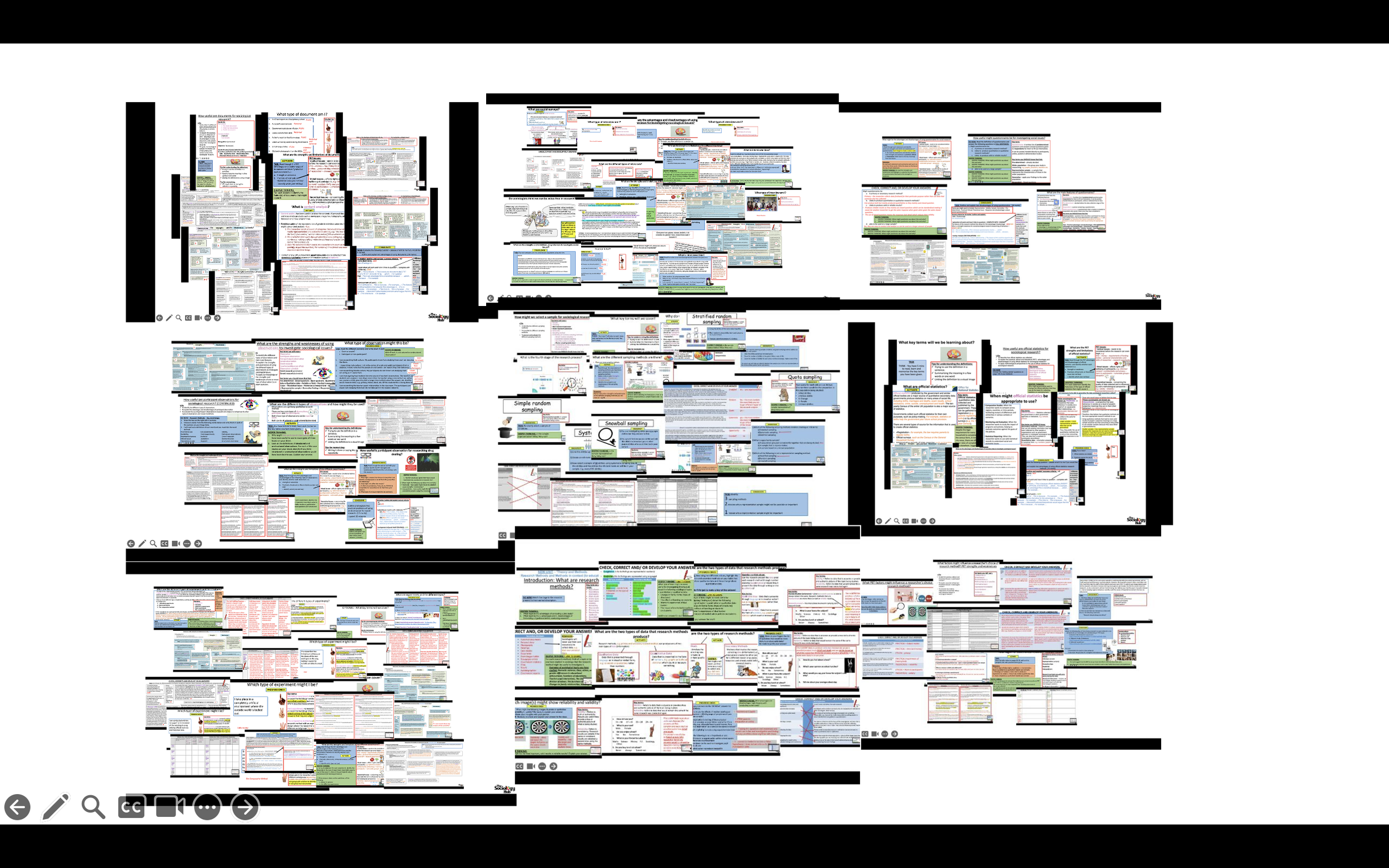
 Image 1 of 1
AQA AS/ A-level Sociology: Research Methods BUNDLE (Incl Intro lesson)
L1 AQA AS/A-level Sociology Research Methods - Introduction to research methods
Detailed and differentiated student-led lesson that explores primary vs secondary methods, quantitative vs qualitative methods, validity and reliability as a way to introduce students to the main main research methods.
Key terms covered:
•Hypothesis
•Operationalise (concepts)
•Pilot studies
•Close questions
•Open questions
•Validity
•Reliability
•Standardised
•Primary methods
•Secondary methods
•Quantitative data
•Qualitative data
ANSWERS TO MAIN ACTIVITIES
Can be used for ANY SPEC and GCSE but catered towards A-LEVEL AQA sociology** .
Comes with key term sheet for the lesson.
L2 AQA AS/A-level Sociology Research methods - Practical, ethical and theoretical issues
Detailed and differentiated student-led lesson that explores practical (time, cost, research opportunity, requirements of funding body & subject matter), ethical (informed consent, confidentiality, harm to participants, vulnerable groups & covert research) and theoretical issues (validity, reliability, representativeness, methodological perspective).
Catered towards A-LEVEL AQA sociology but if main activity can be replaced, the rest can be used for GCSE and ANY SPEC.
Key terms covered:
Practical issues
Ethical issues
Theoretical issues
Methodological perspective
Informed consent
Representative (sample)
Generalisations
Positivism
Interpretivism
ANSWERS TO MAIN ACTIVITIES INCLUDED
RESOURCES CAN BE FOUND AT THE END OF THE PPT
Comes with key term sheet for the lesson.
L3 AQA AS/ A- level Sociology Research methods - Sampling methods
Detailed and differentiated student-led lesson that explores sampling methods, sampling frame, representative (sample), generalising (findings) and the relationship between these and positivism and interpretivism.
Catered for AQA A-level Sociology but can be used for ANY SPEC and GCSE without being edited.
Key terms covered:
Sample
Sampling
Over-represent (extension
Under-represent (extension
Generalise
Sampling method
Probability (or random) sampling methods
Simple random sampling
Systematic random sampling
Stratified random sampling
Cluster sampling (extension)
Non- probability (or non- random) sampling methods
Snowball sampling
Quota sampling
Makes reference to key term you might already know that links:
Representative (sample) – Positivists (extension) - Interpretivists - Data – Sociological research – Research design – Research process
Comes with key term sheet for the lesson.
**ANSWER TO MAIN ACTIVITY INCLUDED
RESOURCES CAN BE FOUND AT THE END OF PPT
L4 AQA AS/A-level Sociology: Research Methods - Experiments
Detailed and differentiated student-led lesson that explores the main features of an experiment, the different types of experiments (lab, field and the comparative method) and the PET advantages and disadvantages of them.
Provides model paragraph and detailed scaffolding to help students apply their knowledge to a 10 markers
Key terms covered:
Experiment
Experimental design
Cause–and–effect relationship
Variables
Extraneous variables
Independent variable
Dependent variable
Laboratory experiments
Field experiments
The comparative method
Hawthorne effect
Experimental group
Control group
Key experiments covered :
Bandura’s Bobo doll experiment
Milgram’s study on obedience
Zimbardo’s Standford prison experiment
Durkheim’s study of suicide
Starter activity requires the AQA A Level Sociology Book One Including AS Level: Book one 3rd Revised edition by Rob Webb, Hal Westergaard, Keith Trobe, Annie Townend
Includes a teaching to all activity
ANSWERS TO MAIN ACTIVITIES iNCLUDED
Catered towards A-LEVEL AQA Sociology
RESOURCES AT THE END OF PPT
L5 AQA AS/A-level Sociology: Research Methods - Questionnaires
Detailed and differentiated student-led lesson that explores what a questionnaire, its main features, when it’s appropriate to use and the PET strengths and weaknesses of using them for social research.
Provides detailed scaffolding to help students apply their knowledge to a 10 markers
Covers the following key terms: Questionnaire, Pre-determined , Respondent,Postal questionnaires
Makes reference to the following key terms students might already know: Closed questions - Data - Practical advantages and disadvantages –Ethical advantages and disadvantages –Theoretical advantages and disadvantages –Reliability – Validity –Sample – Representative sample – Generalise – Sample frame – Variables
ANSWERS TO STARTER MAIN ACTIVITY INCLUDED
Catered towards A-LEVEL AQA Sociology
RESOURCES AT THE END OF PPT
L6 AQA AS/A-level Sociology: Research Methods - Interviews (Structured, Unstructured & Group)
Detailed and differentiated student-led lesson that explores the different types of interviews (structured, unstructured and group), their main features and the PET strengths and weaknesses.
Includes a 20 marker and a model answer on it.
Key terms covered:
Structured interview
Unstructured interview
Semi-structured interview
Group interviews
Interviewer bias
Interview schedule
Social survey
Provides model paragraph and detailed scaffolding to help students apply their knowledge to a 10 markers
Includes a teaching to all activity
ANSWERS TO MAIN ACTIVITIES iNCLUDED
Catered towards A-LEVEL AQA Sociology
RESOURCES AT THE END OF PPT
L7 AQA AS/A-level Sociology: Research Methods - Observations (Participant & Non-participant)
Detailed and differentiated student-led lesson that explores the different types of observations (participant and non-participant), their main features and the PET strengths and weaknesses of using them to investigate sociological issues.
Key terms covered:
Observation
Participant observation
Non-participant observation
Covert observation
Overt research
Hawthorne/Observer effect
Observation schedule
Overt research (extension)
Covert research (extension)
Makes reference to the following key terms students might know that link: Pre-determined - Closed questions - Open questions - Quantitative data vs Qualitative data – Reliable vs Valid – Practical issues – Ethical issues – Theoretical issues – Positivism vs Interpretivist – Sample size – Representative sample – Generalise findings – Respondent – Standardised
Two starter activities - one that requires the AQA A Level Sociology Book One Including AS Level: Book one 3rd Revised edition by Rob Webb, Hal Westergaard, Keith Trobe, Annie Townend
Detailed scaffolding included to help students apply their knowledge to a 10 marker
Includes a teaching to all activity
ANSWERS TO MAIN ACTIVITIES INCLUDED
Catered towards A-LEVEL AQA Sociology
RESOURCES AT THE END OF PPT
L8 AQA AS/A-level Sociology: Research Methods - Official statistics
Detailed and differentiated student-led lesson that explores the different types of observations (participant and non-participant), their main features and the PET strengths and weaknesses of using them to investigate sociological issues.
Key terms covered:
Official statistics
Ideological function
Dark figure of official statistics
Soft statistics
Hard statistics
Makes reference to the following key terms students might know that link: Secondary qualitative data – Secondary quantitative data - Qualitative data – Quantitative data
Starter activity requires the AQA A Level Sociology Book One Including AS Level: Book one 3rd Revised edition by Rob Webb, Hal Westergaard, Keith Trobe, Annie Townend
Detailed scaffolding included to help students apply their knowledge to a 10 marker
Includes a teaching to all activity
ANSWERS TO MAIN ACTIVITY INCLUDED
Catered towards A-LEVEL AQA Sociology
L9 AQA AS/A-level Sociology: Research Methods - Documents
Detailed and differentiated student-led lesson that explores the different types of documents, the process of content analysis and the practical, ethical and theoretical (PET) advantages and disadvantages of using documents and content analysis for sociological research.
Applies methodological perspectives to the use of documents and content analysis for sociological research
Key terms covered:
Documents
Personal document
Historical documents
Public documents
Content analysis
Content
Systematic
Triangulation (extension)
Verstehen (extension) .
Makes reference to the following key terms students might know that link: Secondary qualitative data –Secondary quantitative data - Qualitative data – Quantitative data – Grounded theory (extension) - Analyse
Detailed scaffolding included to help students apply their knowledge to a 10 marker
Includes a teaching to all activity
ANSWERS TO MAIN ACTIVITIES INCLUDED.
Catered towards A-LEVEL AQA Sociology
RESOURCES AT THE END OF PPT
L1 AQA AS/A-level Sociology Research Methods - Introduction to research methods
Detailed and differentiated student-led lesson that explores primary vs secondary methods, quantitative vs qualitative methods, validity and reliability as a way to introduce students to the main main research methods.
Key terms covered:
•Hypothesis
•Operationalise (concepts)
•Pilot studies
•Close questions
•Open questions
•Validity
•Reliability
•Standardised
•Primary methods
•Secondary methods
•Quantitative data
•Qualitative data
ANSWERS TO MAIN ACTIVITIES
Can be used for ANY SPEC and GCSE but catered towards A-LEVEL AQA sociology** .
Comes with key term sheet for the lesson.
L2 AQA AS/A-level Sociology Research methods - Practical, ethical and theoretical issues
Detailed and differentiated student-led lesson that explores practical (time, cost, research opportunity, requirements of funding body & subject matter), ethical (informed consent, confidentiality, harm to participants, vulnerable groups & covert research) and theoretical issues (validity, reliability, representativeness, methodological perspective).
Catered towards A-LEVEL AQA sociology but if main activity can be replaced, the rest can be used for GCSE and ANY SPEC.
Key terms covered:
Practical issues
Ethical issues
Theoretical issues
Methodological perspective
Informed consent
Representative (sample)
Generalisations
Positivism
Interpretivism
ANSWERS TO MAIN ACTIVITIES INCLUDED
RESOURCES CAN BE FOUND AT THE END OF THE PPT
Comes with key term sheet for the lesson.
L3 AQA AS/ A- level Sociology Research methods - Sampling methods
Detailed and differentiated student-led lesson that explores sampling methods, sampling frame, representative (sample), generalising (findings) and the relationship between these and positivism and interpretivism.
Catered for AQA A-level Sociology but can be used for ANY SPEC and GCSE without being edited.
Key terms covered:
Sample
Sampling
Over-represent (extension
Under-represent (extension
Generalise
Sampling method
Probability (or random) sampling methods
Simple random sampling
Systematic random sampling
Stratified random sampling
Cluster sampling (extension)
Non- probability (or non- random) sampling methods
Snowball sampling
Quota sampling
Makes reference to key term you might already know that links:
Representative (sample) – Positivists (extension) - Interpretivists - Data – Sociological research – Research design – Research process
Comes with key term sheet for the lesson.
**ANSWER TO MAIN ACTIVITY INCLUDED
RESOURCES CAN BE FOUND AT THE END OF PPT
L4 AQA AS/A-level Sociology: Research Methods - Experiments
Detailed and differentiated student-led lesson that explores the main features of an experiment, the different types of experiments (lab, field and the comparative method) and the PET advantages and disadvantages of them.
Provides model paragraph and detailed scaffolding to help students apply their knowledge to a 10 markers
Key terms covered:
Experiment
Experimental design
Cause–and–effect relationship
Variables
Extraneous variables
Independent variable
Dependent variable
Laboratory experiments
Field experiments
The comparative method
Hawthorne effect
Experimental group
Control group
Key experiments covered :
Bandura’s Bobo doll experiment
Milgram’s study on obedience
Zimbardo’s Standford prison experiment
Durkheim’s study of suicide
Starter activity requires the AQA A Level Sociology Book One Including AS Level: Book one 3rd Revised edition by Rob Webb, Hal Westergaard, Keith Trobe, Annie Townend
Includes a teaching to all activity
ANSWERS TO MAIN ACTIVITIES iNCLUDED
Catered towards A-LEVEL AQA Sociology
RESOURCES AT THE END OF PPT
L5 AQA AS/A-level Sociology: Research Methods - Questionnaires
Detailed and differentiated student-led lesson that explores what a questionnaire, its main features, when it’s appropriate to use and the PET strengths and weaknesses of using them for social research.
Provides detailed scaffolding to help students apply their knowledge to a 10 markers
Covers the following key terms: Questionnaire, Pre-determined , Respondent,Postal questionnaires
Makes reference to the following key terms students might already know: Closed questions - Data - Practical advantages and disadvantages –Ethical advantages and disadvantages –Theoretical advantages and disadvantages –Reliability – Validity –Sample – Representative sample – Generalise – Sample frame – Variables
ANSWERS TO STARTER MAIN ACTIVITY INCLUDED
Catered towards A-LEVEL AQA Sociology
RESOURCES AT THE END OF PPT
L6 AQA AS/A-level Sociology: Research Methods - Interviews (Structured, Unstructured & Group)
Detailed and differentiated student-led lesson that explores the different types of interviews (structured, unstructured and group), their main features and the PET strengths and weaknesses.
Includes a 20 marker and a model answer on it.
Key terms covered:
Structured interview
Unstructured interview
Semi-structured interview
Group interviews
Interviewer bias
Interview schedule
Social survey
Provides model paragraph and detailed scaffolding to help students apply their knowledge to a 10 markers
Includes a teaching to all activity
ANSWERS TO MAIN ACTIVITIES iNCLUDED
Catered towards A-LEVEL AQA Sociology
RESOURCES AT THE END OF PPT
L7 AQA AS/A-level Sociology: Research Methods - Observations (Participant & Non-participant)
Detailed and differentiated student-led lesson that explores the different types of observations (participant and non-participant), their main features and the PET strengths and weaknesses of using them to investigate sociological issues.
Key terms covered:
Observation
Participant observation
Non-participant observation
Covert observation
Overt research
Hawthorne/Observer effect
Observation schedule
Overt research (extension)
Covert research (extension)
Makes reference to the following key terms students might know that link: Pre-determined - Closed questions - Open questions - Quantitative data vs Qualitative data – Reliable vs Valid – Practical issues – Ethical issues – Theoretical issues – Positivism vs Interpretivist – Sample size – Representative sample – Generalise findings – Respondent – Standardised
Two starter activities - one that requires the AQA A Level Sociology Book One Including AS Level: Book one 3rd Revised edition by Rob Webb, Hal Westergaard, Keith Trobe, Annie Townend
Detailed scaffolding included to help students apply their knowledge to a 10 marker
Includes a teaching to all activity
ANSWERS TO MAIN ACTIVITIES INCLUDED
Catered towards A-LEVEL AQA Sociology
RESOURCES AT THE END OF PPT
L8 AQA AS/A-level Sociology: Research Methods - Official statistics
Detailed and differentiated student-led lesson that explores the different types of observations (participant and non-participant), their main features and the PET strengths and weaknesses of using them to investigate sociological issues.
Key terms covered:
Official statistics
Ideological function
Dark figure of official statistics
Soft statistics
Hard statistics
Makes reference to the following key terms students might know that link: Secondary qualitative data – Secondary quantitative data - Qualitative data – Quantitative data
Starter activity requires the AQA A Level Sociology Book One Including AS Level: Book one 3rd Revised edition by Rob Webb, Hal Westergaard, Keith Trobe, Annie Townend
Detailed scaffolding included to help students apply their knowledge to a 10 marker
Includes a teaching to all activity
ANSWERS TO MAIN ACTIVITY INCLUDED
Catered towards A-LEVEL AQA Sociology
L9 AQA AS/A-level Sociology: Research Methods - Documents
Detailed and differentiated student-led lesson that explores the different types of documents, the process of content analysis and the practical, ethical and theoretical (PET) advantages and disadvantages of using documents and content analysis for sociological research.
Applies methodological perspectives to the use of documents and content analysis for sociological research
Key terms covered:
Documents
Personal document
Historical documents
Public documents
Content analysis
Content
Systematic
Triangulation (extension)
Verstehen (extension) .
Makes reference to the following key terms students might know that link: Secondary qualitative data –Secondary quantitative data - Qualitative data – Quantitative data – Grounded theory (extension) - Analyse
Detailed scaffolding included to help students apply their knowledge to a 10 marker
Includes a teaching to all activity
ANSWERS TO MAIN ACTIVITIES INCLUDED.
Catered towards A-LEVEL AQA Sociology
RESOURCES AT THE END OF PPT