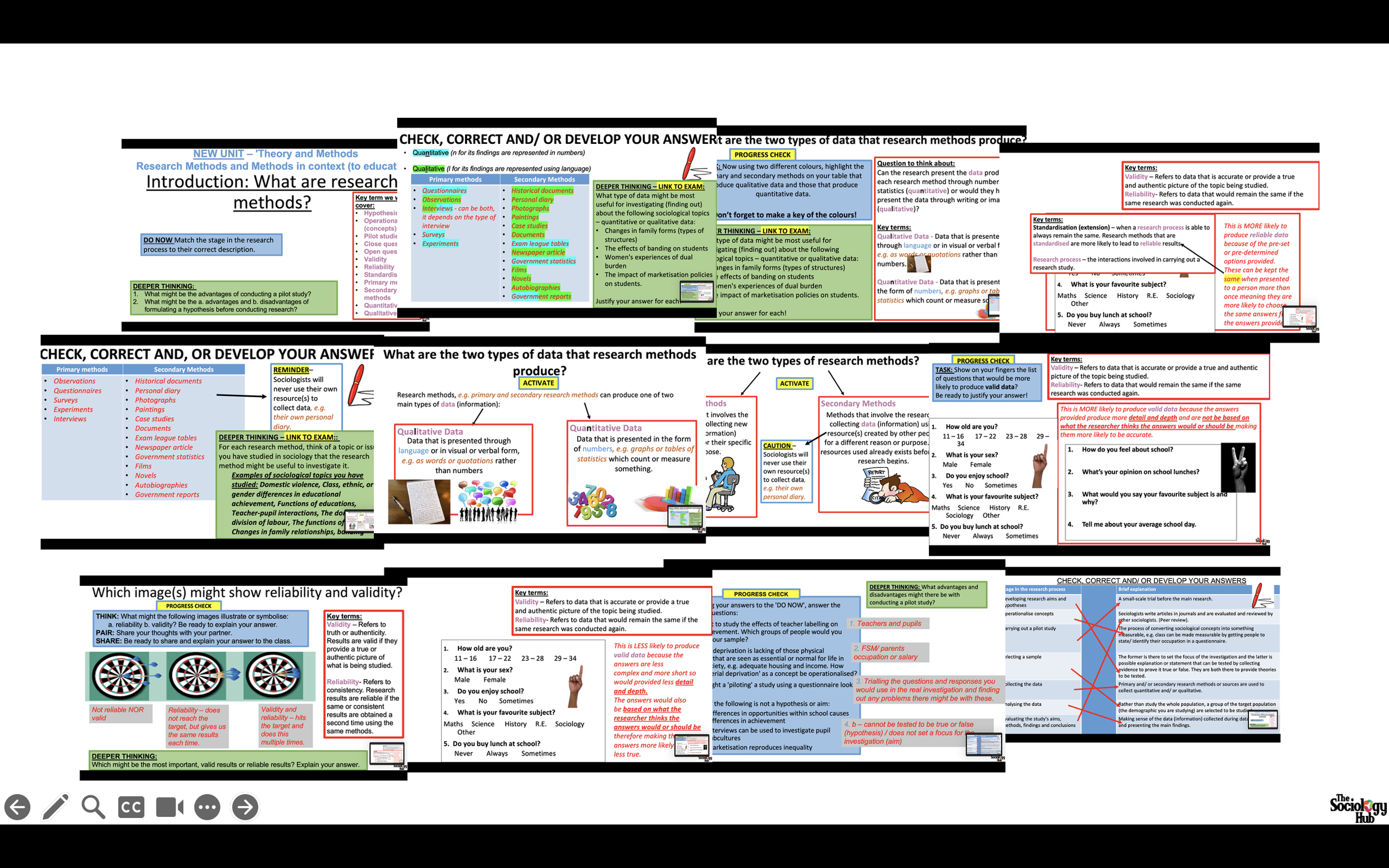
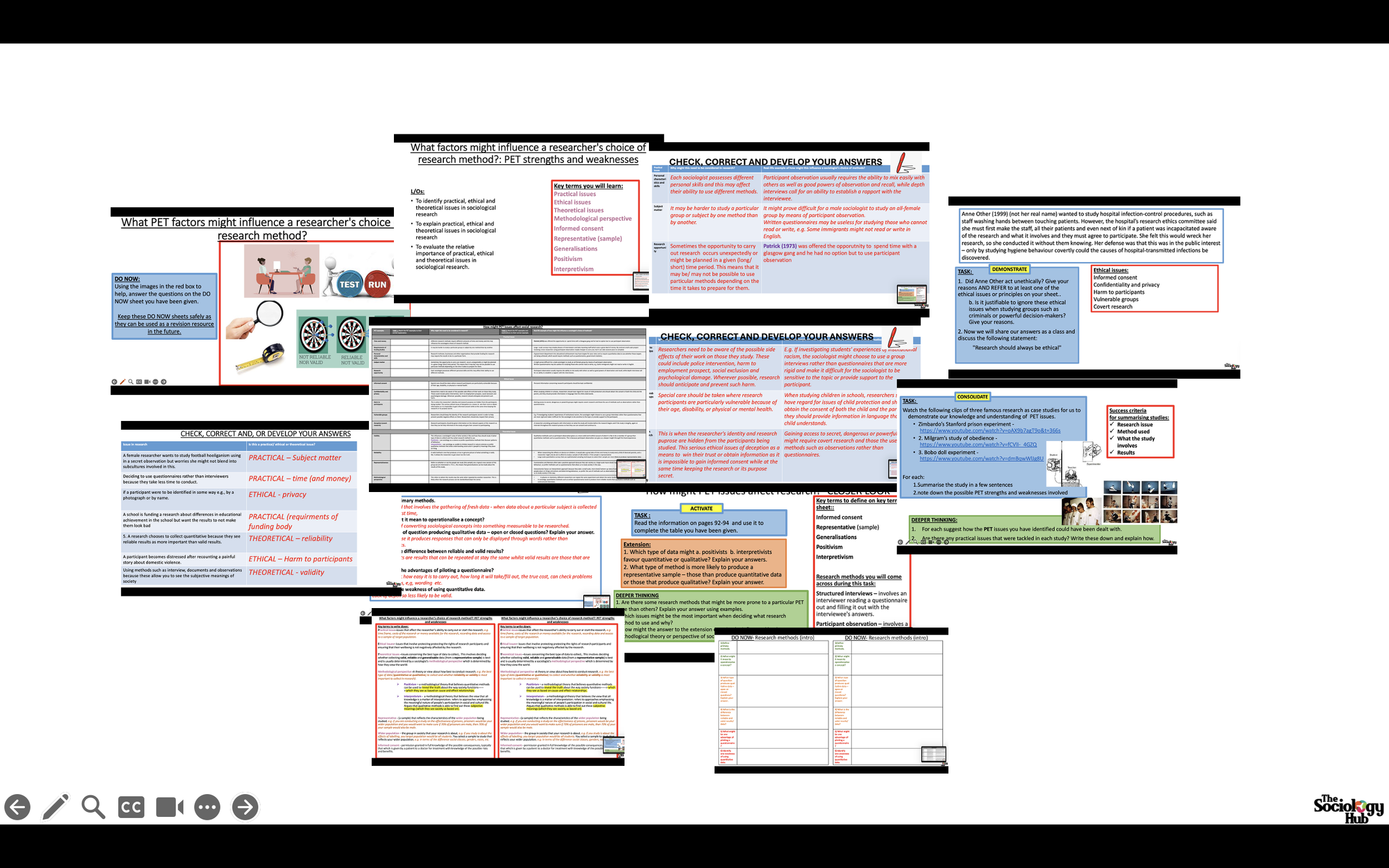
Image 1 of 2
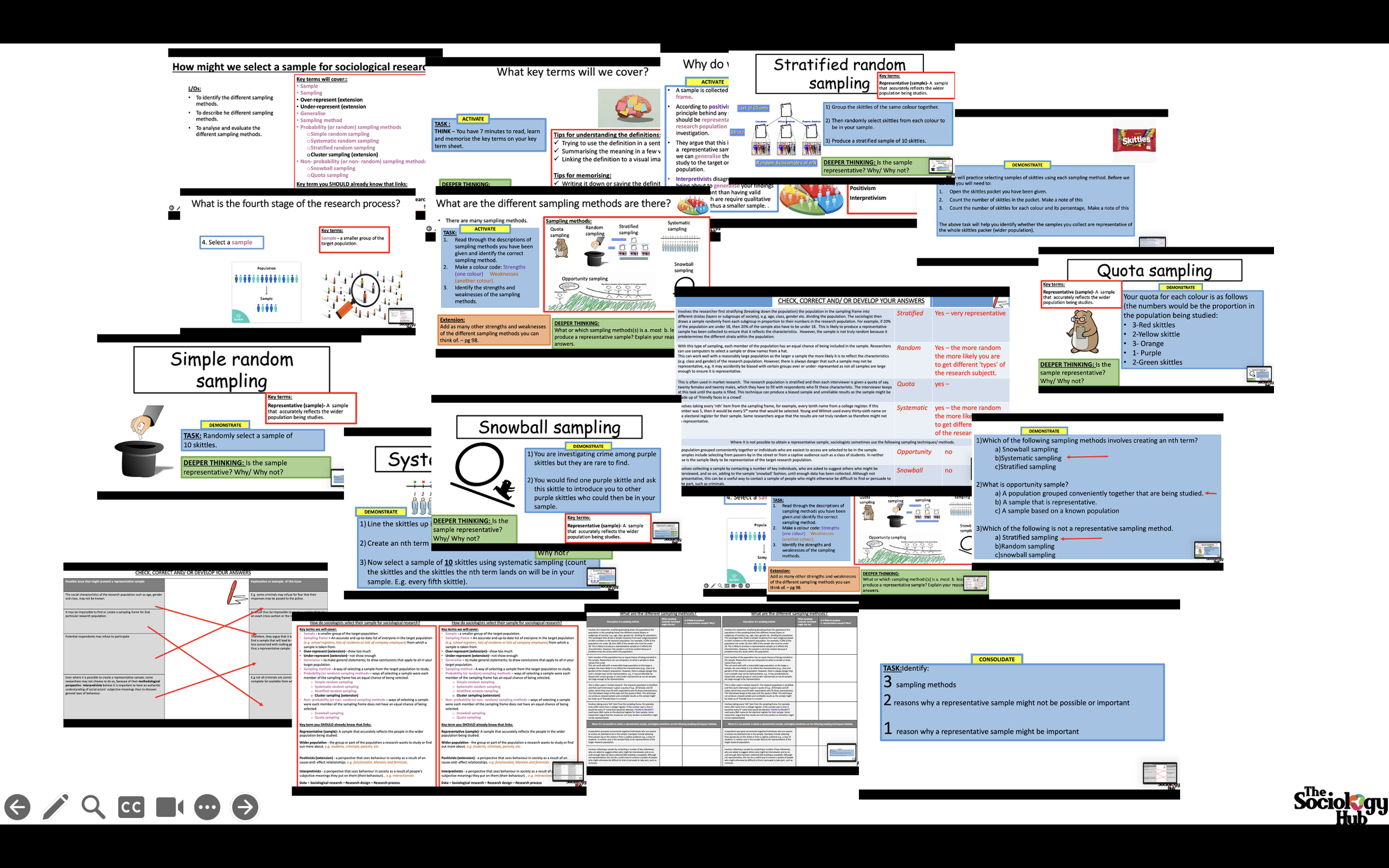 Image 2 of 2
Detailed and differentiated student-led lesson that explores sampling methods, sampling frame, representative (sample), generalising (findings) and the relationship between these and positivism and interpretivism.
Catered for AQA A-level Sociology but can be used for ANY SPEC and GCSE without being edited.
Key terms covered:
Sample
Sampling
Over-represent (extension
Under-represent (extension
Generalise
Sampling method
Probability (or random) sampling methods
Simple random sampling
Systematic random sampling
Stratified random sampling
Cluster sampling (extension)
Non- probability (or non- random) sampling methods
Snowball sampling
Quota sampling
Makes reference to key term you might already know that links:
Representative (sample) – Positivists (extension) - Interpretivists - Data – Sociological research – Research design – Research process
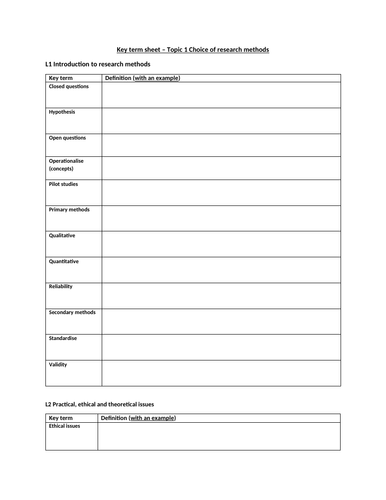
**Comes with key term sheet for the lesson.**
**ANSWER TO MAIN ACTIVITY INCLUDED
**RESOURCES CAN BE FOUND AT THE END OF PPT**
Detailed and differentiated student-led lesson that explores sampling methods, sampling frame, representative (sample), generalising (findings) and the relationship between these and positivism and interpretivism.
Catered for AQA A-level Sociology but can be used for ANY SPEC and GCSE without being edited.
Key terms covered:
Sample
Sampling
Over-represent (extension
Under-represent (extension
Generalise
Sampling method
Probability (or random) sampling methods
Simple random sampling
Systematic random sampling
Stratified random sampling
Cluster sampling (extension)
Non- probability (or non- random) sampling methods
Snowball sampling
Quota sampling
Makes reference to key term you might already know that links:
Representative (sample) – Positivists (extension) - Interpretivists - Data – Sociological research – Research design – Research process
**Comes with key term sheet for the lesson.**
**ANSWER TO MAIN ACTIVITY INCLUDED
**RESOURCES CAN BE FOUND AT THE END OF PPT**