 Image 1 of 2
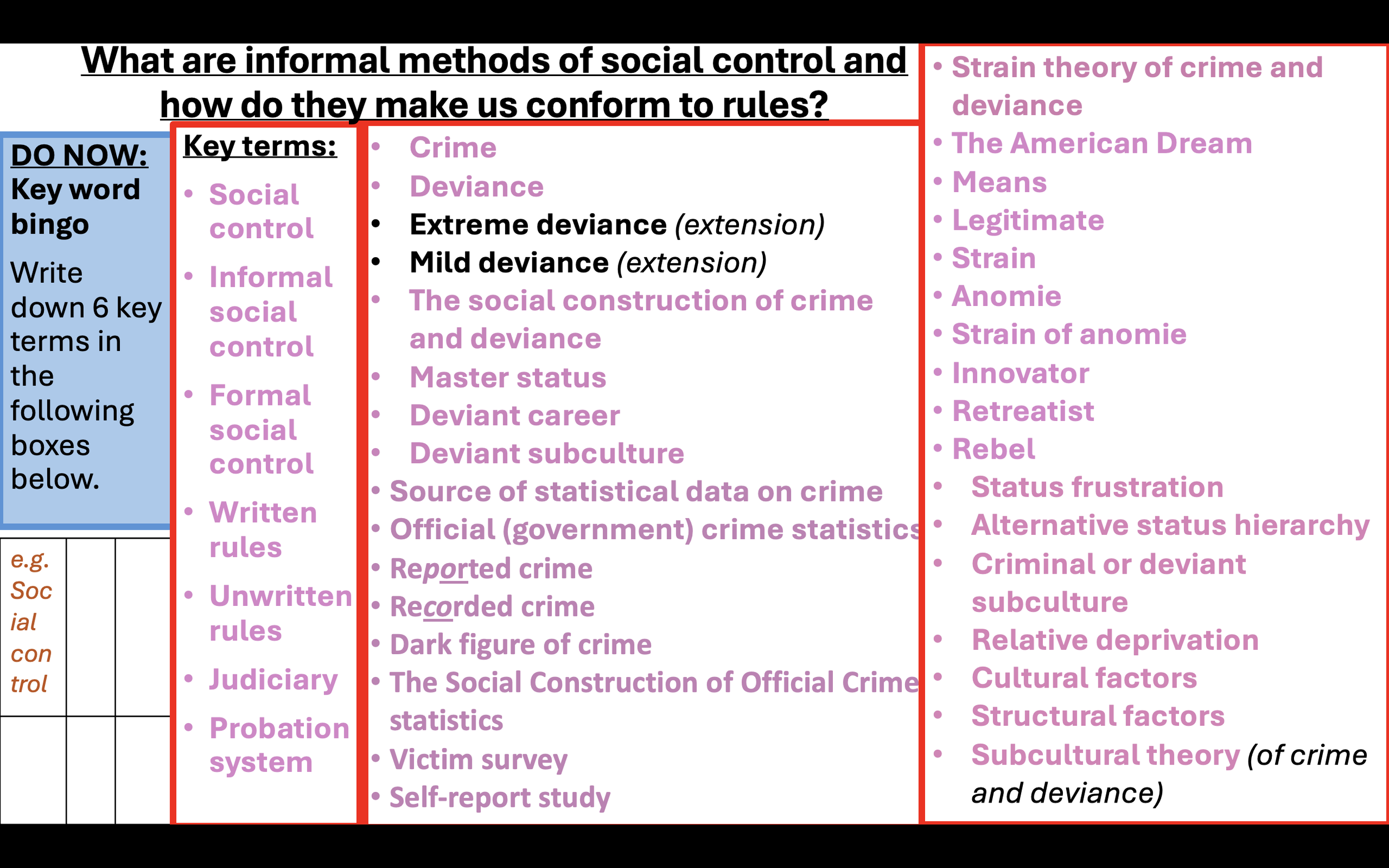 Image 2 of 2
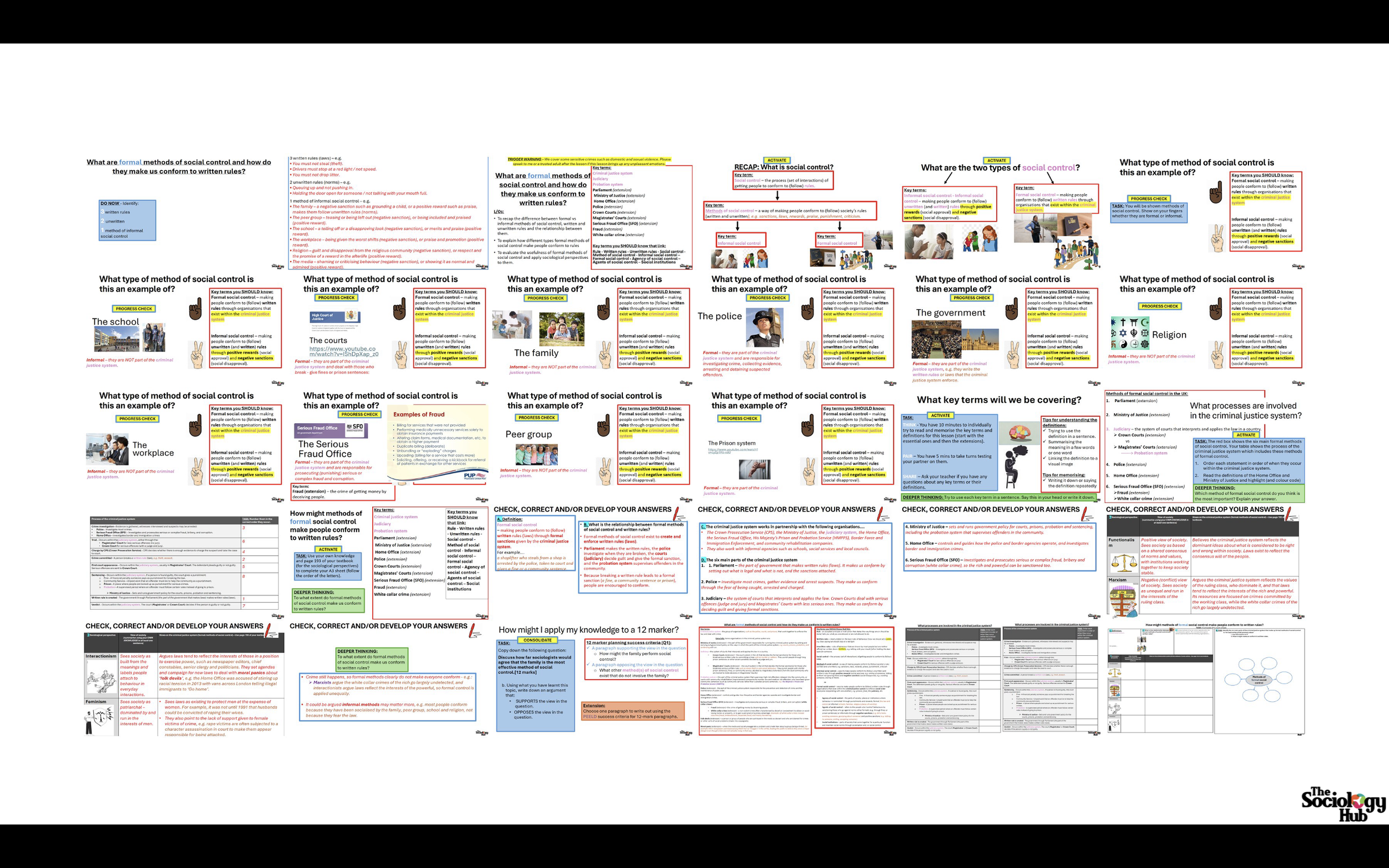
Detailed lesson with lots of scaffolding based on adaptive teaching that helps students identify the difference between formal vs informal methods of social control, written and unwritten rules and the relationship between them, explain how different types of informal methods of social control make people conform to rules, evaluate the usefulness of informal methods of social control and apply sociological perspectives to them.
Covers the following key terms:Rule · Written rules · Unwritten rules · Social control · Method of social control · Informal social control · Formal social control · Glass ceiling (extension) · Social control theory of gender and crime, public and private sphere.
Covers the following sociologists: Farrington and West (extension) · Feminist Heidensohn (key study for perspective 4 marker)
Makes reference to the following prior key terms to promote a spiral curriculum:Norms · Values · Culture · Positive rewards/sanctions · Negative sanctions · Agency of socialisation · Agents of socialisation · Agency of social control · Agents of social control · Social institutions
The lesson includes a teaching-to-all activity on written vs unwritten rules
PRINT mind-map worksheet in A3.
Keyword bingo as starter activity
INCLUDES A KEY TERM SHEET WITH DEFINITIONS FOR THE LESSON.
Includes a ‘perspective 4 marker’ on Heidensohn, scafoldding to help students answer it and a student-friendly markscheme
ANSWERS TO ALL ACTIVITIES INCLUDED
One activity requires AQA GCSE (9-1) Sociology, Updated Editionby David Bown or an alternative source on sociological of informal social control (functionalist, Marxist, interactionists and feminist)
RESOURCESCAN BE FOUND AT THE END OF THE PPT.
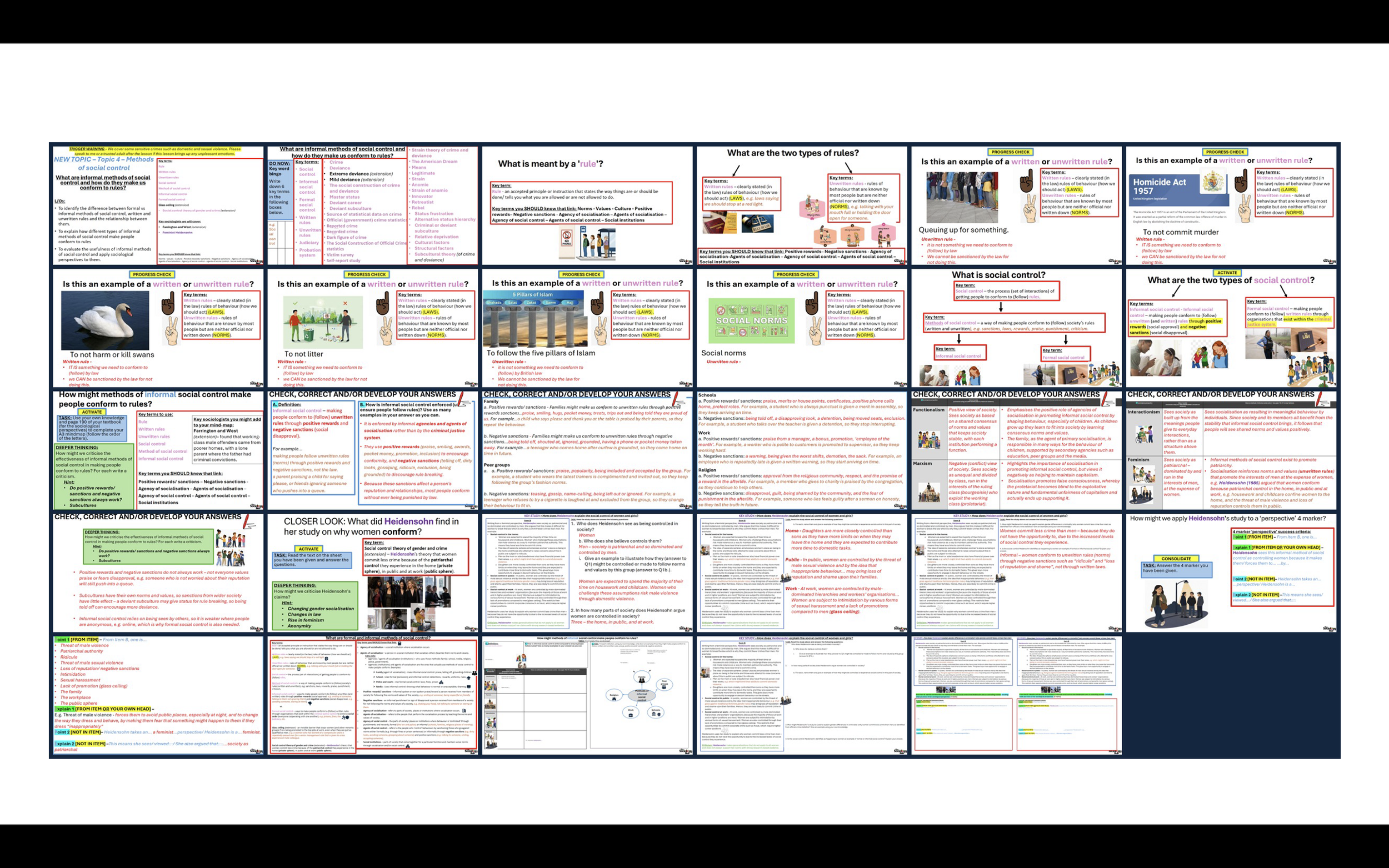
Detailed lesson with lots of scaffolding based on adaptive teaching that helps students identify the difference between formal vs informal methods of social control, written and unwritten rules and the relationship between them, explain how different types of informal methods of social control make people conform to rules, evaluate the usefulness of informal methods of social control and apply sociological perspectives to them.
Covers the following key terms:Rule · Written rules · Unwritten rules · Social control · Method of social control · Informal social control · Formal social control · Glass ceiling (extension) · Social control theory of gender and crime, public and private sphere.
Covers the following sociologists: Farrington and West (extension) · Feminist Heidensohn (key study for perspective 4 marker)
Makes reference to the following prior key terms to promote a spiral curriculum:Norms · Values · Culture · Positive rewards/sanctions · Negative sanctions · Agency of socialisation · Agents of socialisation · Agency of social control · Agents of social control · Social institutions
The lesson includes a teaching-to-all activity on written vs unwritten rules
PRINT mind-map worksheet in A3.
Keyword bingo as starter activity
INCLUDES A KEY TERM SHEET WITH DEFINITIONS FOR THE LESSON.
Includes a ‘perspective 4 marker’ on Heidensohn, scafoldding to help students answer it and a student-friendly markscheme
ANSWERS TO ALL ACTIVITIES INCLUDED
One activity requires AQA GCSE (9-1) Sociology, Updated Editionby David Bown or an alternative source on sociological of informal social control (functionalist, Marxist, interactionists and feminist)
RESOURCESCAN BE FOUND AT THE END OF THE PPT.