 Image 1 of 1
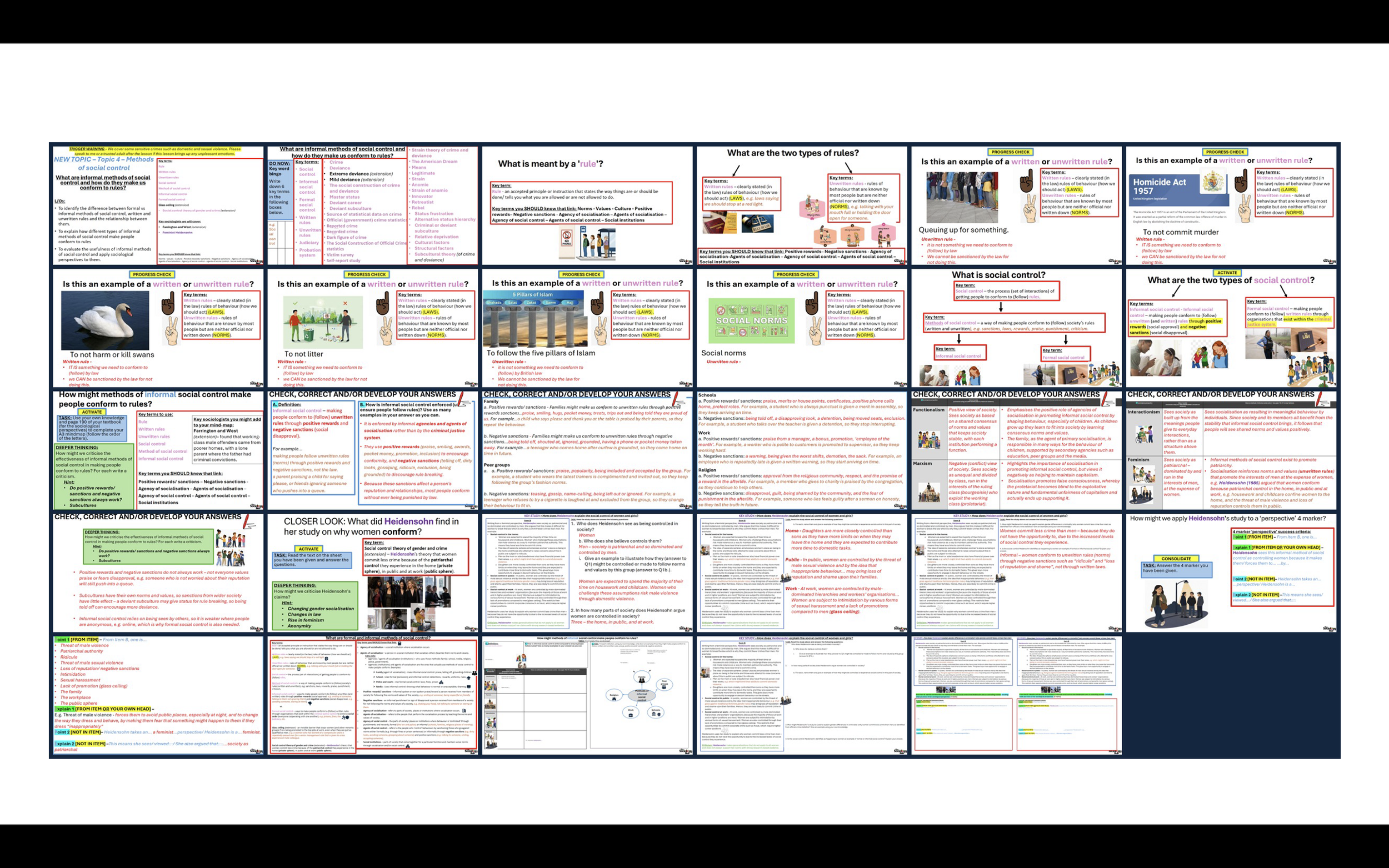
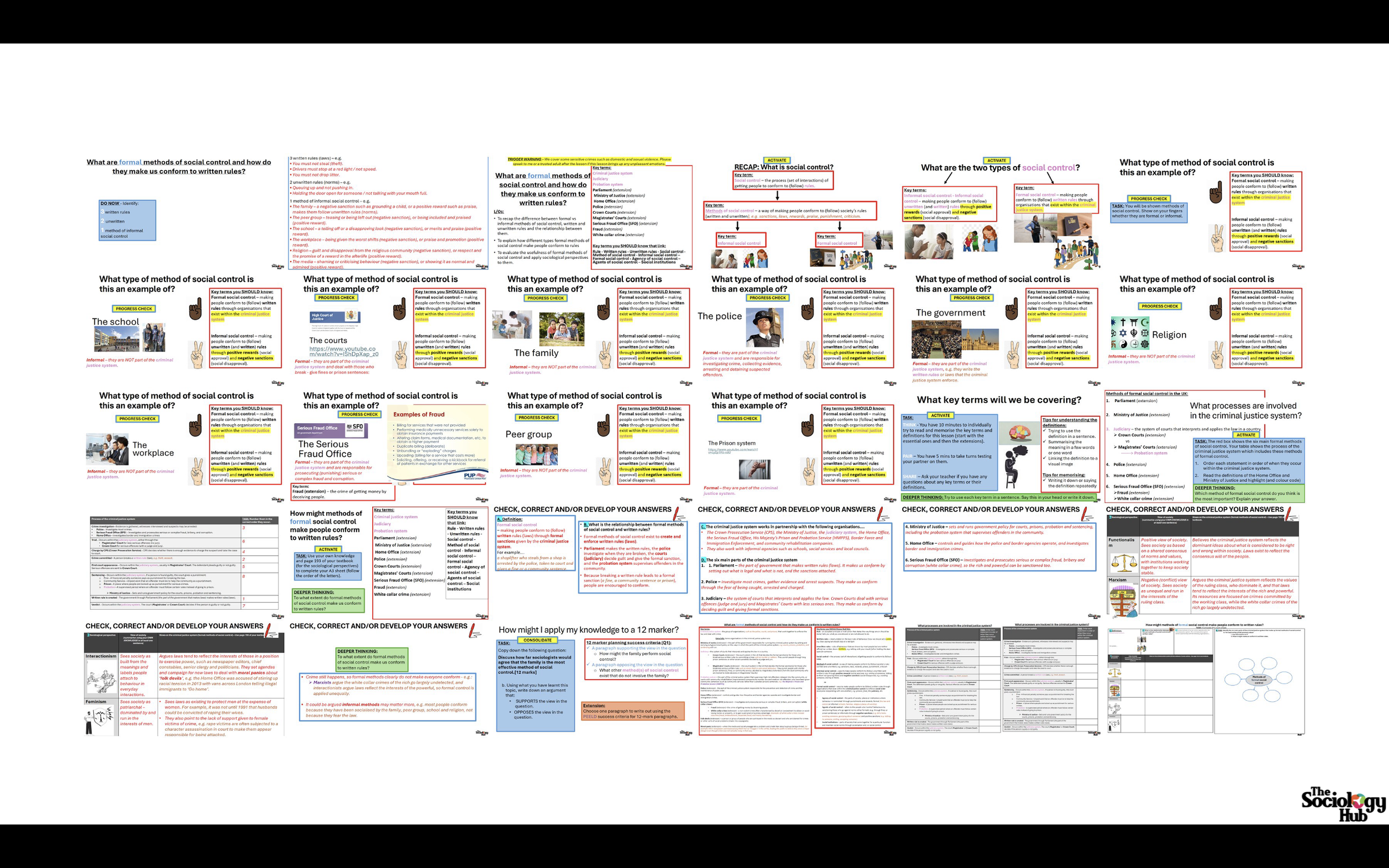
• Detailed lesson with lots of scaffolding based on adaptive teaching that helps students recap the difference between formal and informal methods of social control, explain how the six main parts of the criminal justice system make us conform to written rules, and evaluate how far formal methods of social control work.
• Covers the following key terms: Criminal justice system, Judiciary, Probation system.
• Extension key terms covered: Parliament, Ministry of Justice, Home Office, Police, Crown Courts, Magistrates’ Courts, Serious Fraud Office (SFO), Fraud, White collar crime, Folk devils, Moral panic.
• Covers the following sociological perspectives: Functionalism, Marxism, Interactionism and Feminism on the criminal justice system.
• Makes reference to the following key terms students might know to promote a spiral curriculum: Rule – Written rules – Unwritten rules – Social control – Method of social control – Informal social control – Formal social control – Agency of social control – Agents of social control – Social institutions.
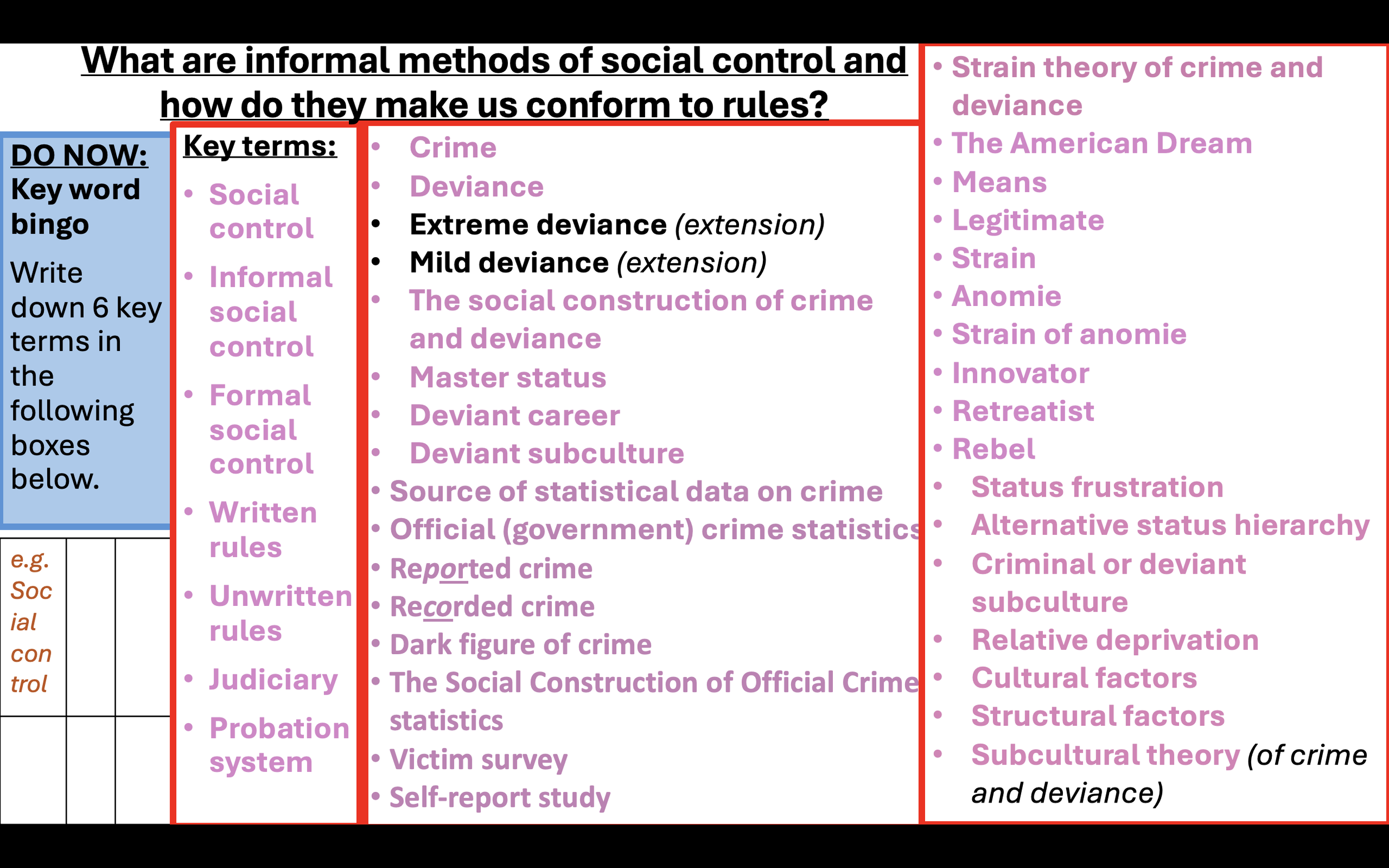
• Includes a Do Now retrieval starter on informal social control.
• Includes teaching to all activity on formal vs informal social control (the school, the courts, the family, the police, the government, religion, the workplace, the Serious Fraud Office, the peer group and the prison system), with two videos as activities.
• Includes a think, pair, share key term memorisation task with study strategies.
• Includes a criminal justice system sequencing task with a printable worksheet and a completed answer table.
• Includes an A3 mind-map worksheet on formal social control, including the sociological perspectives table.
• Includes a 12-marker planning task with success criteria
• One activity requires AQA GCSE (9-1) Sociology, Updated Edition by David Bown or an alternative source on sociological of formal social control (functionalist, Marxist, interactionists and feminist)
• INCLUDES A KEY TERM SHEET WITH DEFINITIONS FOR THE LESSON.
• INCLUDES A TEACHING TO ALL ACTIVITY AND DEEPER THINKING CHALLENGES.
• ANSWERS TO ALL MAIN ACTIVITIES INCLUDED.
• RESOURCES CAN BE FOUND AT THE END OF THE PPT.
• Detailed lesson with lots of scaffolding based on adaptive teaching that helps students recap the difference between formal and informal methods of social control, explain how the six main parts of the criminal justice system make us conform to written rules, and evaluate how far formal methods of social control work.
• Covers the following key terms: Criminal justice system, Judiciary, Probation system.
• Extension key terms covered: Parliament, Ministry of Justice, Home Office, Police, Crown Courts, Magistrates’ Courts, Serious Fraud Office (SFO), Fraud, White collar crime, Folk devils, Moral panic.
• Covers the following sociological perspectives: Functionalism, Marxism, Interactionism and Feminism on the criminal justice system.
• Makes reference to the following key terms students might know to promote a spiral curriculum: Rule – Written rules – Unwritten rules – Social control – Method of social control – Informal social control – Formal social control – Agency of social control – Agents of social control – Social institutions.
• Includes a Do Now retrieval starter on informal social control.
• Includes teaching to all activity on formal vs informal social control (the school, the courts, the family, the police, the government, religion, the workplace, the Serious Fraud Office, the peer group and the prison system), with two videos as activities.
• Includes a think, pair, share key term memorisation task with study strategies.
• Includes a criminal justice system sequencing task with a printable worksheet and a completed answer table.
• Includes an A3 mind-map worksheet on formal social control, including the sociological perspectives table.
• Includes a 12-marker planning task with success criteria
• One activity requires AQA GCSE (9-1) Sociology, Updated Edition by David Bown or an alternative source on sociological of formal social control (functionalist, Marxist, interactionists and feminist)
• INCLUDES A KEY TERM SHEET WITH DEFINITIONS FOR THE LESSON.
• INCLUDES A TEACHING TO ALL ACTIVITY AND DEEPER THINKING CHALLENGES.
• ANSWERS TO ALL MAIN ACTIVITIES INCLUDED.
• RESOURCES CAN BE FOUND AT THE END OF THE PPT.