 Image 1 of 2
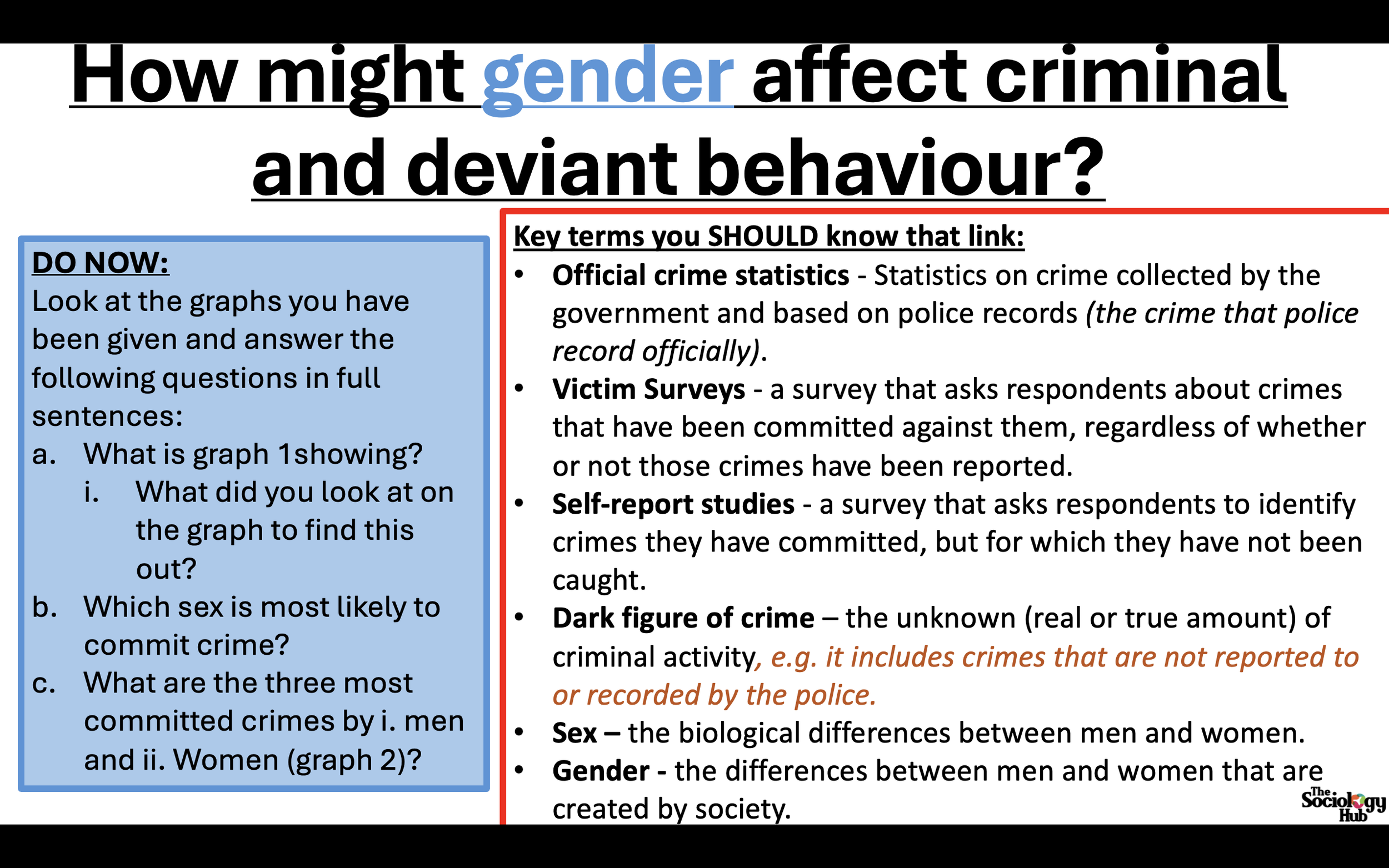 Image 2 of 2
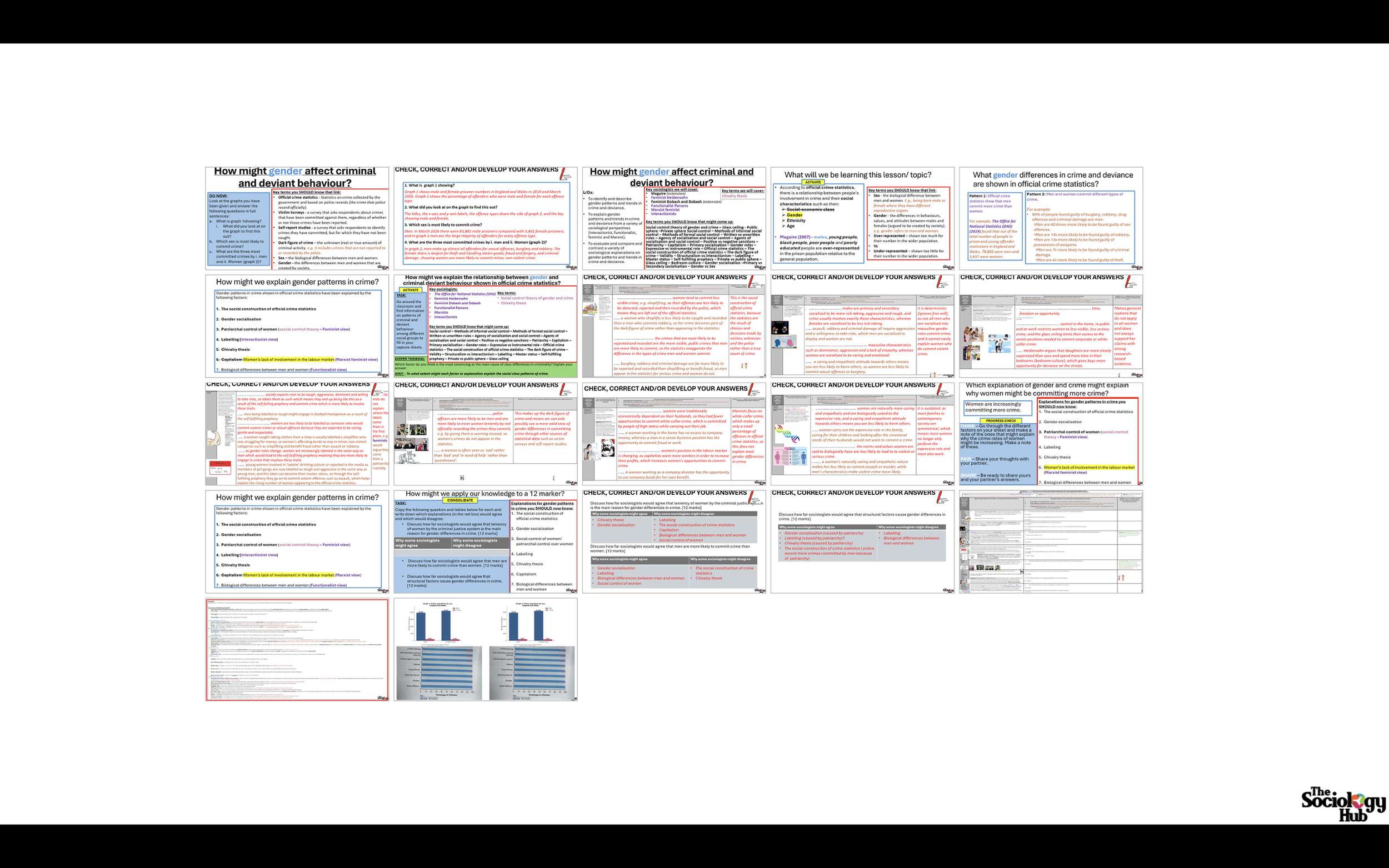
Detailed lesson with lots of scaffolding based on adaptive teaching that helps students identify and describe gender patterns and trends in crime and deviance, explain them from interactionist, functionalist, feminist and Marxist perspectives and evaluate these explanations.
Covers these two main gender patterns in crime: men committing more crime than women and the different types of crime men and women committ.
Covers the following key terms: Chivalry thesis
Covers the following sociologists: Maguire, The Office for National Statistics (ONS), the Ministry of Justice, Heidensohn (feminist), Dobash and Dobash (feminist), Parsons (functionalist), Marxists and Interactionists.
Makes reference to the following key terms students should already know to promote a spiral curriculum: Social control theory of gender and crime - Chivalry thesis - Glass ceiling - Public sphere vs Private sphere.Official crime statistics - The social construction of official crime statistics - The dark figure of crime - Victim surveys - Self-report studies - Validity - Sex vs Gender - Gender socialisation - Gender roles - Expressive vs instrumental role - Social control - Formal vs informal social control - Agencies and agents of socialisation and social control - Positive vs negative sanctions - Patriarchy - Capitalism - White collar crime - Labelling - Master status - Self-fulfilling prophecy - Deviant career - Deviant subculture - Structuralism vs interactionism - Bedroom culture.
Includes a 12 marker planning activity with agree/disagree tables
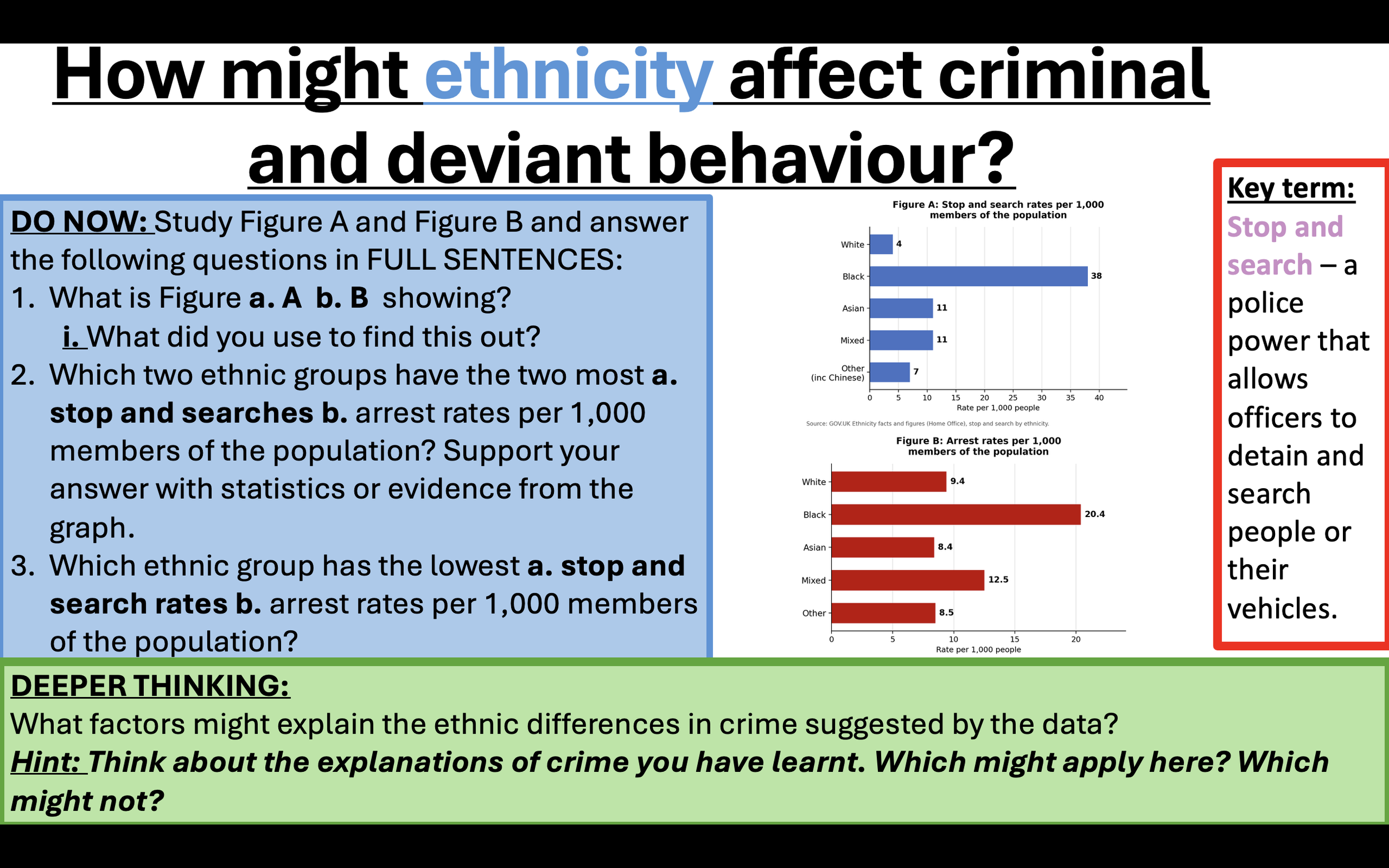
Includes graph activity (2019 vs March 2026 and 2011-2012)
PRINT MAIN TABLE IN A3
ANSWERS TO ALL ACTIVITIES INCLUDED
Includes a key term sheet with definitions for the lesson (and key terms and definitions associated with the main explanations of crime that link, e.g. labelling, social control theory, invalid statistics, etc.
RESOURCES CAN BE FOUND AT THE END OF THE PPT.
Detailed lesson with lots of scaffolding based on adaptive teaching that helps students identify and describe gender patterns and trends in crime and deviance, explain them from interactionist, functionalist, feminist and Marxist perspectives and evaluate these explanations.
Covers these two main gender patterns in crime: men committing more crime than women and the different types of crime men and women committ.
Covers the following key terms: Chivalry thesis
Covers the following sociologists: Maguire, The Office for National Statistics (ONS), the Ministry of Justice, Heidensohn (feminist), Dobash and Dobash (feminist), Parsons (functionalist), Marxists and Interactionists.
Makes reference to the following key terms students should already know to promote a spiral curriculum: Social control theory of gender and crime - Chivalry thesis - Glass ceiling - Public sphere vs Private sphere.Official crime statistics - The social construction of official crime statistics - The dark figure of crime - Victim surveys - Self-report studies - Validity - Sex vs Gender - Gender socialisation - Gender roles - Expressive vs instrumental role - Social control - Formal vs informal social control - Agencies and agents of socialisation and social control - Positive vs negative sanctions - Patriarchy - Capitalism - White collar crime - Labelling - Master status - Self-fulfilling prophecy - Deviant career - Deviant subculture - Structuralism vs interactionism - Bedroom culture.
Includes a 12 marker planning activity with agree/disagree tables
Includes graph activity (2019 vs March 2026 and 2011-2012)
PRINT MAIN TABLE IN A3
ANSWERS TO ALL ACTIVITIES INCLUDED
Includes a key term sheet with definitions for the lesson (and key terms and definitions associated with the main explanations of crime that link, e.g. labelling, social control theory, invalid statistics, etc.
RESOURCES CAN BE FOUND AT THE END OF THE PPT.