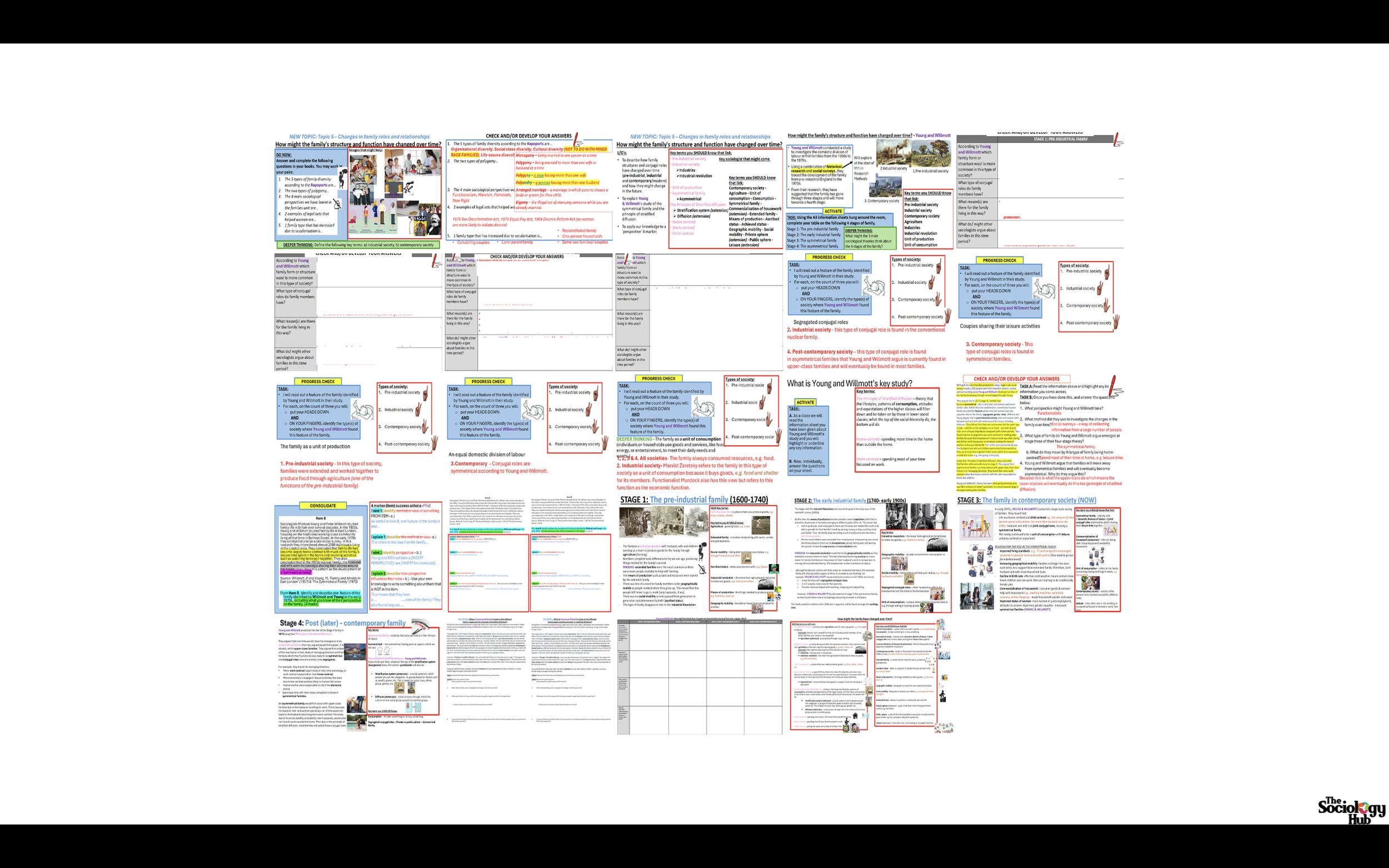
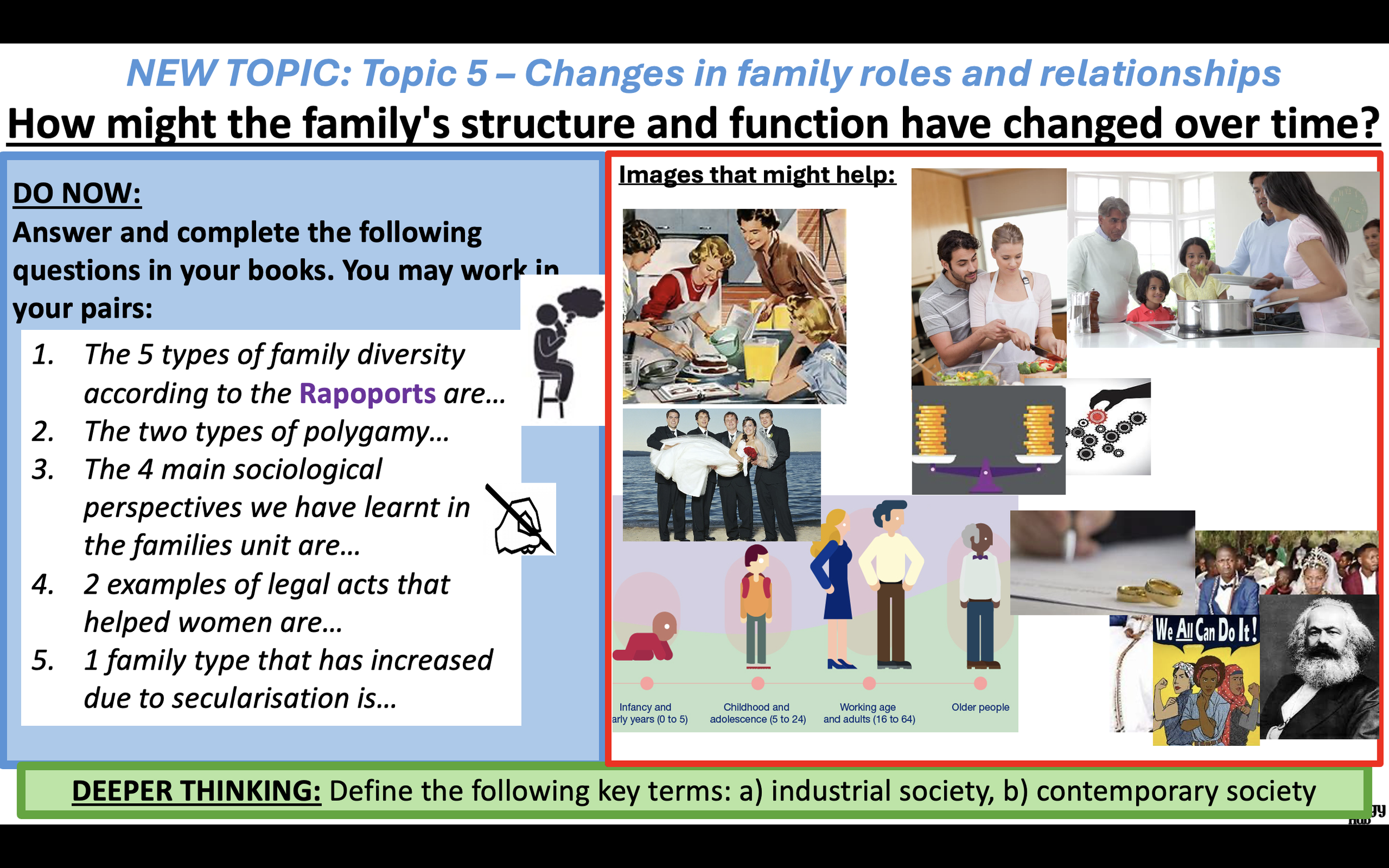
 Image 1 of 2
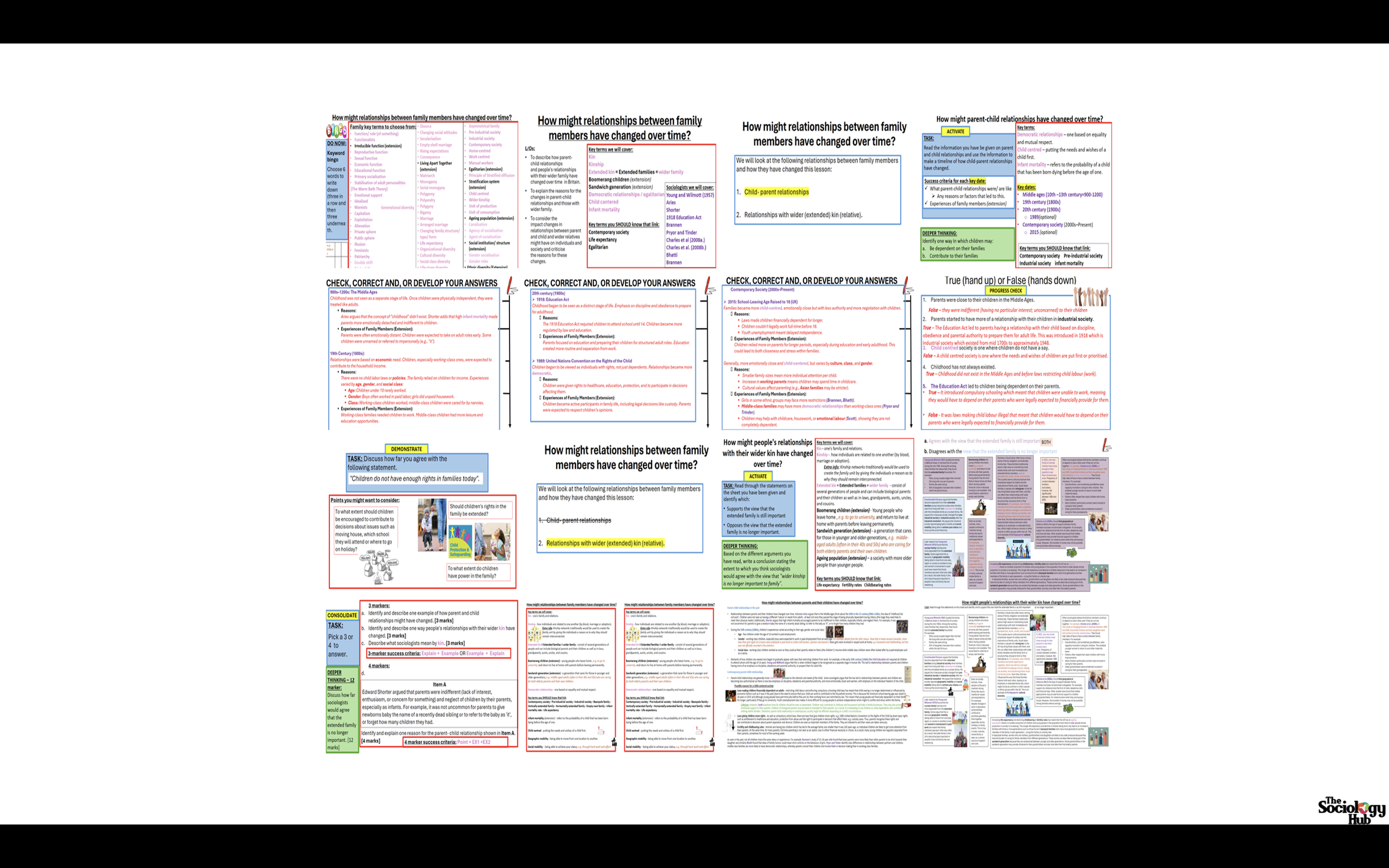
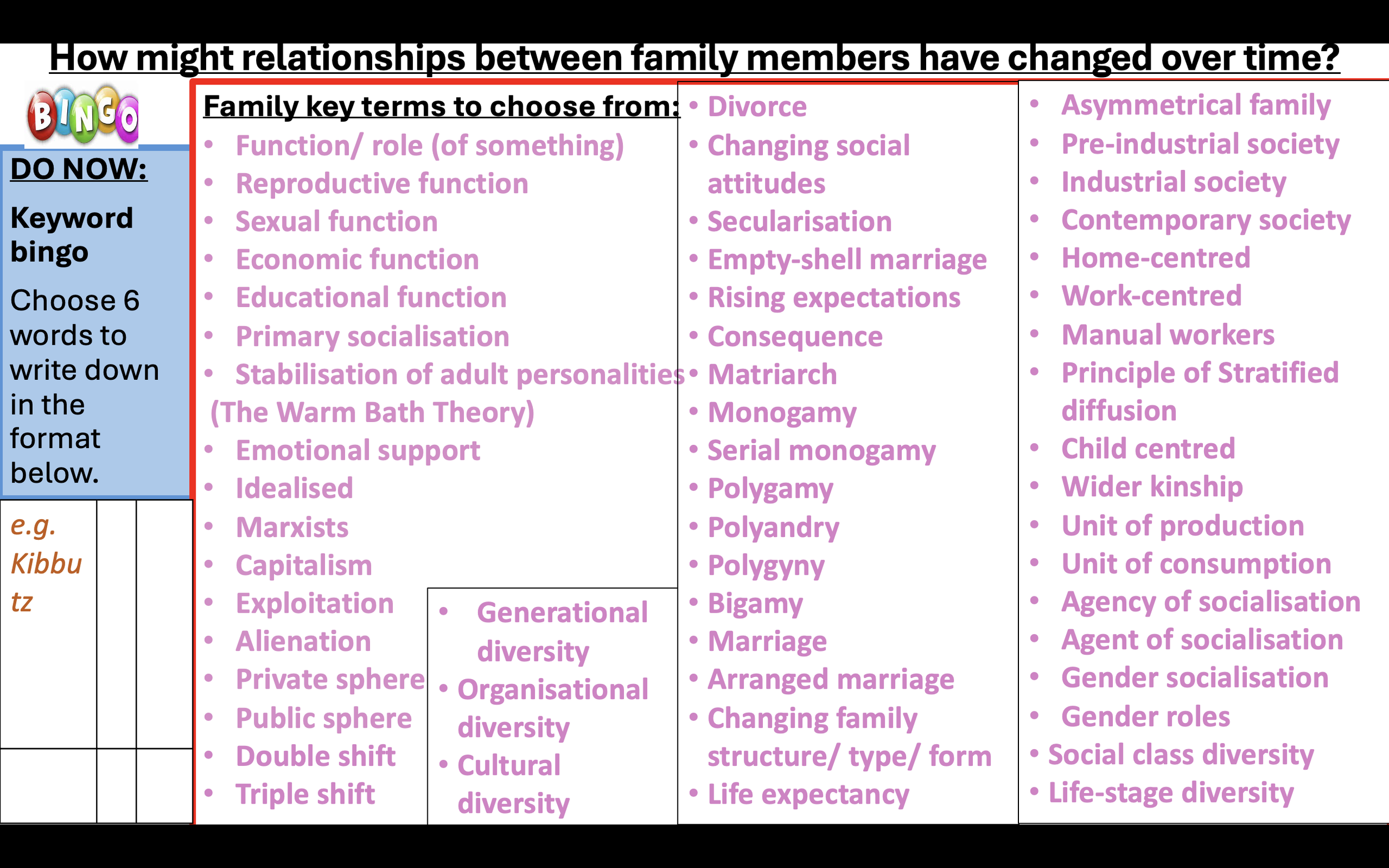 Image 2 of 2
•Detailed lesson with lots of scaffolding based on adaptive teaching that help students describe how parent-child relationships and people's relationships with their wider family have changed over time in Britain, explain the reasons for these changes and consider the impact these changes might have on individuals and society.
•Covers both parent-child relationships and relationships with wider (extended) kin in one full lesson.
•Covers the following key terms: Kin, Kinship, Extended kin/extended family/wider family, Boomerang children, Sandwich generation, Democratic/ egalitarian relationships, Child-centred, Infant mortality, Boomerang children (extension), Sandwich generation (extension)
•Covers the following sociologists: Aries, Shorter, Young and Willmott (1957 and 1973), Parsons, Brannen, Bhatti, Pryor and Trinder, Charles et al. (2008a and 2008b), Scott and the Rapoports.
•Also refers to the 1918 Education Act and the 1989 United Nations Convention on the Rights of the Child.
•Makes reference to the following key terms students might know to promote a spiral curriculum: Contemporary society - Life expectancy - Egalitarian - Pre-industrial society - Industrial society – Geographic mobility - Social mobility- Beanpole family - Life expectancy Fertility rates Childbearing rates
•Includes a keyword bingo 'Do Now' retrieval starter, a timeline-building activity with success criteria and key dates, a true or false progress check, a discussion task on children's rights and a statement-sorting activity on the importance of the extended family.
•Includes 3 and 4 markers
•Includes key term sheet with definitions for the lesson.
•ANSWERS TO MAIN ACTIVITIES INCLUDED
•Includes student information sheets on parent-child relationships and wider kin.
•RESOURCES CAN BE FOUND AT THE END OF THE PPT.
•Detailed lesson with lots of scaffolding based on adaptive teaching that help students describe how parent-child relationships and people's relationships with their wider family have changed over time in Britain, explain the reasons for these changes and consider the impact these changes might have on individuals and society.
•Covers both parent-child relationships and relationships with wider (extended) kin in one full lesson.
•Covers the following key terms: Kin, Kinship, Extended kin/extended family/wider family, Boomerang children, Sandwich generation, Democratic/ egalitarian relationships, Child-centred, Infant mortality, Boomerang children (extension), Sandwich generation (extension)
•Covers the following sociologists: Aries, Shorter, Young and Willmott (1957 and 1973), Parsons, Brannen, Bhatti, Pryor and Trinder, Charles et al. (2008a and 2008b), Scott and the Rapoports.
•Also refers to the 1918 Education Act and the 1989 United Nations Convention on the Rights of the Child.
•Makes reference to the following key terms students might know to promote a spiral curriculum: Contemporary society - Life expectancy - Egalitarian - Pre-industrial society - Industrial society – Geographic mobility - Social mobility- Beanpole family - Life expectancy Fertility rates Childbearing rates
•Includes a keyword bingo 'Do Now' retrieval starter, a timeline-building activity with success criteria and key dates, a true or false progress check, a discussion task on children's rights and a statement-sorting activity on the importance of the extended family.
•Includes 3 and 4 markers
•Includes key term sheet with definitions for the lesson.
•ANSWERS TO MAIN ACTIVITIES INCLUDED
•Includes student information sheets on parent-child relationships and wider kin.
•RESOURCES CAN BE FOUND AT THE END OF THE PPT.