 Image 1 of 2
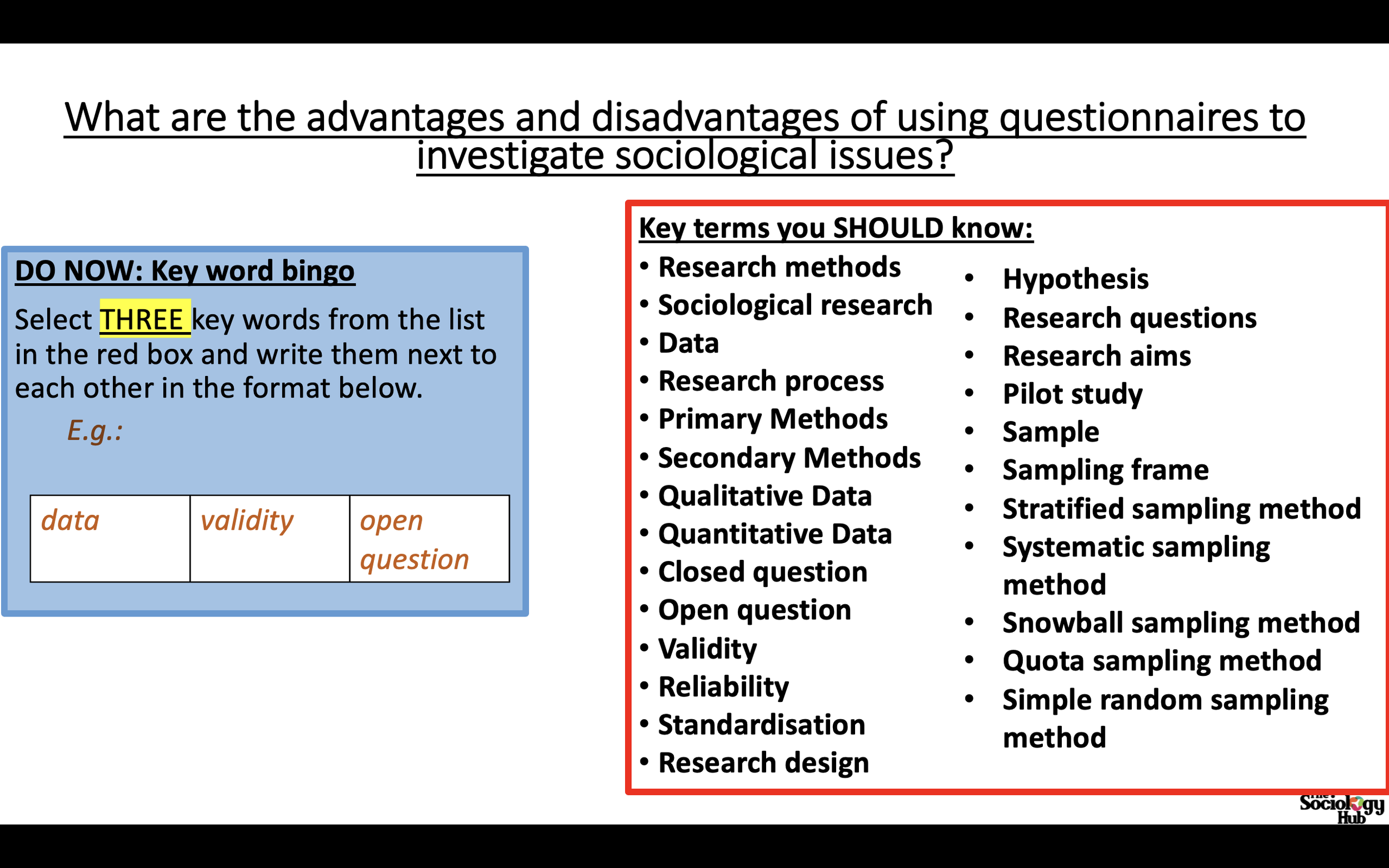 Image 2 of 2
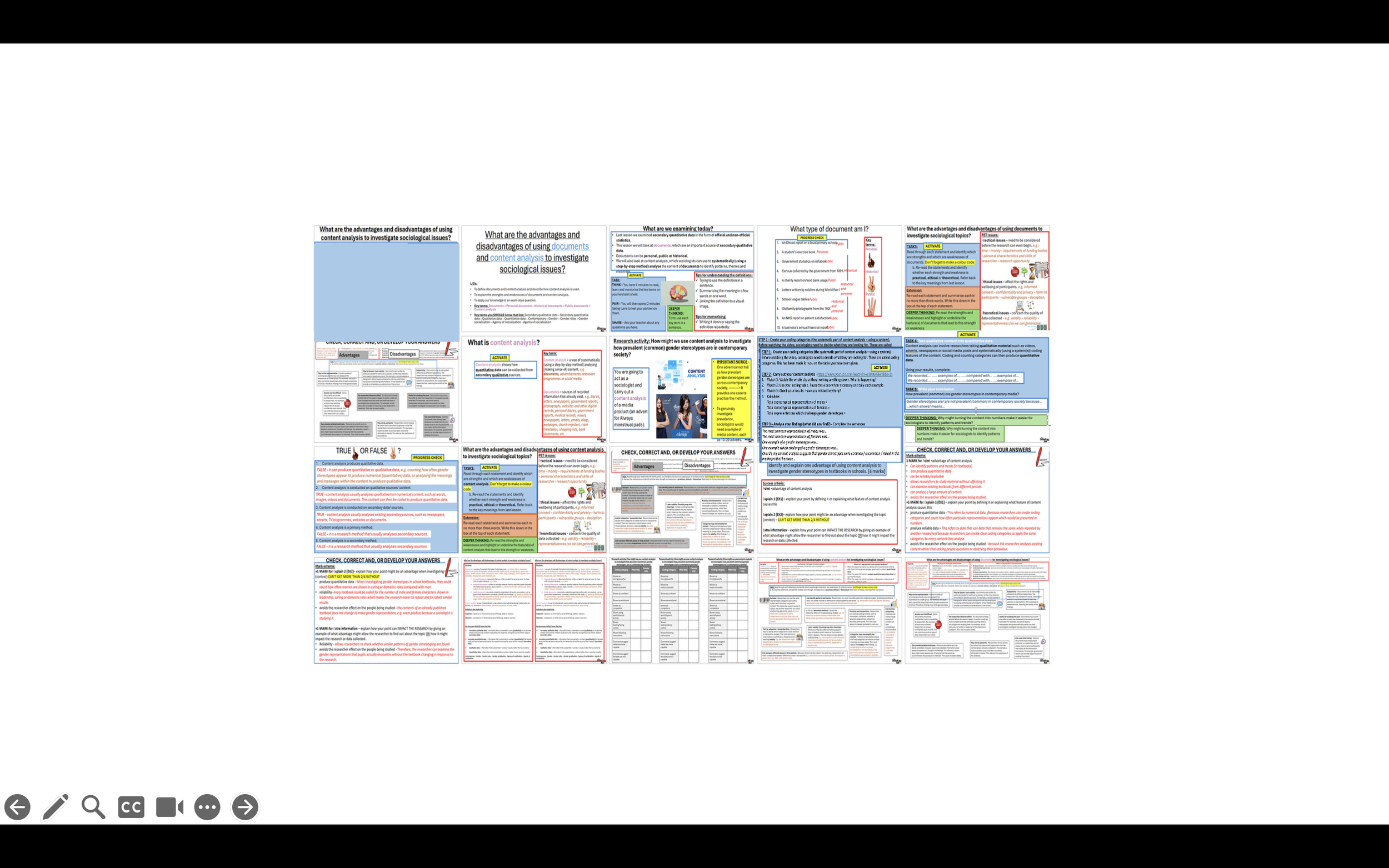
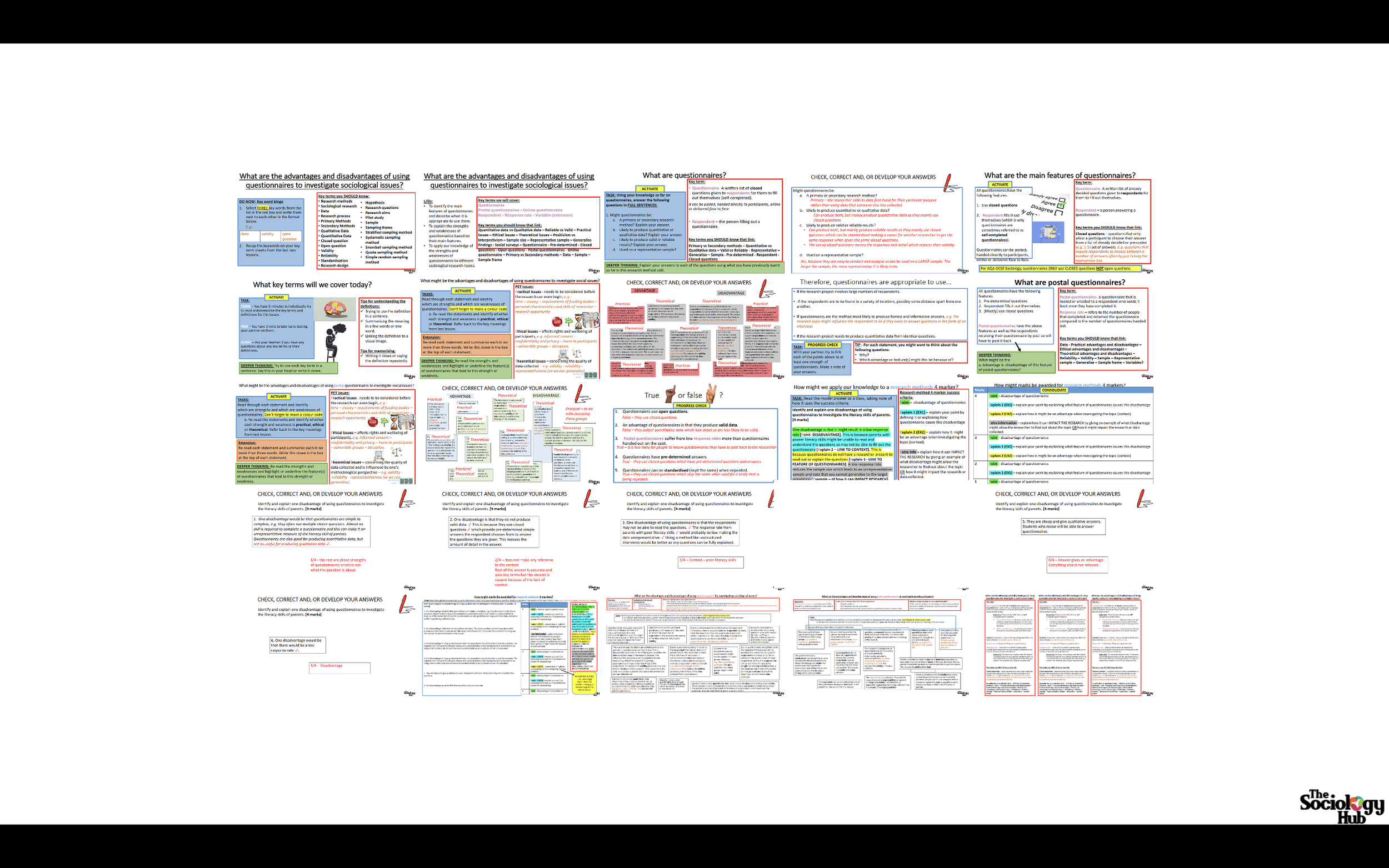
•Detailed lesson with lots of scaffolding based on adaptive teaching that helps students identify the main features of questionnaires and postalquestionnaires, describe when it is appropriate to use them, explain their practical, ethical and theoretical strengths and weaknesses, and apply this knowledge to an exam-style question.
•Covers the following key terms: Questionnaires, Postal questionnaires, Online questionnaire, Respondent, Response rate, Variable (extension).
•Makes reference to the following key terms students might know to promote a spiral curriculum: Quantitative vs Qualitative data – Reliable vs Valid – Practical issues – Ethical issues – Theoretical issues – Positivism vs Interpretivism – Sample size – Representative sample – Generalise findings – Social surveys – Pre-determined – Closed questions – Open questions – Primary vs Secondary methods – Data – Sample – Sample frame.
•Starter activity: key word bingo recapping research methods terms from previous lessons.
•Includes a Think–Pair–Share key term activity with tips for understanding and memorising definitions.
•Includes colour-coded strengths and weaknesses sorting tasks with extension and deeper thinking challenges.
•Includes a 4-marker with success criteria, a mark scheme, a model answer and a peer-assessment activity to help students understand how they gain marks for research methods 4 markers (includes SIX EXAMPLE ANSWERS to do this).
•ANSWERS TO ALL ACTIVITIES INCLUDED.
•INCLUDES KEY TERM SHEET WITH DEFINITIONS FOR THE LESSON.
•RESOURCES CAN BE FOUND AT THE END OF THE PPT.